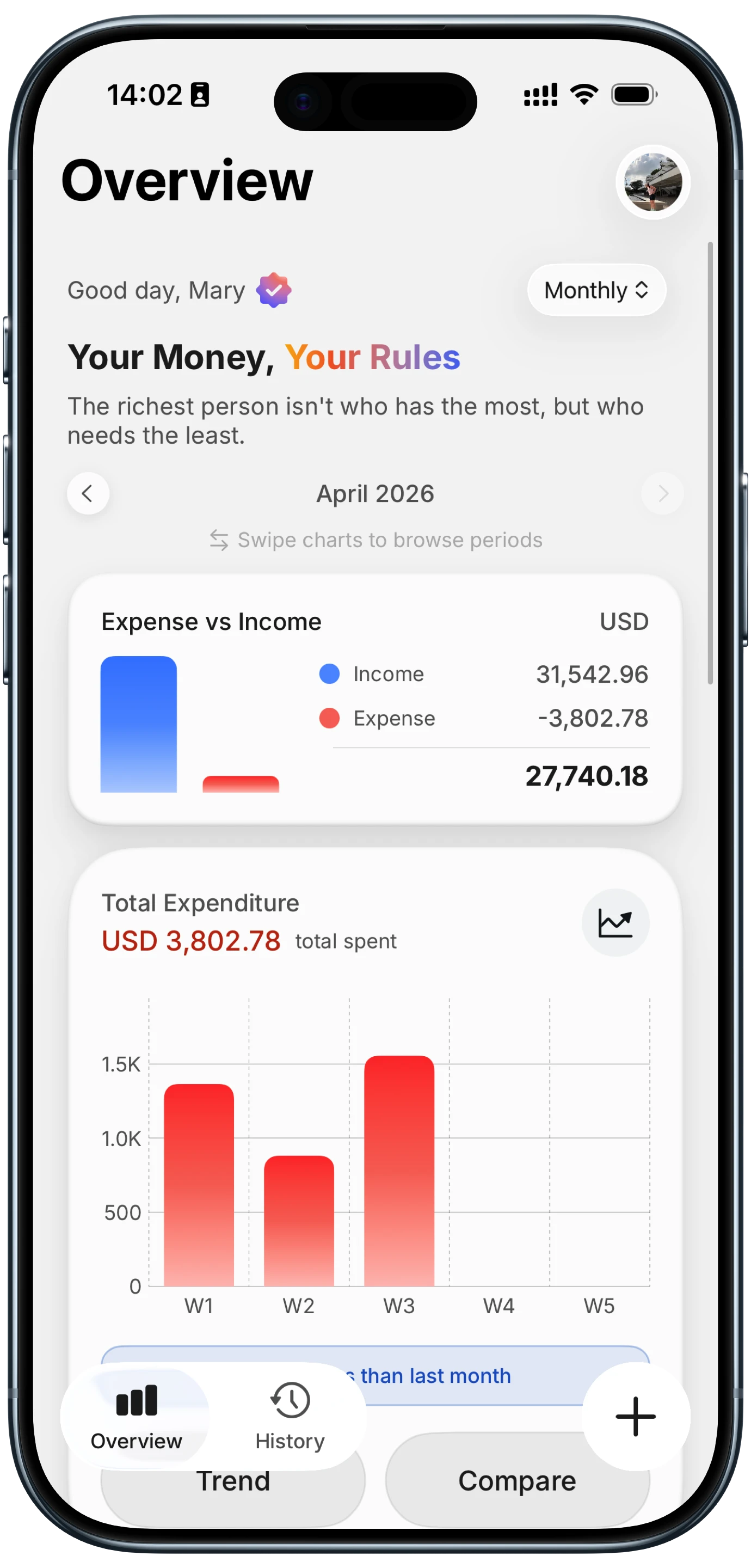
Best Finance Tracker Apps for 2026
Ask ten people what a finance tracker is, and you will get at least six different answers. One person wants a strict envelope budget. Another wants to watch net worth climb across investment accounts. A third just wants to know where the grocery money went last week. A fourth needs to split bills with a partner without fighting about who paid for what. The category is broad because the problem is personal.
This guide to the best finance tracker apps in 2026 skips the generic "top 10" format. Instead, it segments readers by what they actually want the app to do, then routes each persona to the right pick. Every app mentioned is verified active as of April 2026, with current pricing and feature status. For a narrower look at AI-driven logging specifically, see our AI finance tracker guide. For a broader reference, see our best money tracker apps in 2026 roundup.
What Is a Finance Tracker?
A finance tracker is any app or system that records your money activity so you can review it later. That definition is deliberately wide, because finance trackers come in at least three flavors, and each one serves a different goal.
Budget-first trackers assume you want to plan every dollar before it leaves your account. They emphasize categories, limits, and rollovers. YNAB is the archetype. If you open the app and the first question is "what is this money for," you are using a budget-first tracker.
Net-worth trackers assume you want the big picture: assets minus liabilities, trending over time. They connect to brokerages, retirement accounts, mortgages, and credit cards. Monarch Money sits here. Daily transaction logging is secondary to the dashboard view.
Expense-only trackers assume you just want to know what you spent and where. No investment accounts, no debt payoff planner, no net-worth chart. Just a clean log of what went out. Copilot Money leans this direction, as do privacy-first tools that avoid bank connections entirely.
Knowing which flavor you want saves hours of frustration. A budgeter forced to use a net-worth tool will feel lost. A net-worth tracker given an envelope budget will feel constrained. Match the tool to the job.
Best Finance Tracker Apps for 2026 (Comparison)
| App | Best For | Price (2026) | Bank Link | Platforms |
|---|---|---|---|---|
| Monarch Money | Households, net worth | $14.99/mo or $99.99/yr | Required | iOS, Android, Web |
| Copilot Money | iOS premium experience | $13/mo or $95/yr | Required | iOS, Mac |
| YNAB | Zero-based budgeters | $14.99/mo or $109/yr | Optional | iOS, Android, Web |
| PocketGuard | Hands-off spenders | $12.99/mo or $74.99/yr | Required | iOS, Android |
| Spendee | Multi-currency travelers | $1.25 to $1.92/mo | Optional | iOS, Android, Web |
| Honeydue | Couples | Free | Optional | iOS, Android |
| Finny | iOS, privacy, no bank link | Free or a low monthly price | None | iOS |
Monarch Money
Monarch is the app to beat for households that want a full financial dashboard. It connects to more than 13,000 institutions, handles investments, tracks net worth, and supports unlimited collaborators at no extra cost. The 2026 update added an AI assistant, weekly spending recaps, and improved goal-setting tools.
The drawback is price. At $14.99 per month or $99.99 annually, Monarch sits at the top of the market. That cost is justified if you are tracking several accounts across a household, but overkill for someone with a checking account and a credit card.
Copilot Money
Copilot is the polished iOS choice. The visual design is genuinely beautiful, the categorization learns from your corrections, and subscription detection works well. It supports over 10,000 institutions, including Venmo, Coinbase, and Apple Card.
The catch is platform lock-in. Copilot is iOS and Mac only in April 2026. Android and web are still listed as "coming soon." If your partner uses Android, Copilot cannot be your shared tracker. Pricing is $13 per month or $95 annually.
YNAB (You Need A Budget)
YNAB is a method disguised as an app. The zero-based approach requires you to give every dollar a job before you spend it. That discipline produces results. YNAB reports that new users save $600 in their first two months on average.
Pricing is steep at $14.99 per month or $109 annually, though a 34-day free trial and a student discount soften the entry. YNAB covers up to six family members per subscription and now connects to more than 12,000 institutions for optional automatic import.
PocketGuard
PocketGuard leads with the "In My Pocket" number: how much you can actually spend after bills, savings goals, and subscriptions are accounted for. This framing is excellent for people who overspend when they see a high checking balance.
PocketGuard Plus costs $12.99 per month or $74.99 annually. The free tier is usable but limited, with caps on categories and accounts. A lifetime option at $149.99 is occasionally offered in-app.
Spendee
Spendee is the quiet multi-currency pick. Plans start around $1.25 per month, which is nearly an order of magnitude cheaper than Monarch or YNAB. Premium adds bank sync, shared wallets, an AI receipt scanner, and more currencies per wallet.
The app works well for travelers and digital nomads who need to track spending across borders without manual conversion math. The analytics are simpler than Monarch's, but the price-to-feature ratio is hard to beat.
Honeydue
Honeydue is built specifically for couples. Partners link accounts, set spending limits, chat about specific transactions, and choose exactly what to share and what to hide. The app is free. The Honeydue debit card was discontinued in late 2023, but the core finance tracker remains active and supported in 2026.
It is not the app for someone who wants deep investment analysis or advanced budgeting methods. It is the app for two people who want to stop arguing about who paid the electric bill.
Pick Your Finance Tracker by Persona
Best Finance Tracker for Budgeters
If you open your finance tracker expecting to be told where every dollar should go, you want YNAB. The zero-based method forces a plan before the month starts, and the rollover behavior teaches you to absorb variable expenses without panic.
Monarch is a reasonable second choice if you also want investment tracking, but its budgeting layer is lighter than YNAB's. For budgeters who want structure without the $109 annual price, EveryDollar from Ramsey Solutions is worth considering. Finny works for budgeters who prefer to track actuals first and build limits from real data, without sharing bank credentials. For adjacent reading, our best AI budget apps for 2026 guide covers this segment in more depth.
Best Finance Tracker for Travelers and Expats
Travelers need one feature above all others: multi-currency support that does not require manual conversion. Spendee handles this well at a low price. Wallets can hold different base currencies, and transactions are logged in the original currency of the purchase.
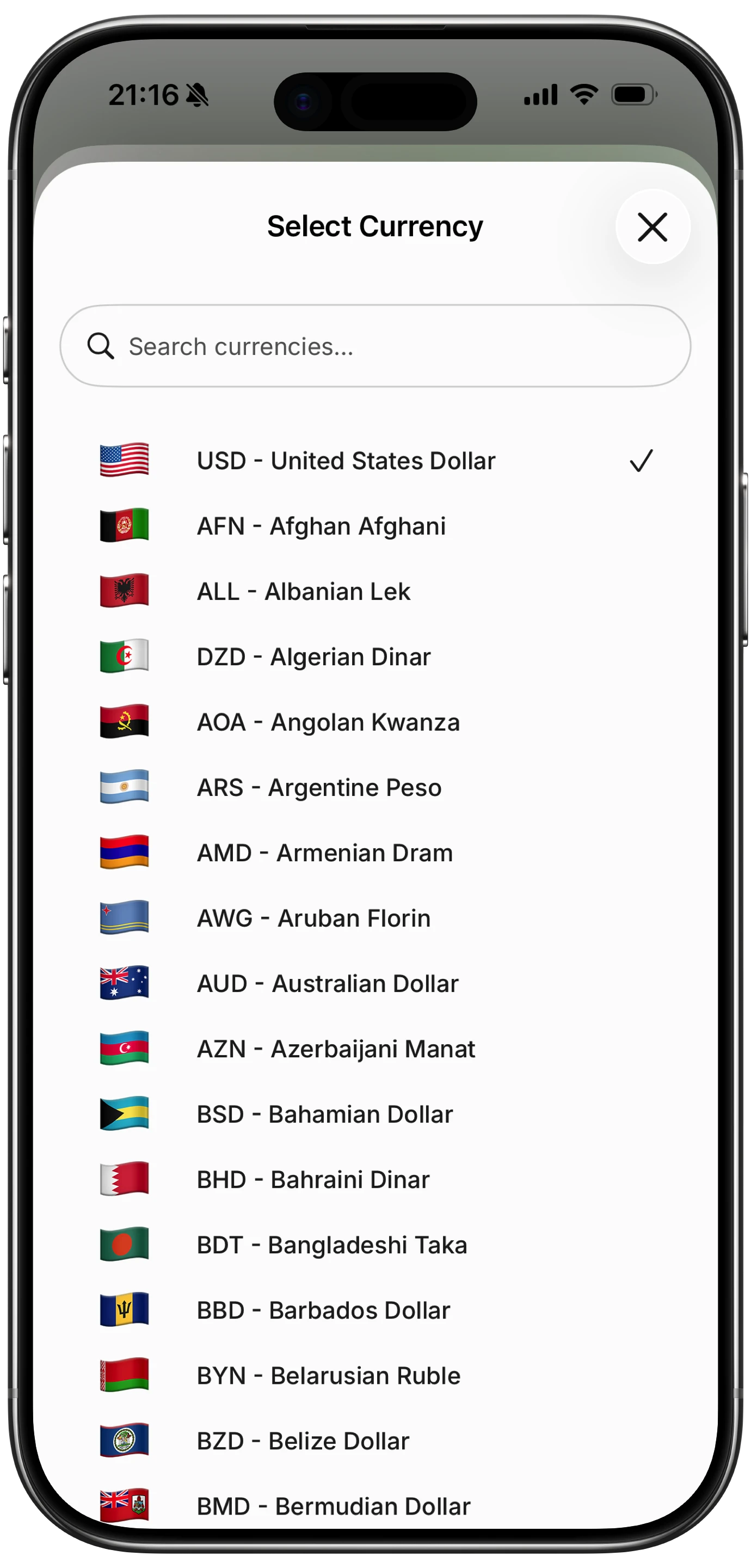
Finny app's multi-currency feature
Finny also handles this case for iPhone users, with 150 plus currencies and a unified view that shows each transaction in its original currency while totals auto-convert. For a deeper comparison of options in this category, see our best multi-currency expense tracker guide.
Monarch supports multiple currencies but leans toward a single-base-currency view, which is less useful if you actively earn and spend in several currencies. Copilot, Honeydue, and YNAB all work best for single-currency users in the United States.
Best Finance Tracker for Couples
Honeydue is the obvious pick for couples who want a dedicated shared finance tracker with flexible privacy controls. The in-app chat on individual transactions solves a real problem: answering "what was this $90 charge" without a text thread.
Monarch is the upgrade path for couples who have outgrown Honeydue. Unlimited collaborators at no extra cost means the whole household sees the same data, with shared goals and budgets. The trade-off is the $14.99 monthly price and the requirement to connect bank accounts. For a focused comparison, see our best budgeting apps for couples guide.
YNAB also works for couples via its family sharing (up to six people), but its method is opinionated enough that both partners need to buy in.
Best Finance Tracker for Freelancers and Side Hustlers
Freelancers have a harder problem than salaried workers: income is lumpy, expenses mix personal and business, and tax planning matters year-round. A finance tracker for this persona needs flexible categories, decent reporting, and the ability to tag transactions for later review.
YNAB handles lumpy income well because its zero-based method explicitly deals with age-of-money and budgeting from last month's income. Monarch provides the reporting and category flexibility freelancers need for quarterly tax estimates, though it lacks dedicated invoicing.
For side hustlers who want to keep personal and business spending separate without opening a full accounting package, a lightweight tracker with strong categorization, like Finny or Spendee, can cover the basics. See our best expense tracker apps guide for a wider freelancer view.
Best Finance Tracker for iOS Minimalists
Some iPhone users do not want a dashboard with ten widgets and six account types. They want a clean interface, fast entry, and a log they can actually review. The iOS minimalist persona values speed and design over breadth of features.
Copilot Money is the premium pick here. The interface is the best in the category, the animations feel native, and the categorization works without constant correction. The price is real at $95 annually, and it requires bank linking.
Finny is the minimalist choice that avoids bank linking. Three input modes (text, voice, receipt) cover fast logging, the interface is iPhone-native, and the free tier is usable without a subscription. Monarch and YNAB have capable iPhone apps, but their interfaces assume you want every feature visible, which is the opposite of minimalism.
Bank-Linked vs Manual Finance Trackers
The single biggest architectural choice in a finance tracker is whether it connects to your bank or not. This decision affects accuracy, privacy, and the daily experience of using the app.
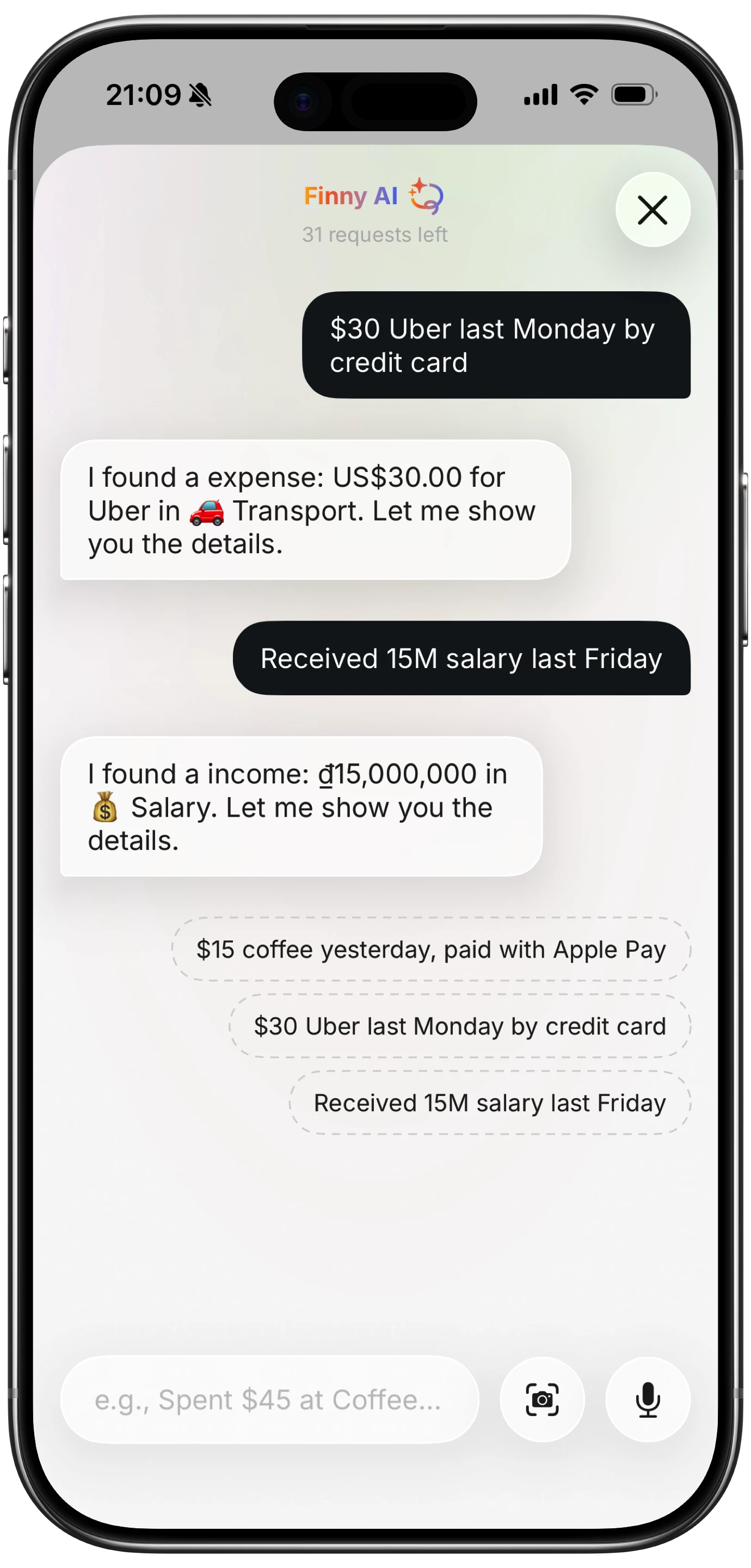
Finny app's AI chat feature
Bank-linked trackers import transactions automatically through aggregators like Plaid or Finicity. You see charges within a day or two of making them, without doing anything. The upside is coverage: nothing slips through as long as you use a linked card. The downsides are real. You are sharing your bank credentials with a third party, you depend on the aggregator's uptime, and cash or peer-to-peer payments still require manual entry. Monarch, Copilot, YNAB (optional), PocketGuard, and Honeydue all work this way.
Manual trackers ask you to enter transactions yourself. Historically this meant slow forms and a high drop-off rate. Modern manual trackers reduce the friction with AI-assisted input: text parsing, receipt scanning, and voice entry. The upside is privacy and control. Your bank credentials never leave your device, and you see every transaction consciously, which tends to change spending behavior. The downside is discipline. If you forget to log, your tracker is out of date.
Hybrid approaches are common. YNAB, Spendee, and a few others support both modes. You can connect accounts for automatic import and still add manual entries for cash. For most people, the right question is not "which mode is better" but "which mode matches my risk tolerance and my habits."
If you have ever been uncomfortable handing your bank password to a fintech app, a manual or hybrid tracker is probably the better fit. If you know you will never log manually, an automatic tracker with strong categorization is the safer bet.
iPhone users who want a narrower shortlist of apps built for the Apple ecosystem should read our best iOS budget apps in 2026 guide next; it filters this field down to picks with strong Shortcuts, Watch, and widget support.
Frequently Asked Questions
What is the best finance tracker app in 2026?
There is no single best finance tracker. Monarch Money is the best overall for households that want a full dashboard. YNAB is the best for strict budgeters. Copilot Money is the best premium iOS experience. Honeydue is the best free option for couples. Finny is a strong pick for iPhone users who want AI-assisted input without bank linking. The right answer depends on whether you value budgeting discipline, net-worth visibility, shared household access, or privacy.
Is a finance tracker worth paying for?
For most people with multiple accounts or specific goals, yes. Paid trackers like Monarch and YNAB typically pay for themselves within a few months by surfacing forgotten subscriptions, overspending patterns, or interest savings. For users with simple finances, a free tier from Honeydue, Spendee, or Finny covers the basics without a subscription. Try the free tier first, then upgrade only if you hit real limits.
Is a personal finance tracker safe?
Bank-linked trackers use the same aggregators that power major fintech apps, with bank-grade encryption and read-only access in most cases. That does not mean zero risk. Breaches at aggregators have happened. Manual trackers that avoid bank connections sidestep this risk entirely by keeping your credentials on your own device. Read the privacy policy, check whether data is stored locally or in the cloud, and decide based on your comfort level.
What is the best finance tracker for iPhone?
For bank-linked tracking with a premium interface, Copilot Money is the standout iPhone pick. For manual or AI-assisted tracking without bank linking, Finny is built iOS-first. Monarch and YNAB have solid iPhone apps if cross-platform access matters. The "best finance tracker for iPhone" depends on whether you want automatic imports or privacy-first logging.
Can I use a finance tracker without connecting my bank?
Yes. Several finance trackers work entirely without bank connections. Finny is built for this use case and uses AI-assisted input (text, voice, receipts) to keep manual entry fast. YNAB supports a manual-only mode, though most users enable bank sync. Spendee also offers manual wallets. Avoiding bank connections trades some automation for stronger privacy and offline-first operation.
Want a finance tracker that works without sharing your bank credentials?
Download Finny for iPhone to log expenses with text, voice, or receipts. Free tier, offline support, 150 plus currencies, and Pro at a low monthly price if you need more.