Do Digital Wallets Track Your Spending?
Short answer: not really. Digital wallets keep a record of your transactions, but a record is not the same as tracking your spending.
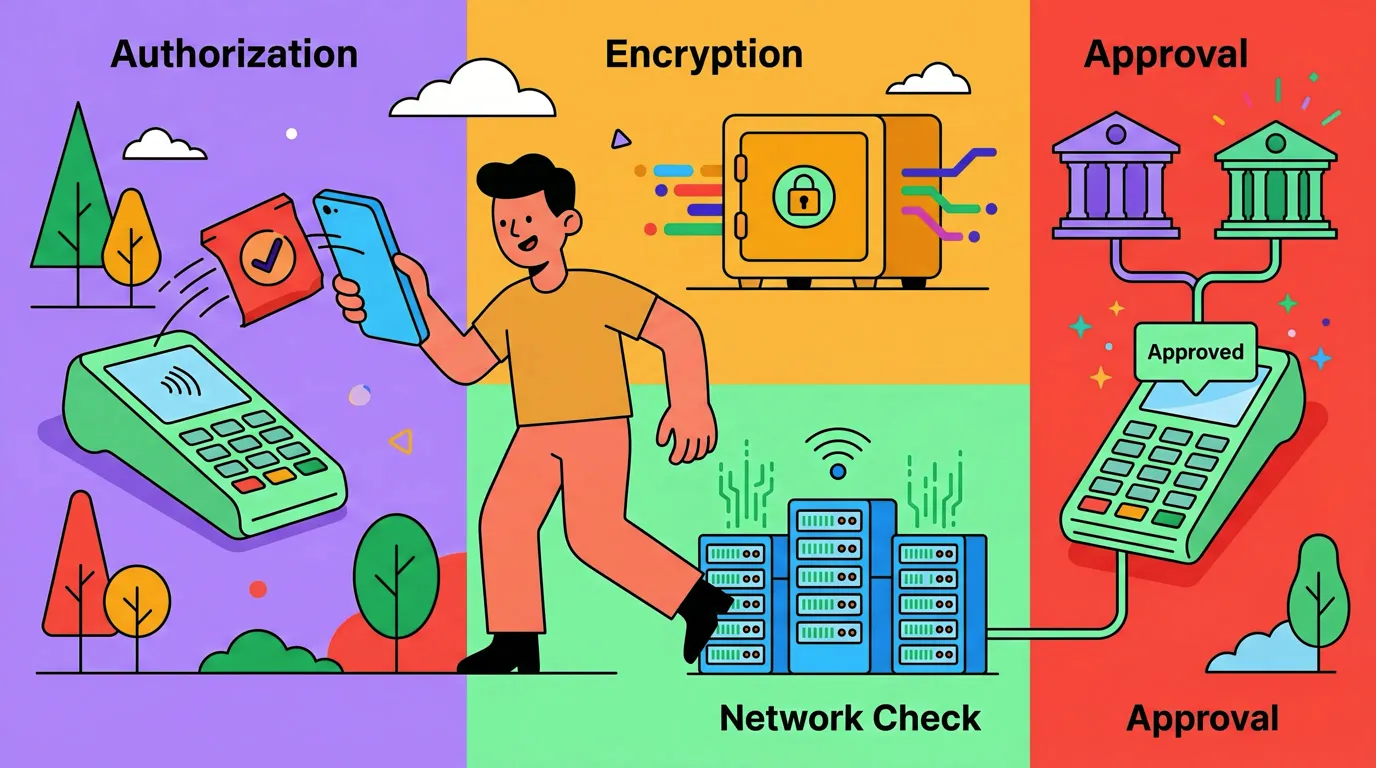
If you tap to pay with Apple Pay, Google Wallet, PayPal, or Cash App, the app remembers what you bought and when. You can scroll back through that list. What you usually cannot do is see your spending sorted into categories, compared against a budget, or totaled across every wallet and card you use. That is the difference between a digital wallet spending tracker and a transaction history. One answers "how am I doing this month." The other just answers "what did I buy."
This guide goes wallet by wallet on exactly what visibility each one gives you in 2026, then covers how to turn that raw history into something you can actually act on. If you want a broader walkthrough first, our guide on how to track e-wallet spending is a good companion.
Transaction history is not spending tracking
It is worth being precise about the difference, because the two get confused constantly.
A transaction history is a chronological list. Date, merchant, amount, maybe a card name. It is accurate and complete for that wallet, and it is genuinely useful for confirming a charge or finding a receipt.
Spending tracking is what you build on top of that list. It includes:
- Categorization, so you can see how much went to groceries versus dining versus transport.
- Budgets, so a category has a target and you can see progress against it.
- Trends, so this month compares to last month.
- Cross-source totals, so spending from every card and wallet rolls up into one number.
Most digital wallets give you the first thing and almost none of the second. A flat list tells you the past happened. It does not tell you whether you are overspending, or where, or what to change. That gap is the whole point of this article.
What Apple Pay and Apple Wallet show
Apple Wallet gives you more than most, but it is uneven, and it depends heavily on whether you have an Apple Card.
With an Apple Card
If you use Apple Card, Wallet shows a weekly and monthly spending wheel with categories like Food, Shops, and Transportation, pulled automatically from the card network. You can switch between Week, Month, and Year views. For a single-card user, this is a real summary.
Even here there are limits. You cannot change a transaction's category or set a budget goal for a category. It is a viewer, not a planning tool. Our deeper look at why the Apple Wallet spending summary is not enough covers exactly where it stops.
With Apple Pay on other cards
This is the part people miss. When you pay with Apple Pay using a non-Apple card, those purchases do not get a categorized summary in Wallet. They appear in the issuing bank's app instead. Apple Wallet keeps a recent transaction list per card, but the categorized spending wheel is an Apple Card feature, not an Apple Pay feature.
So if you pay with three different cards through Apple Pay, you do not get one combined, categorized view. You get fragments.
What Google Wallet, PayPal, and Cash App show
The other major wallets each handle visibility differently, and none of them is a full tracker.
Google Wallet
Google Wallet stores your payment cards and shows recent transactions, but it is built primarily as a payment and pass tool rather than a spending dashboard. There is no robust budgeting or categorization layer. You see what you tapped, not how it adds up.
PayPal
PayPal keeps a detailed activity log and is strong on exports. You can download transaction reports as PDF, CSV, Quicken, or QuickBooks files, covering up to 12 months at a time and up to seven years of history total. The direct CSV download is more limited and the format can be awkward to work with. PayPal shows you the data well. It does not budget or categorize it for you.
Cash App
Cash App has an Activity tab for browsing transaction history, and Cash App Card users get spending insights that group card purchases. You can also export your history as a CSV file and download monthly statements. It is more than a flat list, but the insights stay inside Cash App and cover only Cash App Card activity.
The pattern across all four is the same. Good record keeping, weak analysis, and zero awareness of the money you spent through any other wallet or card.
Do digital wallets track spending across multiple wallets?
This is the question that matters most, and the answer is a flat no.
Each wallet only knows about its own transactions. Apple Wallet does not see your PayPal activity. Cash App does not see your Google Wallet taps. PayPal does not see the card you used in a store.
For most people that is a real problem, because spending is genuinely split. You might tap Apple Pay for coffee, use PayPal for online orders, send rent through one app, and split dinner through another. Each wallet shows a slice. None shows the total.
That fragmentation causes practical issues:
- No accurate monthly number. You cannot say what you spent without manually adding up several apps.
- Easy to undercount. The wallet you check least is the spending you forget.
- No unified categories. "Dining" in one app does not combine with "dining" in another.
- Transfers look like spending. Moving your own money between apps can distort any manual total.
A digital wallet is built to move money, not to give you a single honest picture of it. That is not a flaw in the wallets. It is just outside what they are for.
How to actually track digital wallet spending
If wallets only give you raw history, the job is turning that history into tracking. There are three realistic approaches.
1. Export and reconcile
Most wallets let you export a CSV. PayPal and Cash App both do. You can pull each export into a spreadsheet, categorize rows, and total them. It works, and it is free, but it is slow and you have to repeat it every month for every wallet.
2. Log spending manually
Instead of chasing exports, record each purchase yourself in one place as it happens. This sounds tedious, but it is fast with the right tool and it produces the cleanest data, because you categorize in the moment and nothing gets missed. Our guide on how to track e-wallet spending goes through this in more detail.
3. Use a dedicated expense app
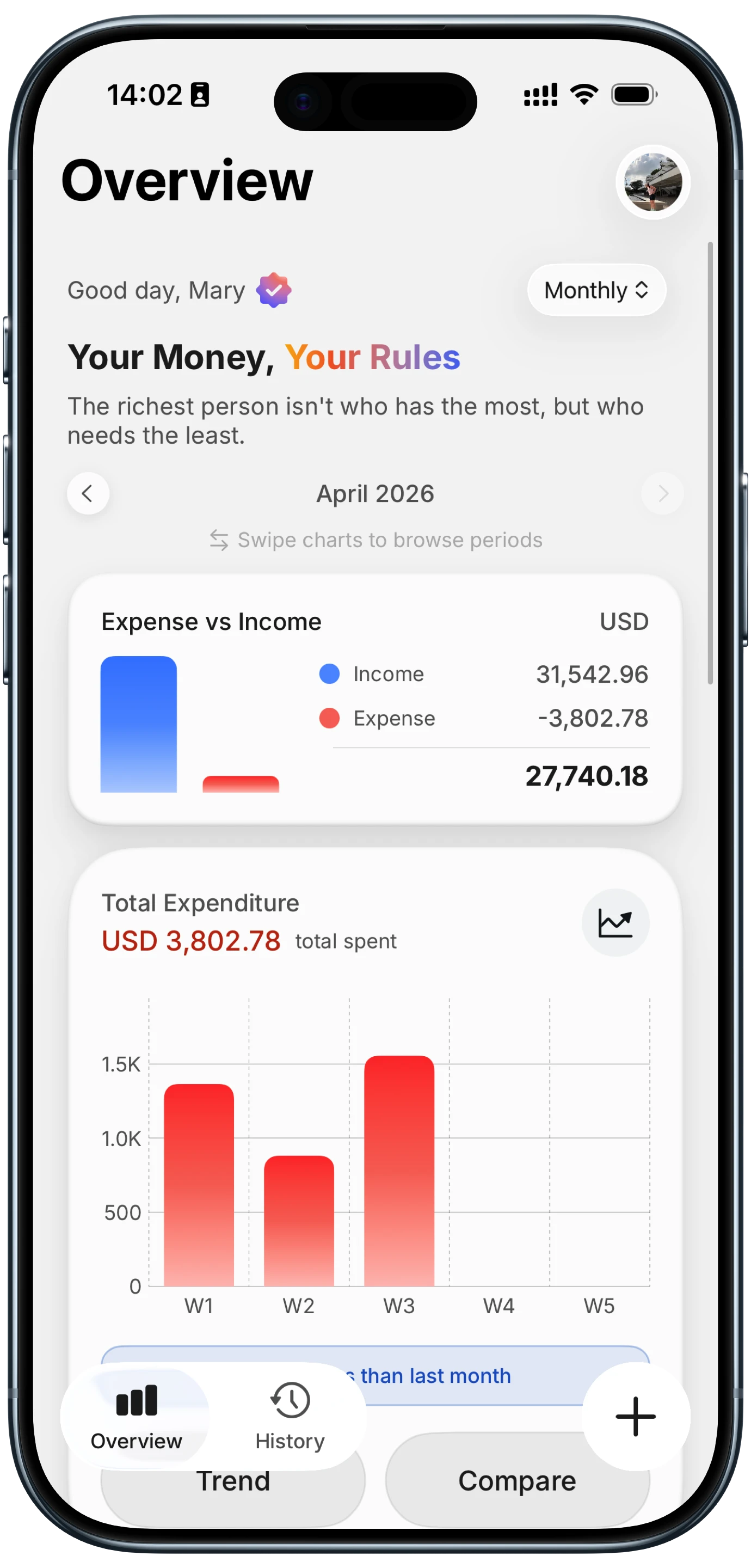
An expense tracker is built for exactly this. You log spending from every wallet and card into one app, it categorizes everything, and it shows budgets, trends, and a combined total. The key is that you log into one app rather than checking one wallet at a time.
For Apple Pay users specifically, there is a way to make manual logging nearly automatic. See our roundup of the best apps to track Apple Pay spending in 2026 and the step-by-step guide on how to automatically track Apple Pay.
Frequently Asked Questions
Does Apple Pay track your spending?
Apple Pay records transactions, but it does not provide full spending tracking. If you use an Apple Card, Apple Wallet shows a categorized weekly and monthly spending wheel for that card. Apple Pay purchases made with other cards do not get that categorized summary in Wallet; they appear in the issuing bank's app. Apple also does not collect your purchase data for its own use, which is good for privacy but means no cross-card analytics.
Can I see all my Apple Pay transactions in one place?
Not in a single categorized view. Apple Wallet shows a recent transaction list for each card, and only Apple Card gets the full spending wheel. Purchases made through Apple Pay with other cards live in their own card lists and in each bank's app. To see every Apple Pay purchase combined and categorized, you need an expense tracker that you log purchases into yourself.
Do digital wallets categorize purchases?
Mostly no. Apple Card inside Apple Wallet is the main exception, with automatic categories, though you cannot edit them. Cash App offers spending insights for its card. Google Wallet and standard Apple Pay do not provide meaningful categorization. PayPal logs and exports transactions but does not categorize them into a budget. For real categories, you need a separate tool.
What is the easiest way to track spending across multiple wallets?
Use one app as your single source of truth and log every purchase into it, regardless of which wallet you paid with. Manual logging is faster than people expect, and on iPhone it can be partly automated for Apple Pay. The alternative, exporting CSVs from each wallet every month, works but is far more tedious and easy to abandon.
The bottom line
Do digital wallets track spending? They track transactions, which is not the same thing. Apple Pay, Google Wallet, PayPal, and Cash App all keep a usable history, and Apple Card adds a basic categorized wheel. None of them gives you budgets, real analysis, or a total across every wallet you use.
If your spending is spread across more than one wallet or card, the only way to see the whole picture is to bring it into one place yourself.
Finny is an AI-assisted expense tracker for iPhone built for that. You log spending by typing, voice, a receipt photo, or a quick chat, and Tap to Track can auto-log your Apple Pay purchases using Apple Shortcuts and NFC, so logging takes a second instead of a chore. Everything lands in one Unified Currency View with custom categories and charts, no bank connection required, and your data stays on your device. The free tier covers unlimited manual tracking. See how it works at getfinny.app.