Moving looks simple on paper: rent a truck, pack some boxes, load, drive, unload. Then the real bills arrive. The truck, the deposit, the packing supplies, the utility connection fees, and the first month of rent all land within the same few weeks, and suddenly the "cheap" move costs far more than you planned. If you want to budget for a move without draining your savings or reaching for a credit card at the worst possible moment, you need to see every cost before you commit, not after the truck is loaded.
The good news is that moving costs are predictable once you break them into categories. In this guide we will separate the move itself from the move-in costs, walk through the numbers most people forget, and show you how to track every expense so your budget survives contact with reality.
What It Really Costs to Move: A Price Breakdown
The first thing to understand is that "moving cost" is not one number. It splits into two big questions: how far are you going, and who is doing the heavy lifting.
Local versus long-distance. A local move (usually defined as under 50 miles or within the same metro area) is almost always priced by the hour. A standard two-person crew runs roughly $100 to $200 per hour, and a typical three-bedroom local move takes about 6 to 8 labor hours. The national average for a local move sits around $1,400, with most falling in the $800 to $2,500 range.
Long-distance moves work differently. Once you cross state lines or go beyond about 100 miles, movers usually switch to a flat rate based on the weight of your belongings and the distance traveled. These moves routinely land between $3,000 and $7,000 for a two to three bedroom home, and a long haul of 1,000 miles or more sits at the high end of that range.
DIY versus professional movers. Renting a truck and doing it yourself is the cheapest option on the sticker, but it is rarely free. You still pay for the truck rental, mileage, fuel, moving blankets, a dolly, and often an extra day of rental if loading runs long. Professional movers cost more upfront but fold labor, equipment, and transport into one price.
Here is a simple way to compare your options:
| Option | Typical distance | What you pay for | Rough cost feel |
|---|---|---|---|
| Local move, DIY | Under 50 miles | Truck rental, mileage, fuel, supplies | Lowest sticker, most labor on you |
| Local move, movers | Under 50 miles | Hourly crew plus supplies | Around $800 to $2,500 |
| Long-distance, DIY | Over 100 miles | Truck, fuel, lodging, days of rental | Moderate, but time-heavy |
| Long-distance, movers | Over 100 miles | Flat rate by weight and distance | Often $3,000 to $7,000 |
Prices vary by season, city, and how much stuff you own, so treat these as starting points and always get written quotes.
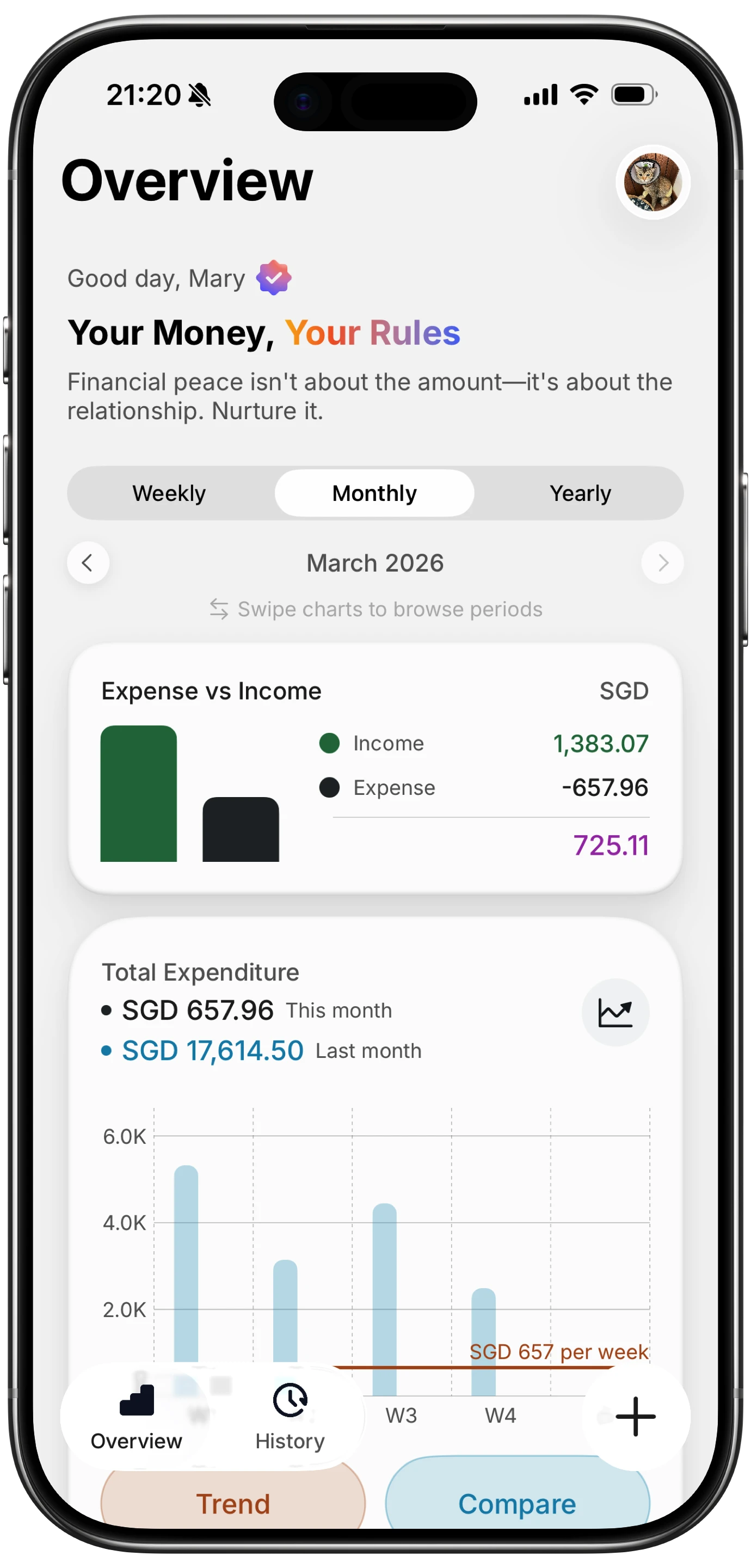
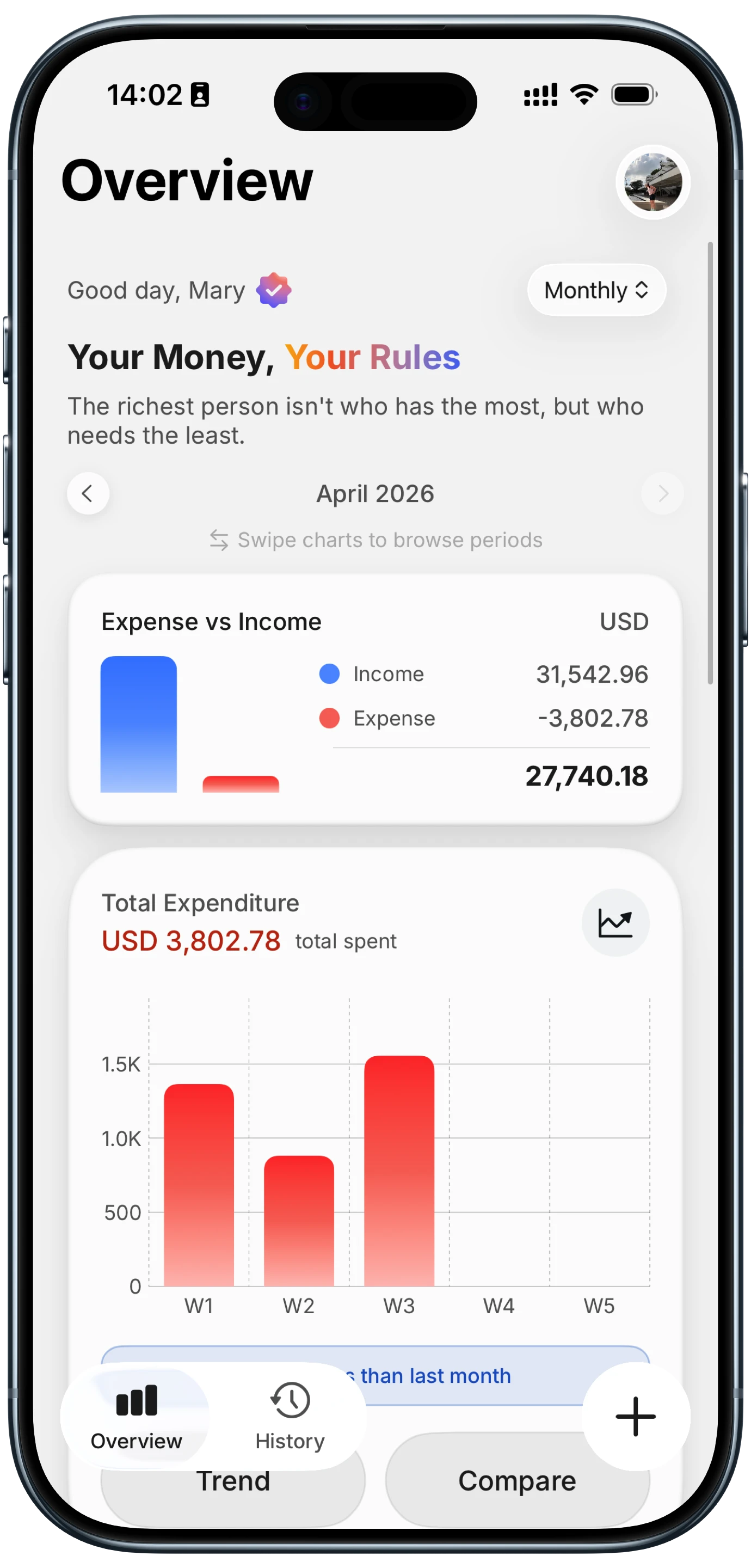
Finny app's Overview feature
Once you have quotes, drop each category into a simple chart so you can see where the money actually goes. Seeing your move as a set of columns, truck here, deposit there, supplies over there, makes it obvious which line item is quietly eating your budget.
Upfront Costs of a New Place
The move itself is only half the story. The other half is getting into your new home, and this is where a lot of budgets crack.
Most landlords ask for some combination of the following before you get the keys:
- First month's rent, almost always due at signing.
- Security deposit, typically equal to one month's rent, with a national average closer to 1 to 1.5 months.
- Last month's rent, required in some states and by some landlords, paid upfront at signing.
- Application fees, usually $25 to $100 per application, and often non-refundable even if you are turned down.
- Pet deposits and pet rent if you have animals, commonly a $200 to $500 deposit plus $25 to $100 per pet each month.
Add those together and the pattern is clear: move-in day can easily ask for two to three times your monthly rent all at once. On a $1,500 apartment, that can mean $3,000 to $4,500 before you have bought a single box.
Rules differ by state. Some places cap how much a landlord can collect upfront, and deposit laws change over time, so confirm the specifics for your city before you sign. Budget for the full upfront amount, then treat any cap as a pleasant surprise rather than a plan.
Hidden Costs People Forget When They Budget for a Move
This is the category that blows budgets. Surveys consistently find that most movers end up paying for something they did not expect, and a large share go over budget entirely. Experts often suggest padding your estimate by 15% to 20% just to cover the surprises.
Here are the costs that quietly pile up:
- Utility setup. Connection fees and deposits for electricity, gas, water, and internet can total $200 to $600. New service sometimes needs an activation fee, a technician visit, or a new router.
- Overlap. If your lease dates do not line up, you may pay rent or utilities on two places at once for a week or two.
- Packing supplies. Boxes, tape, bubble wrap, mattress bags, and labels run anywhere from $100 for a small apartment to $400 for a full house.
- Moving insurance. The default coverage most movers include pays only a small amount per pound, which barely covers a laptop. Full value protection costs more but actually replaces what breaks.
- Cleaning. A move-out clean to protect your old deposit, plus supplies for the new place.
- Food and travel. Takeout on packing nights, gas or flights for a long move, and possibly a hotel along the way.
- Time off work. Unpaid days for packing, driving, and unpacking are a real cost even if no one sends you a bill.
None of these are huge on their own. Together, they are often the difference between a move that stays on budget and one that does not.
Build a Moving Fund Into Your Budget for a Move
Once you know the full picture, give it a dedicated pool of money. A moving fund is a small sinking fund: a savings target you fill up gradually for a known, one-time expense so the bill does not hit your regular spending all at once.
A simple way to build one:
- Total your estimate. Add up the move, the upfront rental costs, and the hidden costs, then add a 15% to 20% buffer on top.
- Divide by your runway. If you are moving in four months, split the total into four monthly targets.
- Automate it. Move that amount into a separate savings pot on payday so you are not relying on willpower.
- Protect your safety net. Keep your moving fund separate from your emergency fund. The move should not eat the cushion you keep for actual emergencies.
If your income is uneven, base each month's contribution on a percentage of what you actually earn rather than a fixed number. Our guide on how to budget with variable income walks through that approach in detail.
Track Every Moving Expense as It Happens
A budget is only as good as the follow-through. Moving costs arrive in a messy stream over several weeks, a deposit here, a hardware-store run there, a tank of gas on the drive, and if you wait until the end to add it all up, you will have lost the receipts and the plot.
The fix is to log each expense the moment it happens. This is where a fast tracker earns its keep. With Finny, you can jot down a cost in seconds while you are standing in the checkout line, then review your running total against your moving budget any time.
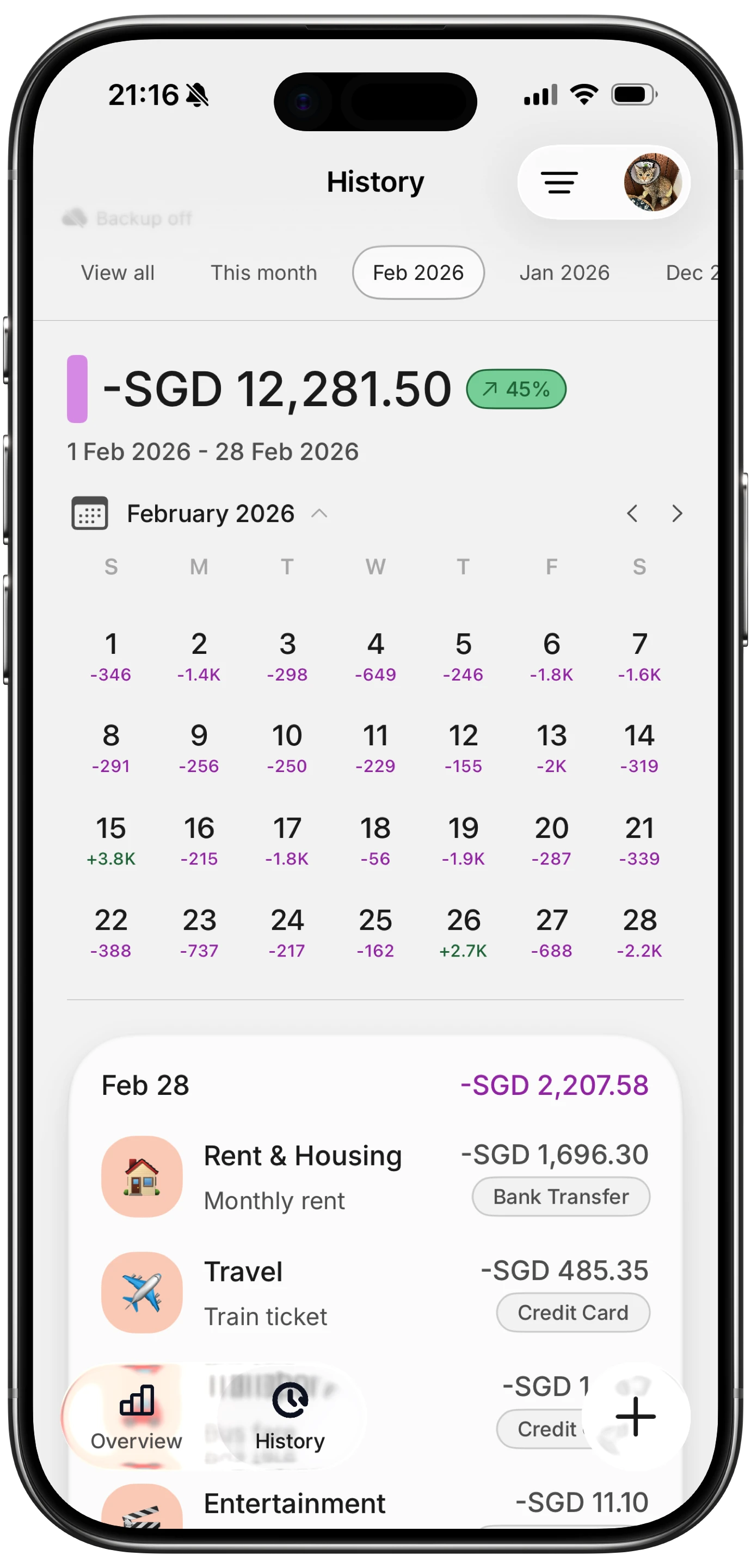
Finny app's History calendar feature
A clean history view turns your move into a story you can actually read: truck rental on the 3rd, deposit on the 5th, boxes on the 8th. When every entry has a category and a date, you can spot overspending early, while you still have time to adjust, instead of discovering it after the fact.
A few habits that keep tracking painless:
- Use one category for the move. Tag every move-related cost the same way so you can see the running subtotal at a glance.
- Capture receipts on the spot. Snap them before they end up crumpled in a box.
- Check the total weekly. A two-minute review each week beats one panicked reckoning at the end.
Finny's free plan covers manual tracking, custom categories, and spending charts, so you can run your whole moving budget without paying anything. If you want to speed things up, Finny Pro (a low monthly or yearly price) adds AI input, so you can just type "moving truck 240" or snap a receipt and let the app fill in the details for you to review before saving. For a broader primer, see our guide on how to track expenses.
A Special Note on International or Cross-Currency Moves
Moving abroad adds a layer that domestic moves never touch: currency. Your shipping quote might be in one currency, your new deposit in another, and your income in a third. If you track everything in a single home currency, your numbers will drift as exchange rates move, and you will underestimate the true cost.
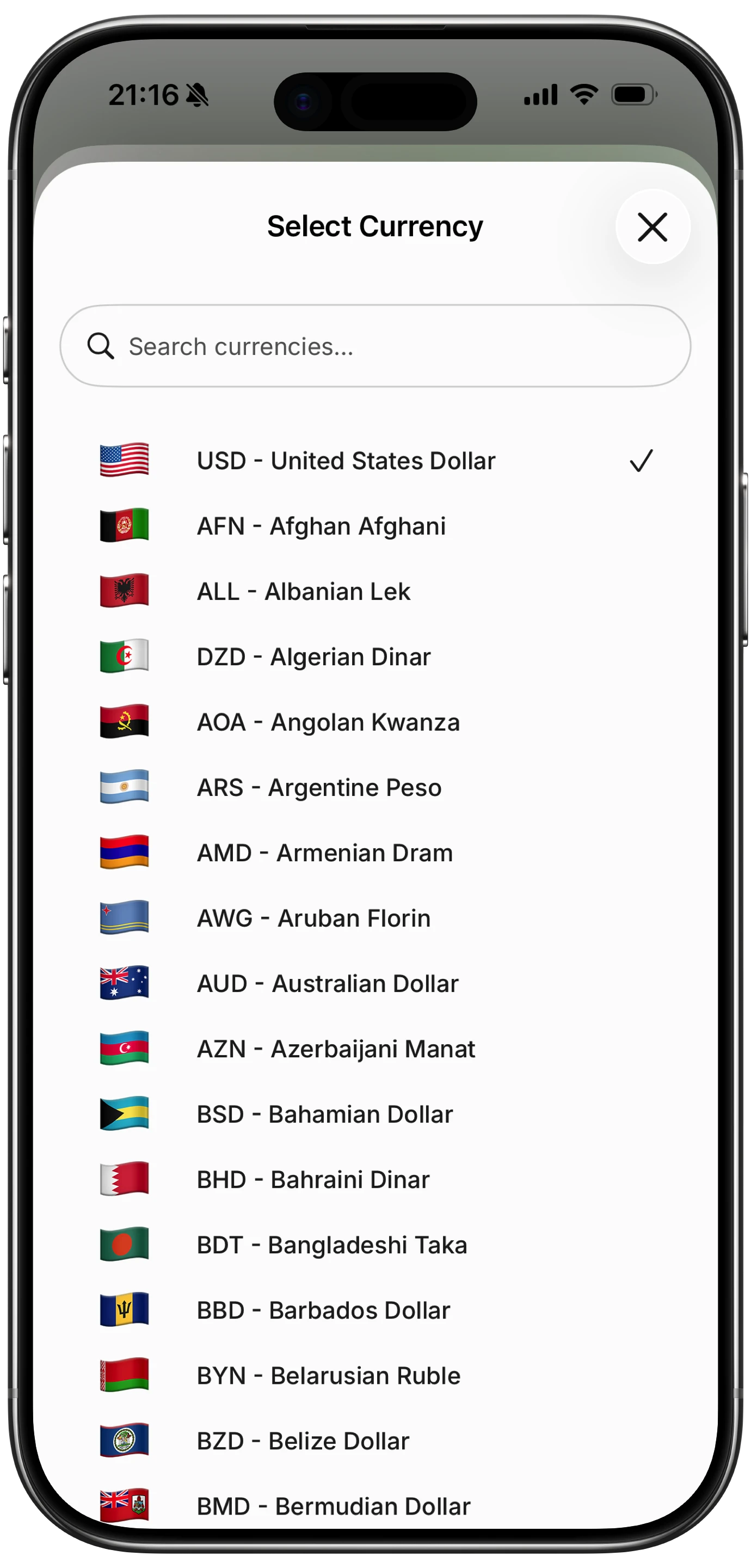
Finny app's multi-currency feature
This is where multi-currency tracking matters. Finny supports 150+ currencies and works offline, which is genuinely useful when you are setting up a new life in a new country and do not yet have reliable data or a local bank account. There is no bank login required and your data stays on your device, so you can start logging expenses on day one without waiting for anything to connect.
A few things to plan for on an international move:
- Exchange rate swings. The cost of your move can change between the quote and the payment. Track conversions as you make them.
- Foreign transaction fees. Cards can quietly add a few percent to every purchase abroad. Our guide on how to avoid foreign transaction fees covers how to dodge them.
- Two-currency budgeting. You may still be paying bills back home while starting fresh abroad. For the full workflow, read our guide to multi-currency management.
Ready to Budget Your Move With Confidence?
The best time to build your moving budget is before you sign anything. List the move, the move-in costs, and the hidden extras, add a buffer, and start tracking every dollar as it goes out. Download Finny and set up your moving fund today, so your next move is a fresh start, not a financial surprise.
FAQ: How to Budget for a Move
How much should I budget for a move?
It depends on distance and whether you hire movers. A local move often runs $800 to $2,500, while a long-distance move with professionals commonly lands between $3,000 and $7,000. On top of that, add your upfront rental costs (first month, deposit, and sometimes last month) plus a 15% to 20% buffer for hidden expenses.
What is the cheapest way to move?
A local, do-it-yourself move with a rented truck is usually the cheapest on paper. Just remember the extras: fuel, mileage, packing supplies, and possibly a second rental day. If your time is tight or the distance is long, the labor you save with movers can be worth the higher price.
How far in advance should I start saving for a move?
As early as you can. Once you know your target date, total your estimated costs, add a buffer, divide by the number of months until moving day, and save that amount automatically each payday. Even a two to three month runway makes the upfront bills far easier to absorb.
What upfront costs do landlords usually charge?
Most ask for the first month's rent and a security deposit (often one month, sometimes up to 1.5 months). Some also require last month's rent upfront, an application fee of $25 to $100, and pet deposits or pet rent if you have animals. Rules vary by state, so confirm the caps in your area.
How do I track moving expenses in different currencies?
Use a tracker that supports multiple currencies natively so your totals stay accurate as exchange rates shift. Finny supports 150+ currencies and works offline, so you can log costs in any currency the moment they happen, then review your true total in your home currency.
Conclusion
Moving is one of those expenses that feels small until every bill arrives at once. The way to stay in control is to plan for all of it: the move itself, the upfront cost of the new place, and the hidden extras that most people forget. Break the total into a monthly savings target, keep it separate from your emergency fund, and track each expense as it lands so nothing slips through. Do that, and you will budget for a move that ends with keys in your hand and your savings still intact.