A new baby brings a lot of joy and, if we are honest, a wave of new bills that can feel overwhelming before you even leave the hospital. Learning how to budget for a new baby is one of the kindest things you can do for your future self, because it turns a blurry pile of "someday" costs into a plan you can actually follow. The good news is that most baby expenses are predictable. Once you separate the big one-time purchases from the steady monthly costs, the numbers stop feeling scary and start feeling manageable.
This guide walks you through the full picture: what to expect in the first year, how to build a savings buffer before your due date, how to reshape your monthly budget, and how to keep an eye on spending once your little one arrives. Take it one section at a time. You do not need to solve everything today.
One-Time Setup Costs vs Ongoing Monthly Costs
The single most useful move when you budget for a new baby is to split expenses into two buckets: one-time setup costs and recurring monthly costs. One-time costs are the nursery, the gear, and the delivery. Recurring costs are the diapers, the feeding, and (for many families) childcare that shows up month after month.
Estimates vary widely by location and lifestyle, but published 2026 figures put the first year somewhere in the range of roughly $20,000 to $28,000 for many families, with some sources citing an even broader span depending on childcare and medical bills. Treat these as planning anchors, not promises. Your real number depends on where you live, your insurance, and the choices you make.
Here is a simple way to see both buckets side by side:
| Category | One-time or recurring | Estimated range |
|---|---|---|
| Labor and delivery (out of pocket) | One-time | $5,000 to $15,000 |
| Nursery furniture (crib, dresser, glider) | One-time | $500 to $2,500 |
| Car seat and stroller | One-time | $200 to $1,200 |
| Starter gear (bassinet, bottles, carrier, clothes) | One-time | $1,000 to $4,500 |
| Diapers and wipes | Recurring | $80 to $100 per month |
| Formula (if used) | Recurring | $40 to $300 per month |
| Childcare (infant) | Recurring | $650 to $1,500 per month |
| Health, clothing, and extras | Recurring | Varies by family |
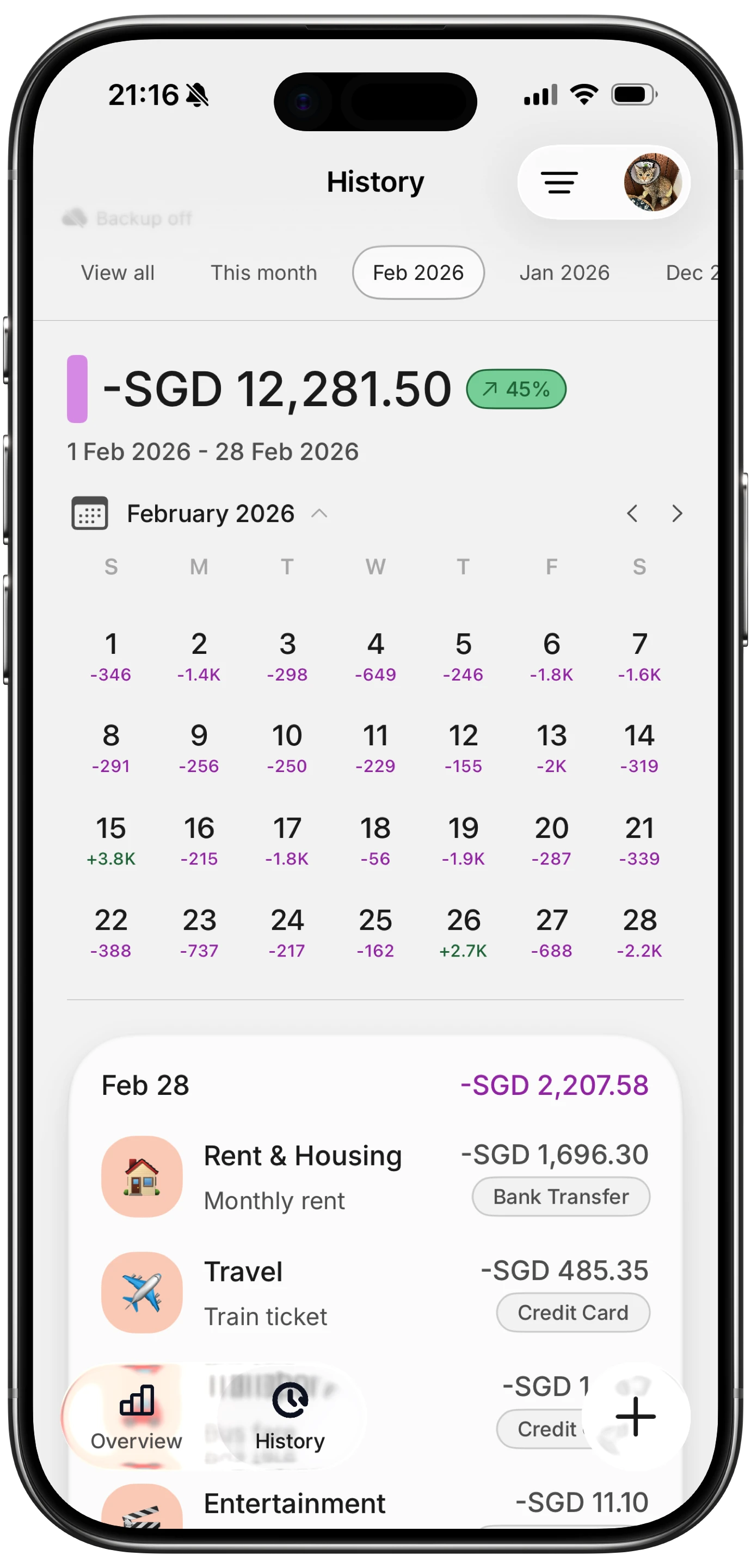
Finny app's History calendar feature
Notice how lopsided the two columns are. One-time costs feel huge in the moment, but you pay them once. Recurring costs look small line by line, yet they quietly add up to the largest share of the year. That difference shapes how you save. One-time costs call for a lump sum set aside in advance, similar to a sinking fund. Recurring costs call for a permanent change to your monthly budget.
Build a Baby Fund Before the Due Date
The calmest new parents are usually the ones who started saving months before the birth. A dedicated baby fund gives you a cushion for the one-time costs and a bridge across any dip in income during parental leave.
Financial guides commonly suggest building toward a target in the range of $20,000 to $25,000 before a first child, layered on top of a standard emergency fund that covers three to six months of living expenses. That figure sounds enormous, so break it down:
- Pregnancy and delivery: Set aside your expected out-of-pocket amount. Call your insurer and ask for an estimate based on your plan and hospital.
- Nursery and gear: Add up the one-time items you actually plan to buy, not the full catalog.
- Income buffer: If parental leave is unpaid or partially paid, save enough to cover the gap for the weeks you will be out.
You do not need the whole amount in one deposit. Pick a monthly savings number you can sustain, automate a transfer on payday, and let it grow. If you are still filling a general safety net, our guide on how to build an emergency fund fast shows how to accelerate without burning out. Starting early is the real trick: even a modest amount set aside each month for six to nine months adds up to a meaningful buffer by the due date.
Adjust Your Monthly Budget for a New Baby
Once the baby arrives, your monthly budget needs a permanent update, not a temporary patch. This is the step where many families feel the pinch, because recurring costs like diapers, feeding, and childcare become fixed parts of life.
Start by listing your current monthly spending, then add the new baby line items on top:
- Diapers and wipes: Budget roughly $80 to $100 per month. Newborns can go through up to a dozen diapers a day.
- Feeding: Formula can run anywhere from about $40 to $300 per month depending on brand and needs. Breastfeeding lowers this cost, though it may add expenses for pumps and supplies.
- Childcare: Often the single largest line, ranging from around $650 to $1,500 per month for infant care, and higher in expensive metro areas.
- Health and clothing: Copays, medicines, and the steady stream of larger sizes as your baby grows.
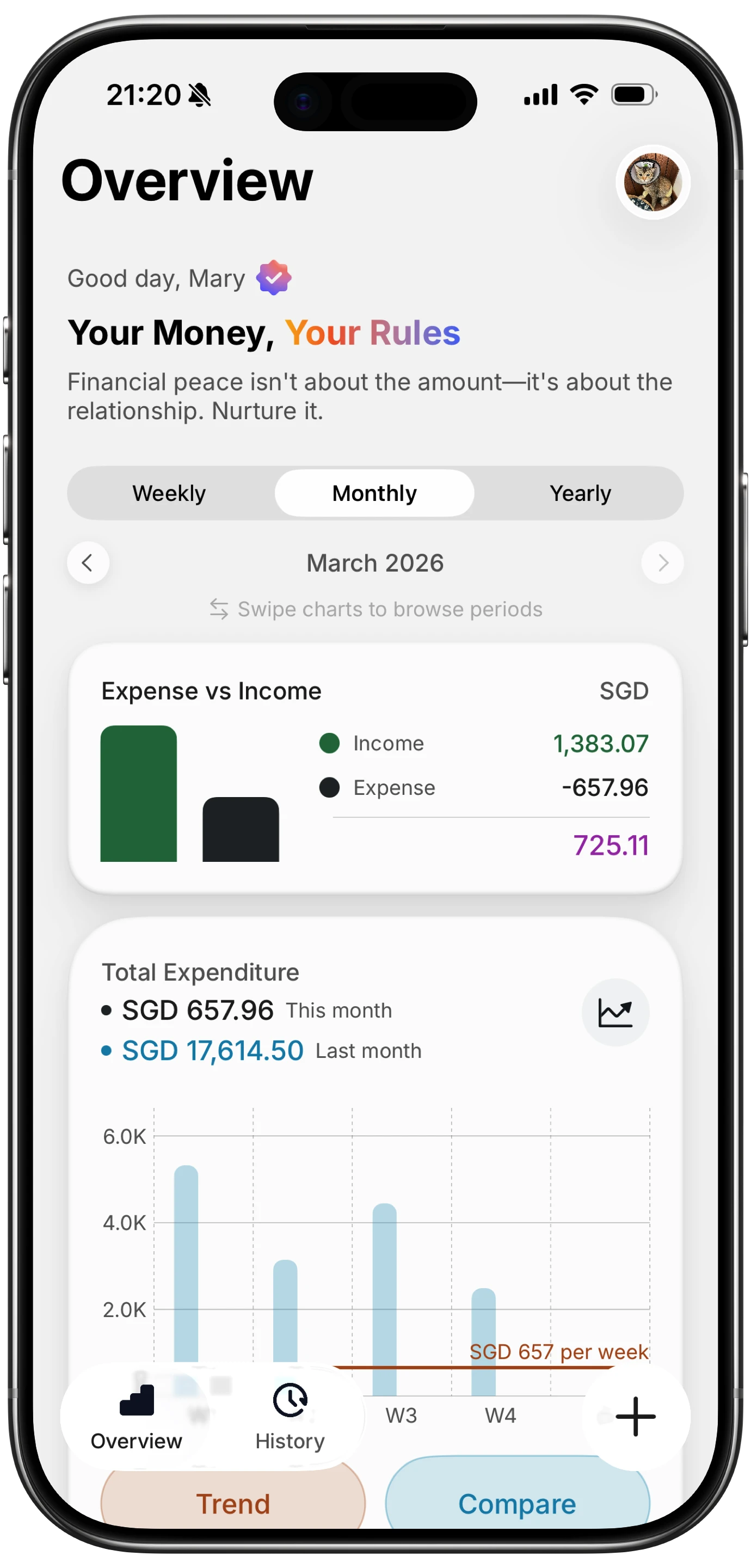
Finny app's Overview feature
A framework helps here. Many parents lean on the 50/30/20 rule as a starting point, then adjust the percentages because a baby pushes needs (like childcare) higher and squeezes wants for a while. That trade-off is normal and temporary. If your household income moves around, our guide on budgeting with variable income explains how to plan around your lowest reliable month rather than your best one. The goal is not a perfect budget. It is a realistic one you can actually keep.
Childcare and Healthcare Planning
Two categories deserve extra attention because they carry the most uncertainty: childcare and healthcare.
Childcare is worth researching before the baby arrives, not after. Costs swing dramatically by region and by care type. In-home daycare tends to cost less than a center, and a nanny or nanny share usually costs the most. Waitlists for infant spots can be long, so pricing options early gives you time to compare and to build the number into your budget. Ask about registration fees, deposits, and whether the quoted rate is weekly or monthly so you are comparing apples to apples.
Healthcare planning starts with your insurance. A few questions to ask now:
- What is your out-of-pocket maximum for the year of delivery?
- How soon must you add the baby to your plan after birth?
- Which pediatricians and hospitals are in network?
- Does your employer offer an FSA or HSA that can cover eligible baby medical costs with pre-tax dollars?
Adding a baby to your insurance is usually time-sensitive, so mark the deadline the moment you know it. A short call to your provider today can prevent a large surprise bill later.
Ways to Save When You Budget for a New Baby
Budgeting for a baby is not only about spending more. It is also about spending smarter. Small choices add up over a full year.
- Accept hand-me-downs. Clothes, bassinets, and toys from friends and family are gently used and free. Babies outgrow everything quickly.
- Buy big items secondhand, safely. Cribs and dressers hold up well used. Always buy car seats new, though, since safety and expiration dates matter.
- Register strategically. Put the expensive one-time items on your registry so gifts cover them instead of your budget.
- Consider feeding costs honestly. Where it works for your family, breastfeeding can save a significant amount over the first year, with some estimates around $1,500.
- Buy diapers in bulk and use store brands. The savings per change are small, but multiplied by thousands of diapers, they are real.
- Skip the trend gear. Focus on the handful of items you will use daily. Many novelty products get used a few times and stored forever.
The families who save the most are rarely the most frugal. They are the ones who track what they actually buy, spot the leaks, and adjust. If you are budgeting for other big life events too, the same playbook applies whether you are budgeting for a move or budgeting for groceries for a growing household.
Track Your Spending in the First Year
A budget is a plan. Tracking is how you find out whether the plan is working. In the newborn haze, spending can drift without anyone noticing, so a light-touch tracking habit is worth its weight in sleep.
The point is not to log every penny with perfect discipline. It is to capture enough that you can see patterns: which weeks ran high, whether formula is costing more than you guessed, and how much childcare really takes. Even a rough record beats a foggy memory. Our guide on how to track expenses covers a few gentle systems for busy people.
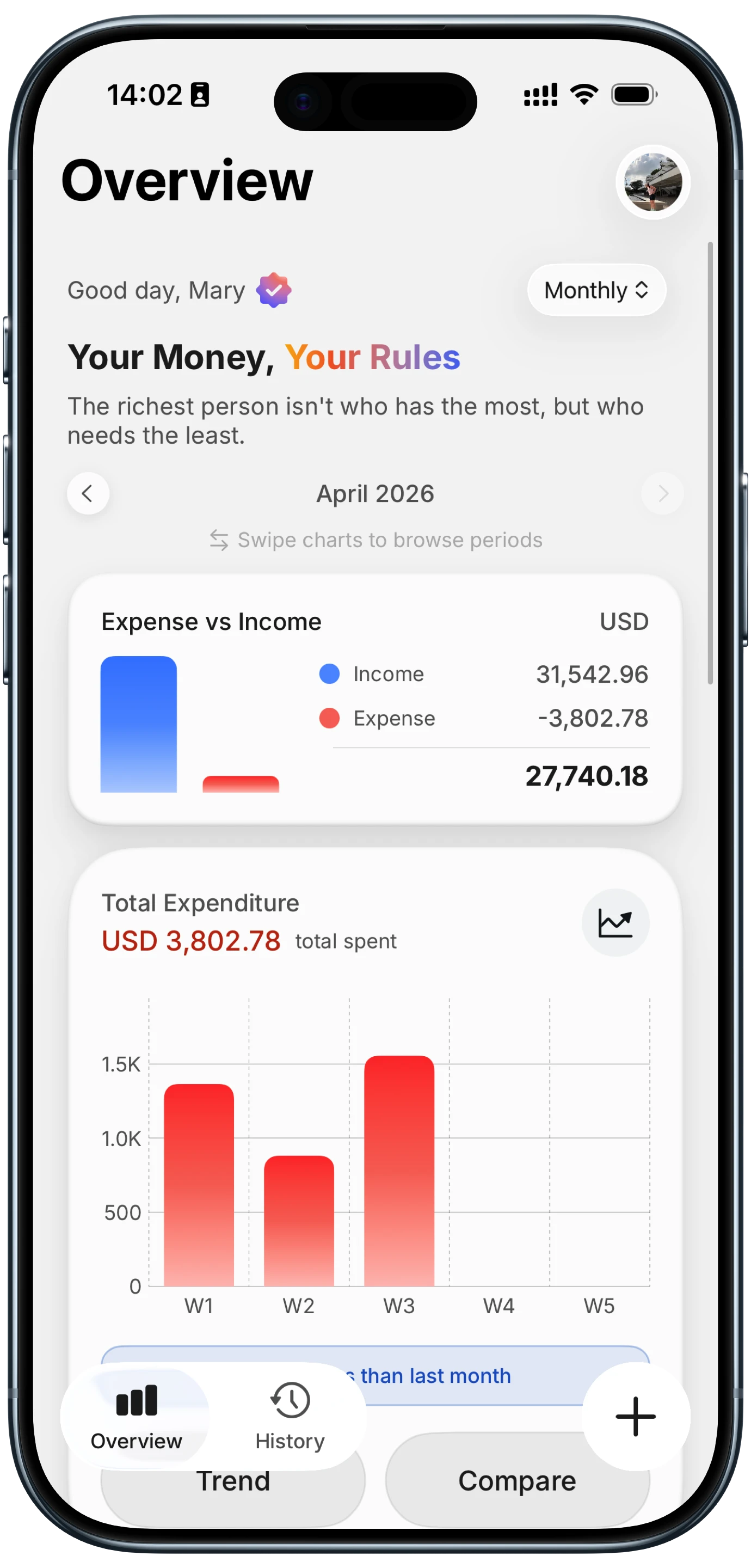
This is where a simple app helps more than a spreadsheet you will never open at 3 a.m. Finny is an AI-powered expense tracker for iPhone built for exactly these moments. You can jot a cost in seconds by typing something like "diapers 40," speaking it out loud, or snapping a receipt, then reviewing it before it saves. Custom categories let you set up buckets like "diapers," "childcare," and "baby gear," and the spending charts show where the money actually went.
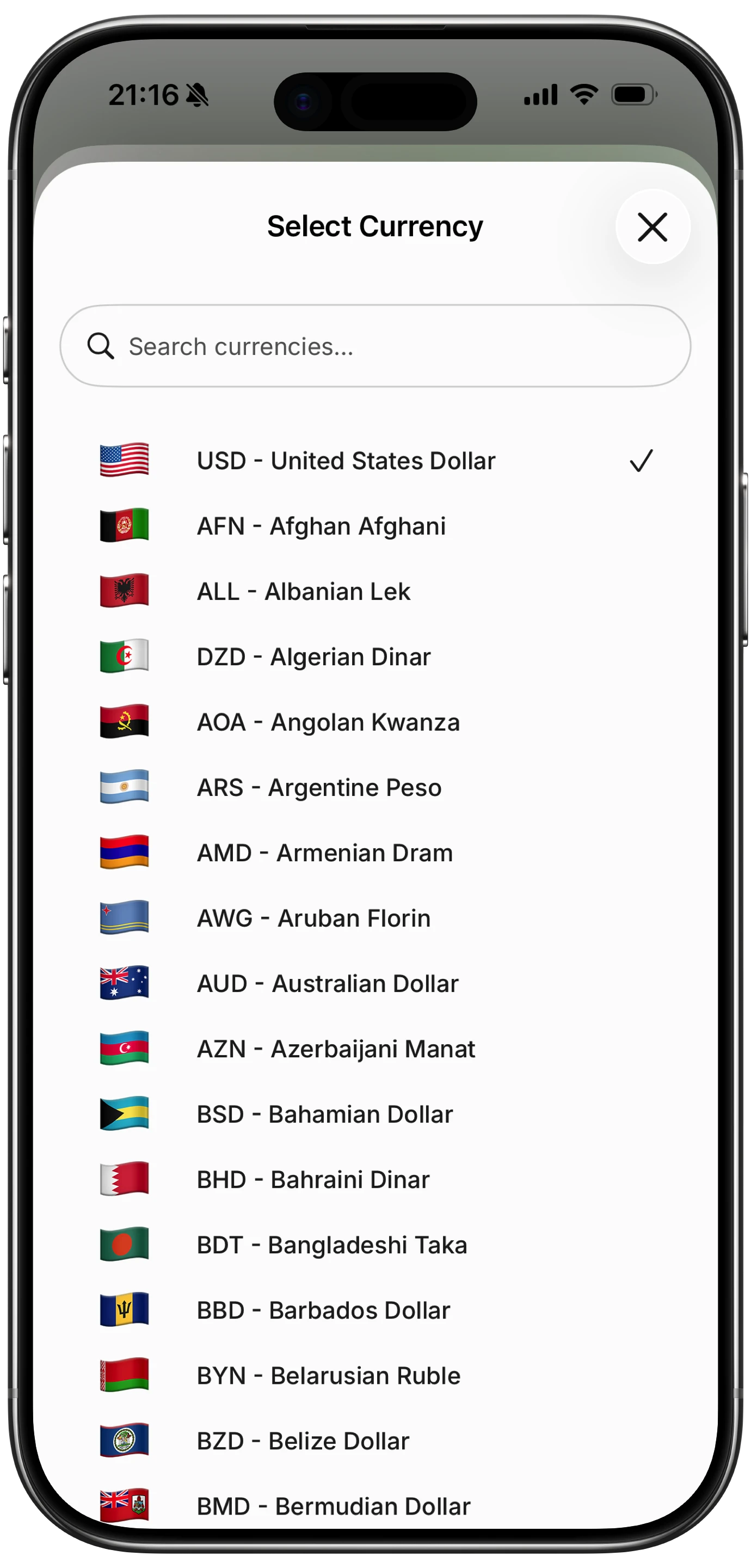
Finny app's multi-currency feature
Finny keeps a free forever core with manual tracking, custom categories, spending charts, support for 150+ currencies, and offline access, which is handy if you travel to see family with the new baby. There is no bank login required and your data stays on your device. If you want the faster input, Finny Pro costs a low monthly or yearly price and unlocks AI input, batch receipt scanning, and cloud sync. Whichever way you track, the win is the same: a clear picture of your first year, updated in seconds, so your budget stays honest.
Frequently Asked Questions
How much should I save before the baby arrives?
Many financial guides suggest building toward roughly $20,000 to $25,000 before a first child, on top of a standard emergency fund covering three to six months of expenses. Your target depends heavily on your insurance, your leave situation, and local childcare costs, so use that range as a starting point and adjust it to your own numbers.
What is the biggest baby expense to plan for?
For most families, childcare is the largest recurring cost, often ranging from about $650 to $1,500 per month for infant care and higher in expensive cities. It is worth researching options and prices well before your due date.
How do I budget for a new baby if my income is irregular?
Plan around your lowest reliable month rather than your best one, and lean harder on your savings buffer to smooth out the gaps. Our guide on budgeting with variable income walks through this approach in detail.
One-time or recurring: which costs surprise parents most?
Recurring costs usually surprise people most. One-time purchases like the crib and car seat feel dramatic, but you pay them once. Diapers, feeding, and childcare are smaller line by line yet add up to the largest share of the first year.
Do I need a separate baby fund or just my emergency fund?
Keep them separate. Your emergency fund covers surprises like job loss or a medical emergency, while a baby fund covers the known, planned costs of pregnancy, gear, and any income dip during leave. Mixing them makes it hard to know what money is available for what.
Bringing It All Together
Learning how to budget for a new baby comes down to a few calm steps: split your costs into one-time and recurring buckets, build a savings buffer before the due date, reshape your monthly budget for the new fixed costs, and keep a light tracking habit through the first year. You will not get every number right, and that is fine. A budget you can actually follow beats a perfect one you abandon.
Start small this week. Pick your savings number, set up your baby categories, and log the first few expenses. If you want a simple, private way to see where the money goes, download Finny and track your first year in seconds. Your future, well-rested self will thank you.