Weddings are joyful, and they are also one of the easiest ways to overspend without realizing it. Deposits go out months apart, small upgrades feel harmless in the moment, and vendor invoices arrive with fees you did not see coming. Learning how to budget for a wedding is really about giving yourself a clear number, a monthly plan to reach it, and a habit of tracking every payment so nothing slips through. Do those three things and you can enjoy the planning instead of dreading the credit card statement.
This guide covers setting a realistic total, breaking it into categories, building a sinking fund, tracking vendor balances, and spotting the hidden costs that trip couples up. The goal is not to spend less than you want. It is to spend on purpose.
Start With a Realistic Total Budget
Before you tour a single venue, decide what the whole event can cost. According to The Knot's 2026 Real Weddings Study, which surveyed more than 10,000 couples married in 2025, the average US wedding came in around $34,200, or roughly $292 per guest. That is an average, not a target. Plenty of couples celebrate beautifully for a fraction of it, and others spend far more. Your number should reflect your own savings, timeline, and priorities, not a national headline.
To land on a figure that fits your life:
- Add up what you can save. Look at how much you can set aside each month and multiply by the months until the wedding.
- Include any contributions. If family is helping, get a real number and treat it as part of the total, not a mystery cushion.
- Subtract a buffer first. Set aside 5 to 10 percent of your budget before you allocate anything, so surprises do not force you into debt.
- Anchor to guest count. Because so much of the cost scales with headcount, your guest list is a budgeting decision as much as a social one. Trimming twenty guests can save more than any single vendor negotiation.
A helpful reframe: a wedding is a large, planned purchase with a deadline, much like a down payment or a big trip. That is exactly what a sinking fund is designed for, and we will build one below.
Typical Cost Categories and a Percentage Breakdown
Once you have a total, the next step is dividing it into categories. Wedding planners tend to recommend similar ranges, and the pattern is consistent: venue and catering take the largest bite, usually close to half, while everything else fills in around it. Use the table below as a starting point, then bend the percentages toward what matters most to you.
| Category | Typical share | Notes |
|---|---|---|
| Venue and catering | 40% to 50% | Almost always the biggest line. Includes food, bar, and rentals like tables and chairs |
| Photography and videography | 10% to 15% | The lasting record of the day, so many couples protect this one |
| Entertainment (DJ or band) | 8% to 12% | Ceremony music plus reception dancing |
| Flowers and decor | 8% to 10% | Bouquets, centerpieces, lighting, and rentals |
| Attire and beauty | 5% to 8% | Dress, suits, alterations, hair, and makeup |
| Stationery | 2% to 3% | Save the dates, invitations, programs, signage |
| Transportation | 2% to 3% | Getaway car and guest shuttles |
| Rings | 2% to 3% | Wedding bands, often separate from the engagement ring |
| Buffer and miscellaneous | 5% or more | Fees, tips, favors, and the surprises below |
The point of the table is not to hit each percentage exactly. It is to make trade-offs visible. If you want a live band and a longer flower budget, something else has to shrink. Deciding that on a spreadsheet in month one is far less stressful than discovering it on a final invoice in month ten.
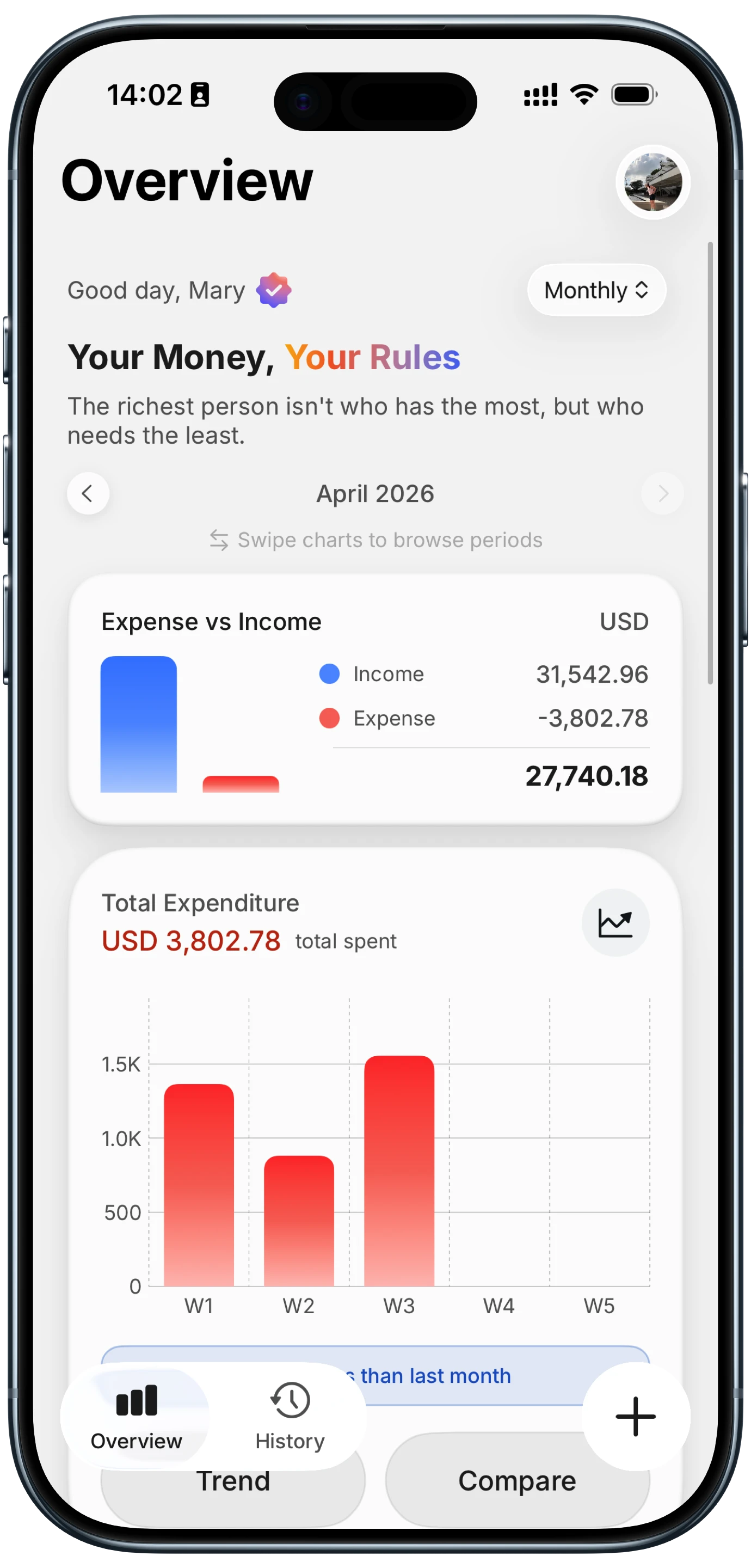
Once your categories are set, it helps to see spending by category as it happens. A simple category view turns a wall of receipts into a clear picture of where the money is going.
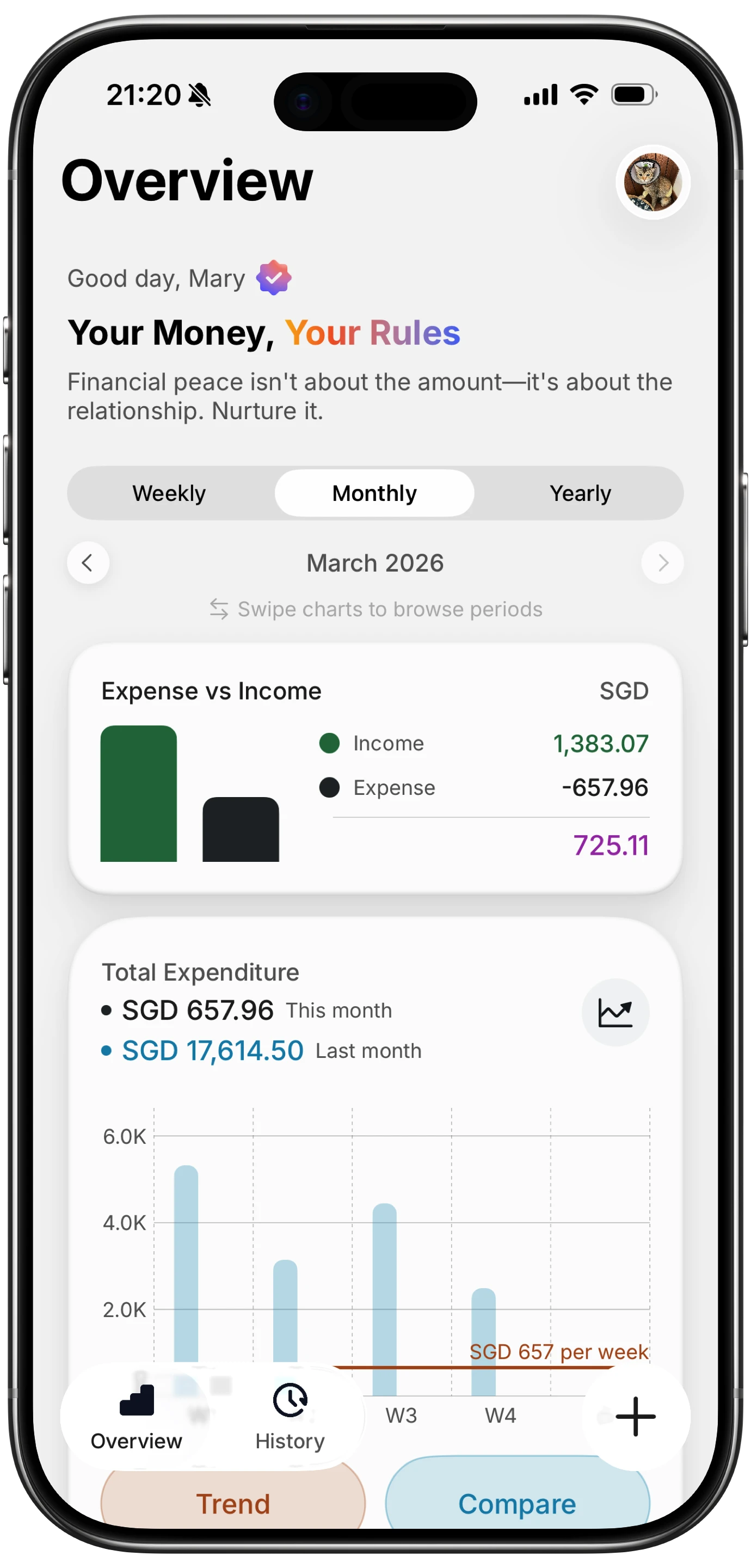
Finny app's Overview feature
If dividing a large goal into buckets appeals to you, the envelope budgeting method uses the same idea, giving each category its own limit so overspending in one area does not quietly drain another.
Build a Wedding Sinking Fund and Save Monthly
A sinking fund is money you save gradually toward a known future expense. For a wedding, it is the difference between paying vendors from cash you already set aside and scrambling to cover deposits as they land.
The math is refreshingly simple. Take your total budget, subtract any money you already have or that family is contributing, and divide the rest by the number of months until the wedding. That is your monthly savings target.
- Open a separate account. Keep wedding savings out of your everyday checking so you are not tempted to dip in, and so the balance always reflects the real number.
- Automate the transfer. Move the monthly amount the day after payday. Money you never see in checking is money you do not miss.
- Name the goal. Whether it is a labeled savings account or a category in your tracker, seeing "Wedding" attached to the balance keeps it real.
- Protect the rest of your money. A wedding fund should sit alongside, not instead of, your emergency fund. Do not empty your safety net for the reception.
If your monthly target feels impossible against the timeline, you have three levers: extend the date, raise the monthly amount, or lower the total. Adjusting early is painless. Adjusting after contracts are signed is not.
Track Every Deposit, Payment, and Vendor Balance
Here is where most wedding budgets quietly go sideways. You do not overspend in one dramatic moment. You overspend across dozens of small payments spread over a year: a florist deposit here, a catering installment there, a final balance you forgot was due. Without a running record, the total is invisible until it is too late.
The fix is a single habit: log every wedding payment the moment it happens. Record each deposit when you hand it over, and each balance when it comes due. Over a year, that running list becomes your real budget, far more honest than the estimate you started with.
This is exactly the kind of ongoing record that a spending tracker is built for. With Finny, you can jot down each payment in seconds, and if you have Pro, you can simply type or speak it in plain language. Enter "florist deposit 500" and the AI sorts the amount and category for you, then lets you review before saving.
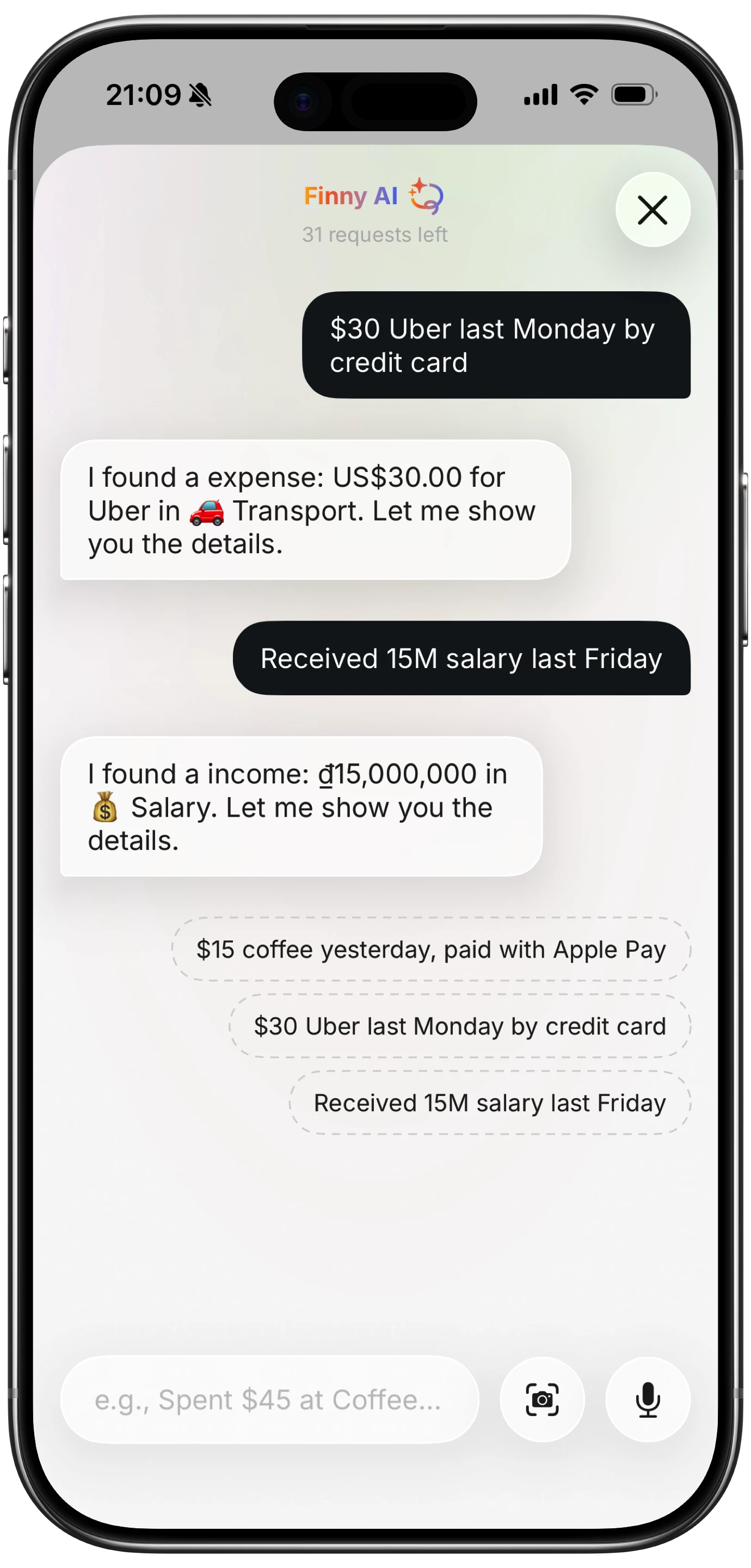
Finny app's AI chat feature
Because every entry is timestamped, your history becomes a clear timeline of what you paid, when, and to whom. Scroll back and you can see each vendor deposit, spot a balance that is coming due, and confirm you are still tracking against your category limits.
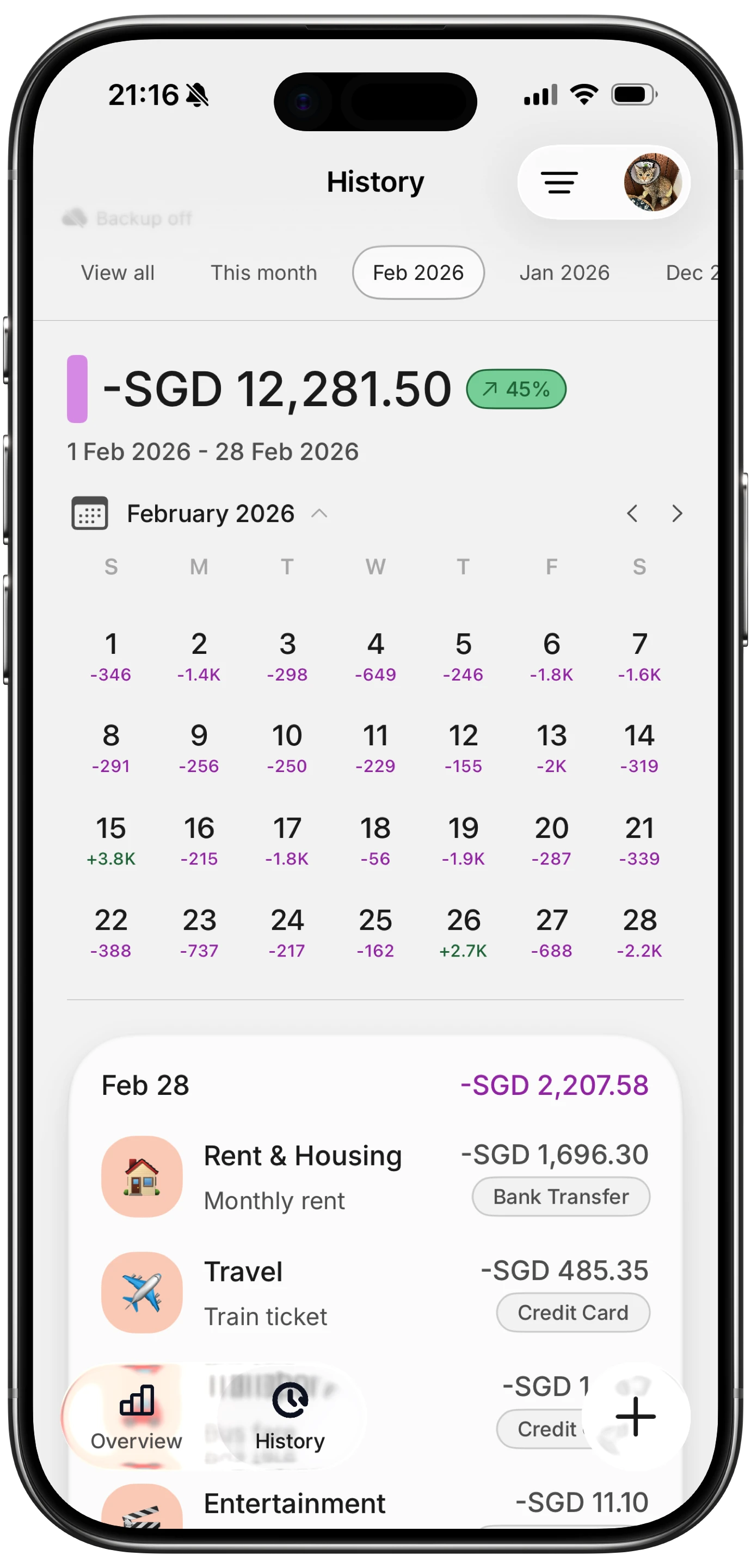
Finny app's History calendar feature
A few tips that make tracking painless:
- Use custom categories per vendor type. Separate "Catering," "Photography," and "Flowers" so your totals match your budget table.
- Log deposits and balances as two entries. That way you always know what is paid and what still hangs over you.
- Note the due date. A quick note on the payment reminds you when the final balance lands.
- Review weekly. Five minutes each Sunday keeps the picture current and the surprises small.
If you are new to keeping a running record, our guide on how to track expenses covers the basics that apply just as well to daily life as to wedding planning.
Watch Out for Hidden and Surprise Costs
The sticker price a vendor quotes is rarely the price you pay. The most common wedding budget blowouts come from costs that were technically disclosed but easy to overlook. Build a line for these from the start.
- Service fees. Many venues and caterers add a service fee, often in the 18 to 25 percent range, on top of the food and beverage total. This is not a tip. It covers their staffing, and it can add thousands.
- Taxes. Sales tax applies to most vendor totals and is frequently quoted separately.
- Gratuities. Photographers, DJs, hair and makeup artists, and delivery crews are often tipped, commonly 10 to 20 percent, and it is usually not baked into the quote.
- Vendor meals. Your photographer, videographer, and planner may need to be fed during the reception, and caterers charge for those plates.
- Overtime and cleanup. Running late into the night, extra cleaning, and trash removal can each carry their own charge.
- Alterations and beauty trials. Dress alterations and makeup trials add up beyond the headline attire price.
- Postage, favors, and day-of extras. Small line items like heavy invitation postage, welcome bags, and guest transportation quietly stack up.
A reliable rule of thumb from wedding planners: ask every vendor for the "out the door" total, including all fees and taxes, before you sign. Then keep roughly a third of your core costs earmarked for tips, taxes, and the inevitable extras. Logging these as they appear keeps your running total honest.
Ways to Cut Wedding Costs Without Cutting Joy
Trimming a wedding budget is not about a lesser day. It is about spending where it counts and quietly saving where guests will never notice.
- Shrink the guest list. Because so much cost scales per head, this is the single most powerful lever you have.
- Choose an off-peak date. A Friday, a Sunday, or a winter month can lower venue and vendor pricing meaningfully.
- Book a venue that includes tables and chairs. All-in venues cut rental costs and the coordination headache.
- Prioritize two or three categories. Spend generously on what you will remember, and go modest on the rest.
- Reuse ceremony flowers at the reception. Repurposing arrangements doubles their value.
- DIY the low-risk items. Signage, favors, and playlists are safe to handle yourself. Leave the high-stakes work to professionals.
If you and your partner are figuring out money together for the first time, it is worth setting up a shared system for the whole thing. Our roundup of the best budgeting apps for couples can help you find a workflow you both actually use, and the classic 50/30/20 rule is a gentle way to keep the rest of your finances balanced while you save for the big day.
Track Your Wedding Spending With Finny
A wedding budget only works if you can see it. Finny is an AI-powered expense tracker for iPhone that makes logging every deposit, installment, and final balance take seconds, so your category totals and your buffer are always up to date. The free core includes manual tracking, custom categories, spending charts, and support for 150 or more currencies, with no bank login required and your data kept on your device. If you want to log payments by typing, speaking, or snapping a receipt, Finny Pro adds AI input and batch receipt scanning for a low monthly or yearly price.
Set your categories, log each vendor payment as it happens, and watch your real total stay in view all the way to the aisle. Start tracking your wedding budget with Finny and give yourself one less thing to worry about on the big day.
Frequently Asked Questions
How much should I budget for a wedding?
There is no single right number. The Knot's 2026 study put the US average near $34,200, but many couples spend far less and celebrate beautifully. Base your budget on what you can realistically save each month before the date, plus any family contributions, and let your guest list and priorities shape the rest.
What is the biggest expense in a wedding budget?
Venue and catering are almost always the largest share, commonly 40 to 50 percent of the total. Because so much of the cost scales with guest count, the size of your list has an outsized effect on this category.
How do I save for a wedding in a year?
Take your total budget, subtract what you already have, and divide the rest by twelve. Automate that monthly amount into a separate savings account the day after payday. Treating the wedding as a sinking fund keeps deposits fully funded as they come due.
How much should I set aside for hidden wedding costs?
Plan for service fees of roughly 18 to 25 percent from many venues and caterers, gratuities around 10 to 20 percent, plus taxes and day-of extras. A common rule is to reserve about a third of your core costs as a buffer for tips, taxes, and surprises.
How can I keep track of all my wedding payments?
Log every deposit and balance the moment it happens, sorted into a category per vendor type. An app like Finny lets you record a payment in seconds, or type something like "florist deposit 500" and let the AI file it, so your running total and category limits stay accurate all year.
Final Thoughts
Budgeting for a wedding is less about restriction and more about clarity. Set a realistic total, divide it into categories that reflect your priorities, save toward it every month with a sinking fund, and log every payment so the real number never surprises you. Add a buffer for hidden fees, trim where guests will not notice, and you get to spend the year excited rather than anxious. A calm, well-tracked budget is the quiet gift that lets you enjoy the run-up as much as the day itself.