How to Budget for Groceries: A Practical Guide
Groceries are one of the most slippery lines in any budget. Rent is fixed, your car payment is fixed, but food is a variable expense that shifts every single week. A few extra items in the cart, a spontaneous run to the store, a price hike on the things you always buy, and suddenly the month is over and you spent far more than you meant to. Learning how to budget for groceries is really about taming that quiet balloon before it eats into your savings, your dining out fund, or your ability to cover a surprise bill.
The good news is that food spending is one of the most controllable categories you have. You cannot easily lower your rent this month, but you can change what lands in your cart tomorrow. This guide walks through how much to set aside, how to pick a number that fits your income and habits, how to shop and plan so you stay inside that number, and how to track it all so you can adjust before the overspend happens instead of after.
How Much Should You Budget for Groceries?
The most useful public benchmark comes from the USDA, which publishes monthly food plans at four cost levels: Thrifty, Low-Cost, Moderate-Cost, and Liberal. Each level represents a healthy diet built entirely from food prepared at home, and the USDA updates the figures every month to reflect food price inflation. They are a helpful starting anchor, not a rule, since your real number depends on where you live, your household, and how you eat.
Here is roughly how the four levels compare for a single adult, based on 2025 USDA figures. The ranges reflect differences by age and sex, and adult men generally land toward the higher end because their average calorie needs are greater.
| USDA food plan level | Monthly cost per adult | Best described as |
|---|---|---|
| Thrifty | about $247 to $309 | bare minimum, heavy planning and store brands |
| Low-Cost | about $323 to $371 | tight but doable with careful shopping |
| Moderate-Cost | about $392 to $465 | average spending with some variety |
| Liberal | about $499 to $566 | comfortable, more brand names and convenience |
Household size changes the total, though not in a perfectly linear way, since larger households tend to waste less and buy in more efficient quantities. As a rough guide from 2025 data, a family of four lands near $1,000 a month on the Thrifty plan, around $1,500 on the Moderate-Cost plan, and closer to $1,630 on the Liberal plan. National averages for grocery spending per person tend to fall in the ballpark of roughly $370 to $430 a month depending on the source and how it is measured, which is why the Moderate-Cost tier is a reasonable default for many people.
Treat these as guardrails. If you are spending far above the Liberal level, there is likely room to trim. If you are well under Thrifty, make sure you are actually eating enough and not just undercounting.
Set Your Own Grocery Number Based on Income and Habits
Benchmarks tell you what is typical. Your budget should reflect what is realistic for you. Two households of the same size can reasonably land hundreds of dollars apart based on income, location, dietary needs, and how often they cook.
A common approach is to size groceries as a share of your take-home pay. Many budgeters aim to keep all food, groceries plus dining out, somewhere around 10 to 15 percent of net income, though this flexes with your cost of living. If you follow a percentage-based framework like the 50/30/20 rule, groceries live inside your "needs" bucket, while restaurants and takeout usually belong in "wants."
To set your own number:
- Start from your recent reality. Pull the last two or three months of grocery spending. Your true baseline is more useful than any national average.
- Separate groceries from dining out. These are different habits with different fixes. Blending them hides where the money actually goes.
- Adjust for your constraints. Special diets, food allergies, a new baby, or a high cost-of-living city all justify a higher number. Do not force yourself into the Thrifty plan if it is not sustainable.
- Pick a target you can hit most weeks. A budget you blow through every month is not a budget, it is a wish. Set something slightly ambitious but achievable, then tighten it over time.
If your income changes from month to month, groceries are one of the easiest places to flex. Our guide on budgeting with variable income covers how to set a lean baseline and scale up in stronger months.
Meal Planning and Shopping Strategies to Stay on Budget
Once you have a number, the day-to-day battle is won or lost at the planning stage and in the store. Most grocery overspending is not one big splurge, it is a steady drip of unplanned items and repeat trips.
A few strategies that consistently move the needle:
- Plan meals around a set number of dinners. Decide how many nights you will actually cook, then build a list from those recipes. Planning for seven dinners when you realistically cook four just guarantees waste.
- Shop from a list, and stick to it. The list is your budget in physical form. Impulse buys are where the plan quietly falls apart.
- Check what you already have first. A quick pantry and freezer scan before you shop stops you from buying a third jar of the same sauce.
- Do not shop hungry. It sounds like a cliché because it is true. Hunger inflates the cart.
- Build meals around cheaper anchors. Beans, rice, eggs, seasonal produce, and whole cuts of meat stretch further than pre-made and single-serve items.
- Cut trip frequency. Every extra store visit is another chance for unplanned spending. One planned weekly shop usually beats three "quick" runs.
Some people take this further with a dedicated cash or digital envelope for food. If a fixed weekly food allowance appeals to you, envelope budgeting pairs naturally with groceries because the category is frequent and easy to overspend.
For irregular but predictable food costs, like a big holiday meal or hosting season, a small sinking fund keeps those spikes from wrecking a normal month's grocery budget.
Track Your Grocery Spending So You Can Adjust
Here is the honest truth: a grocery budget only works if you know your running total before the month ends. Groceries are frequent, small, and easy to lose track of. Ten trips at $40 feels like nothing in the moment, but that is $400 gone. Without tracking, you find out you overspent when it is already too late to do anything about it.
The fix is to log each grocery run quickly, right when it happens, so the number stays current. This is exactly where a fast expense tracker earns its keep. With Finny, you can type a purchase in plain language like "groceries 82," speak it, or snap the receipt, and the AI turns it into a categorized entry you review before saving.
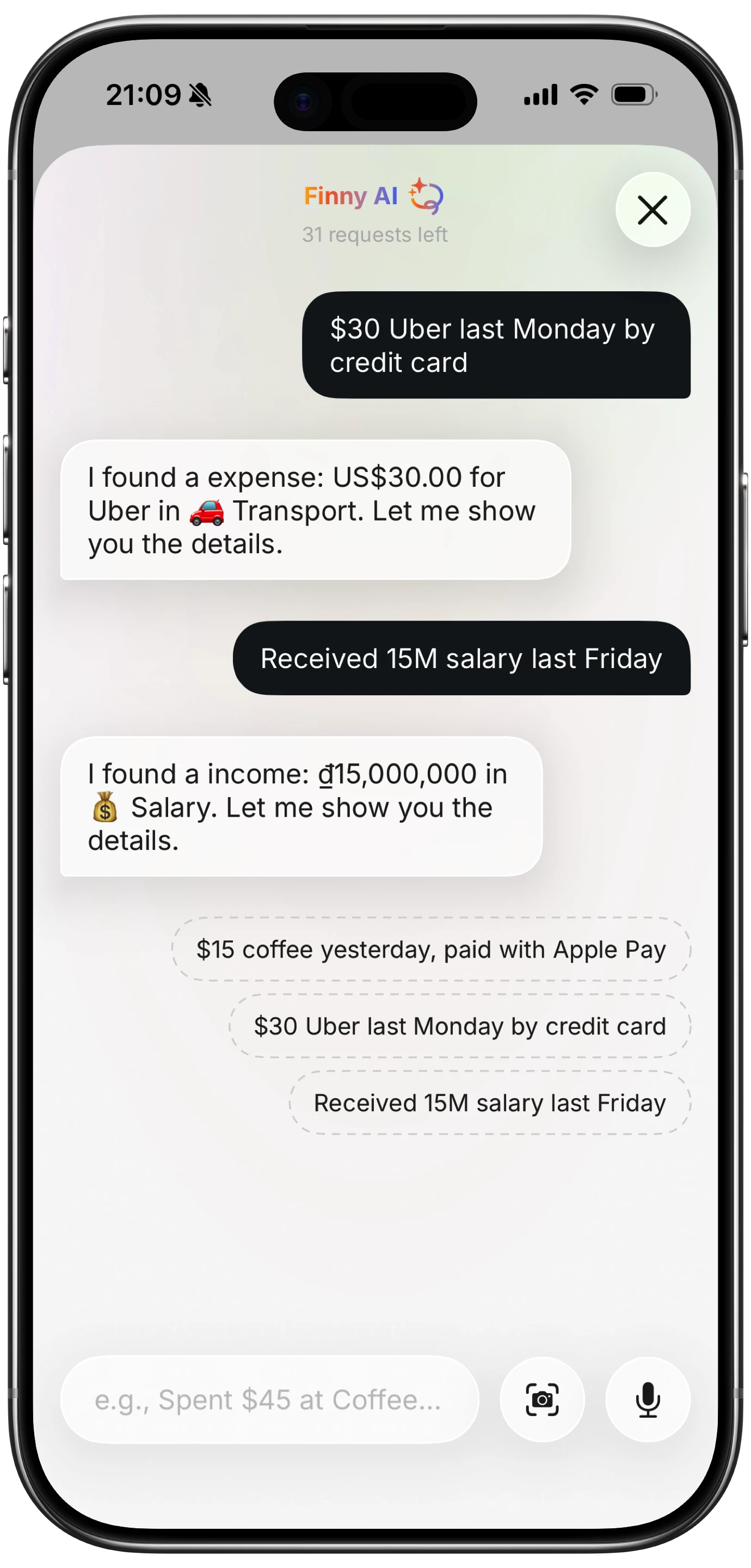
Finny app's AI chat feature
Because grocery receipts are long and detailed, batch receipt scanning is especially handy here. Finny Pro lets you scan up to five receipts at once, so a week's worth of shopping trips can be logged in one sitting instead of one painful entry at a time. Every purchase drops into your Groceries category automatically, and you can always review before it saves.
Once entries are flowing in, your history becomes the feedback loop. Scrolling through recent grocery logs shows you the pattern behind the total: the mid-week top-up trips, the pricey specialty run, the weekend haul.
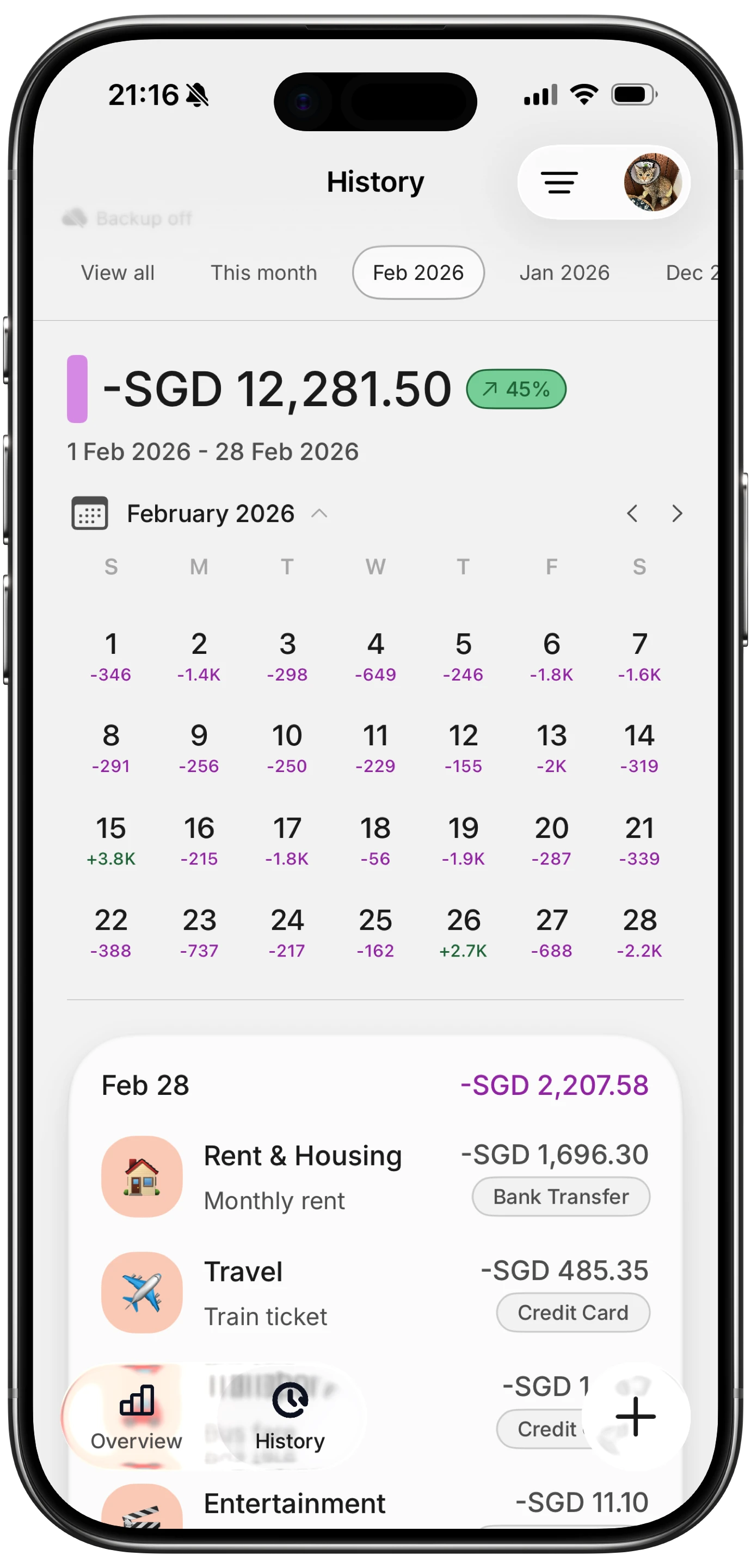
Finny app's History calendar feature
The real payoff is the category view. Instead of guessing, you see your grocery total climbing through the month and can tell at a glance whether you are on pace or already over.
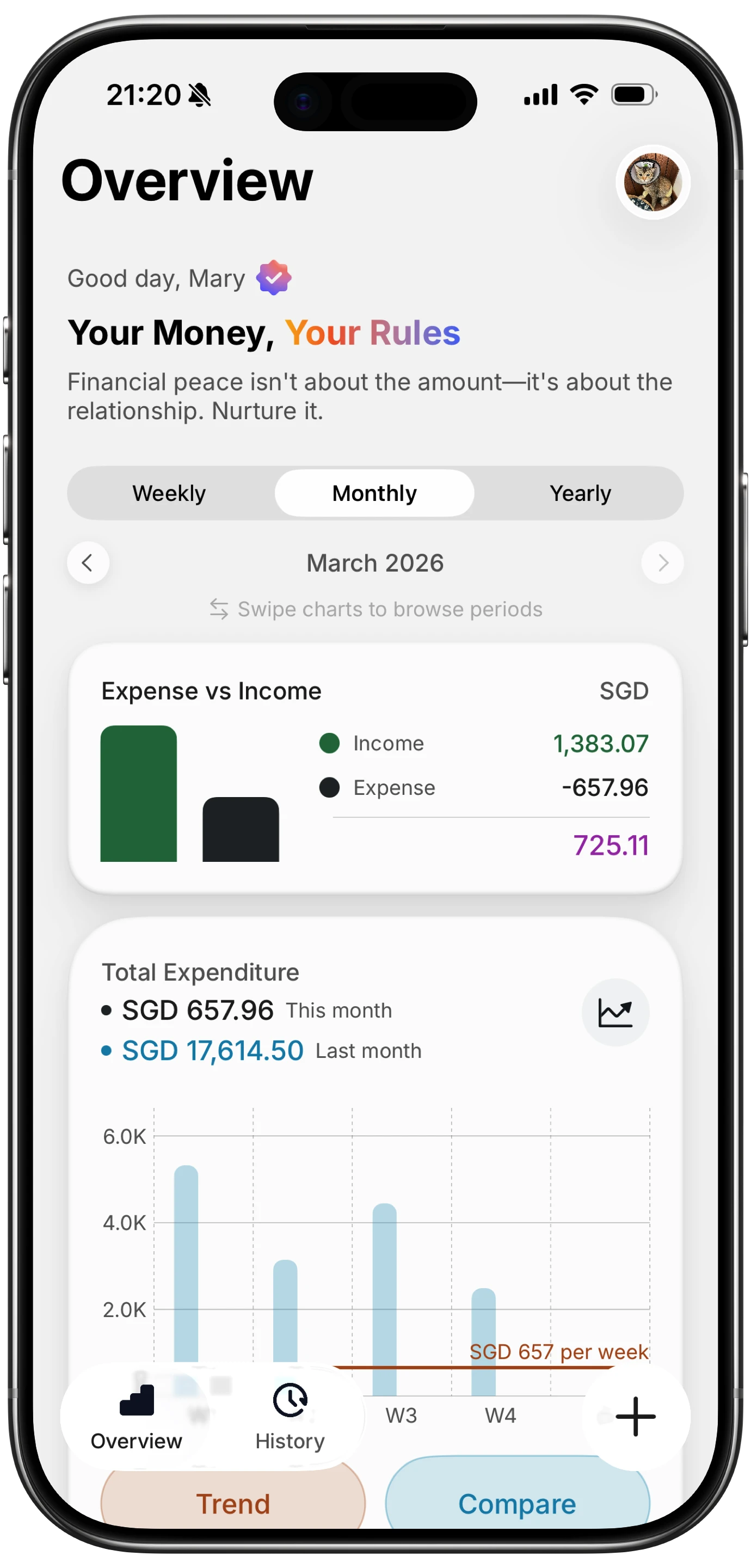
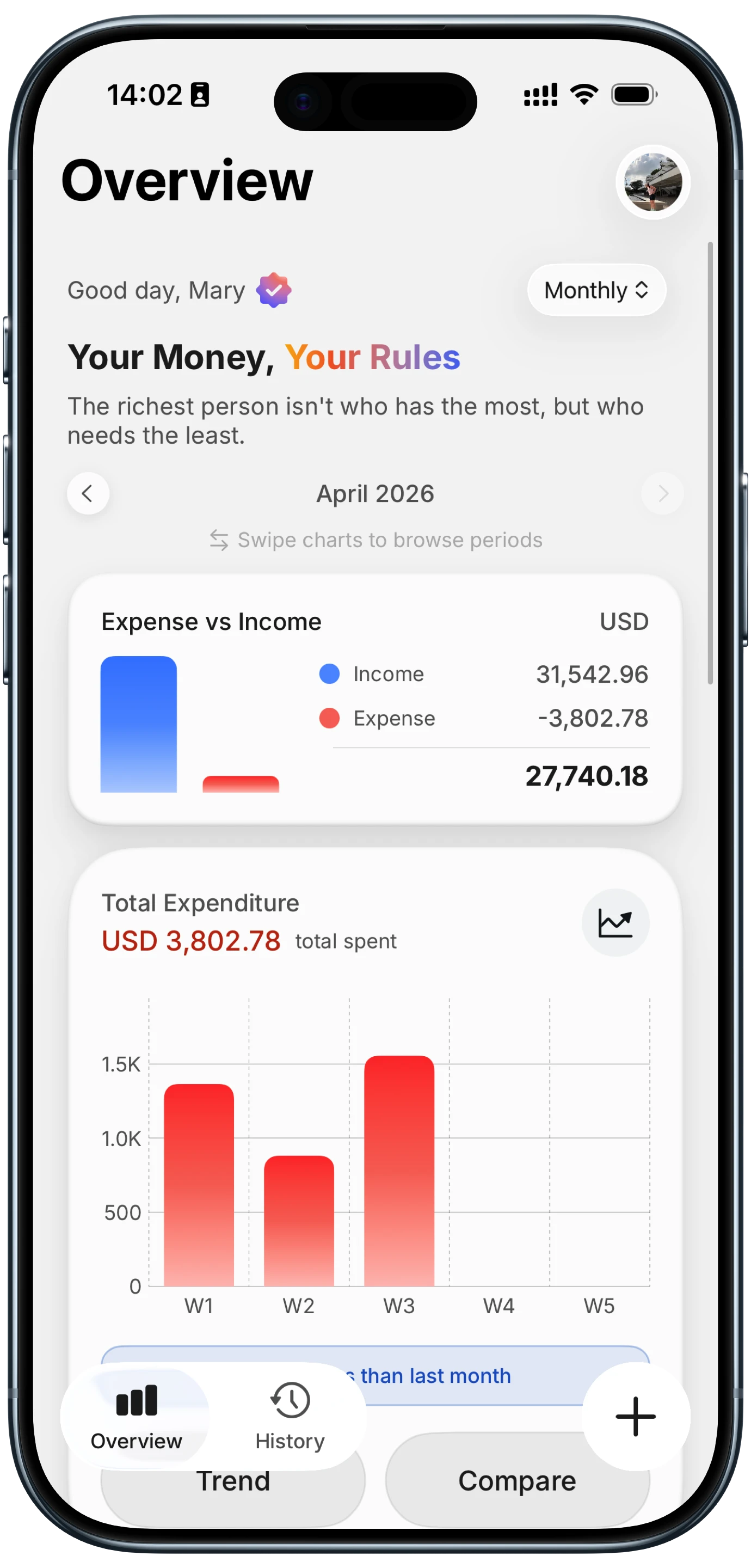
Finny app's Overview feature
When groceries are up 20 percent by the 15th, you have two weeks to lean on the pantry and coast to the finish. That is the whole point of tracking: it turns a budget from a hope into something you can steer. For a fuller walkthrough of methods, see our guide on how to track expenses.
Ways to Cut Your Grocery Bill
If your tracking shows you are consistently over, these are the highest-leverage cuts, roughly in order of impact:
- Shift toward store brands. Generic staples are frequently 20 to 30 percent cheaper than name brands with little quality difference on basics like flour, canned goods, and cleaning supplies.
- Buy staples in bulk, perishables as needed. Bulk pricing helps on rice, oats, and freezer-friendly items. It backfires on fresh produce you end up throwing out.
- Cook one or two "waste-cleanup" meals a week. A stir fry, soup, or grain bowl that absorbs whatever is about to go bad recovers money you already spent.
- Reduce food waste. The average household throws away a meaningful share of what it buys. Eating what you have before restocking is like a free discount.
- Swap a few restaurant meals for home cooking. Dining out is usually the single biggest lever on your total food spend, even when groceries feel expensive.
- Watch unit prices, not sticker prices. The bigger package is not always cheaper per ounce. The shelf tag usually shows the unit price if you look.
- Time purchases to sales for non-perishables. Stock up on shelf-stable favorites when they hit a low, rather than buying at full price the week you run out.
Small changes compound. Trimming even $15 a week is around $780 over a year, and tracking is what tells you whether the changes are actually working.
Start Budgeting Your Groceries with Finny
The fastest way to keep grocery spending in line is to make logging effortless and to see your category totals in real time. Finny is an AI-powered expense tracker for iPhone with a free forever core: manual tracking, custom categories, spending charts, support for 150+ currencies, and offline use, with no bank login required and your data kept on device. When you want AI text and voice input, Tap to Track, and batch receipt scanning for those long grocery receipts, Finny Pro costs a low monthly or yearly price.
Download Finny and start logging your grocery runs in seconds, then watch your Groceries category total tell you exactly where you stand.
Frequently Asked Questions
How much should one person budget for groceries per month?
A reasonable default is the USDA Moderate-Cost plan, which in 2025 fell around $392 to $465 a month for a single adult, with men generally higher than women. If money is tight, the Thrifty and Low-Cost tiers (roughly $247 to $371) show what careful shopping can achieve. Your best target is your own recent average, adjusted toward whichever tier fits your goals.
What percentage of income should go to groceries?
Many budgeters aim to keep total food spending, groceries plus dining out, near 10 to 15 percent of take-home pay, though this flexes with your cost of living and household size. In a percentage framework like the 50/30/20 rule, groceries count as a "need" and restaurant meals usually count as a "want."
How do I stop overspending on groceries?
Plan a set number of meals, shop from a list, cut the number of store trips, and track each purchase as it happens so you can see your running total. Most overspending comes from unplanned items and repeat trips, both of which shrink once you plan and log consistently.
Do grocery budgeting apps need access to my bank account?
Not all of them. Finny does not require a bank login. You log purchases yourself by typing, speaking, or snapping a receipt, and your data stays on your device. That keeps grocery tracking private while still giving you real-time category totals.
Is it worth scanning grocery receipts?
Yes, especially if you shop often. Receipt scanning captures the full purchase quickly and lands it in your Groceries category. With Finny Pro you can scan up to five receipts at once, so a whole week of shopping trips can be logged in a single sitting.
Conclusion
Groceries feel unpredictable, but they are one of the most controllable parts of your budget once you give the category a number and a feedback loop. Use the USDA food plan levels as guardrails, set a target that matches your income and habits, plan and shop with intention, and above all track each run so your total stays visible while you can still adjust. Do those four things and the quiet monthly balloon stops catching you by surprise. Pick your number this week, log every trip, and let the category totals guide the rest.