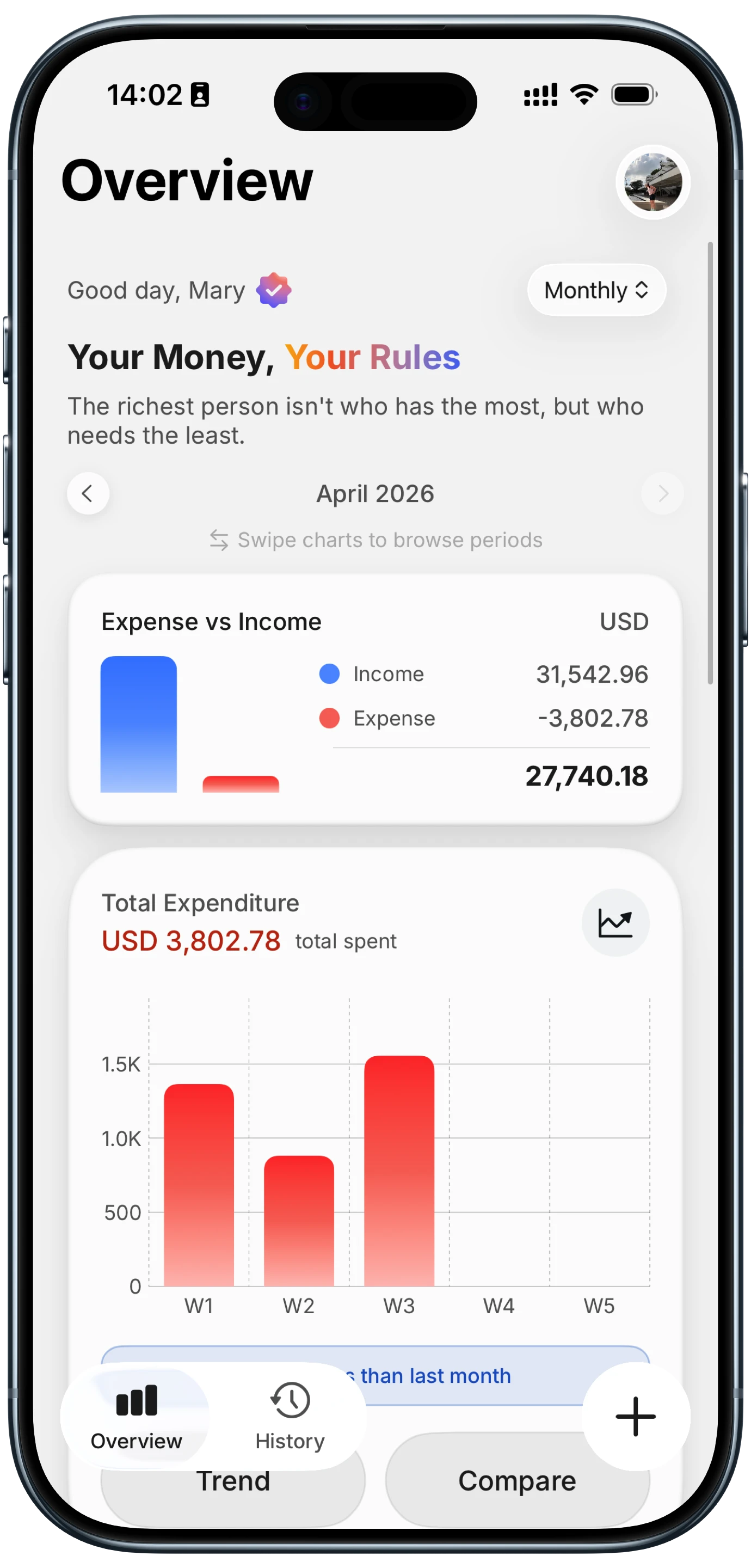
The average American household spends over $78,000 per year, and much of that goes to expenses that could be reduced without lowering quality of life. The problem is not a lack of information. It is a lack of specific, actionable steps.
This guide collects 50 money saving tips organized by category so you can scan for the areas where your spending is highest and start there. None of these require extreme frugality. Most require one decision or one habit change.
If you want a broader framework before diving into individual tips, our complete guide to personal finance covers budgeting, saving, investing, and debt management from end to end.
Daily Habits (Tips 1 to 10)
1. Track every expense for 30 days
You cannot reduce what you do not measure. Logging every purchase for one month reveals patterns you would never notice otherwise. An app like Finny makes this effortless with AI text input: just type "coffee 4.50" and the transaction is logged with the correct category automatically.
2. Wait 24 hours before any unplanned purchase over $50
The impulse fades quickly. If you still want the item tomorrow, buy it. Most of the time, you will not.
3. Carry a reusable water bottle
A single bottled water costs $2 to $3. One per weekday adds up to $500 to $750 per year.
4. Bring lunch to work three days per week
The average lunch out costs $15 to $18. Packing lunch costs $3 to $5. Doing this three days a week saves roughly $1,500 to $2,000 annually.
5. Use the library for books, audiobooks, and streaming
Most public libraries offer free access to apps like Libby for ebooks and audiobooks, plus Kanopy for movies. That replaces $10 to $15 per month in subscriptions.
6. Unsubscribe from retail marketing emails
Every promotional email is designed to make you spend money you were not planning to spend. Removing the trigger removes the temptation.
7. Switch to a no-fee bank account
Monthly maintenance fees of $10 to $15 cost $120 to $180 per year for the privilege of holding your own money. Online banks and credit unions commonly offer fee-free checking.
8. Pay with cash or a tracking app for discretionary spending
Physical cash or logging each purchase creates friction that reduces impulse buying. When you see daily totals adding up in real time, you naturally spend less.
9. Set a weekly discretionary spending limit
Pick a number, say $75 per week for dining out and entertainment, and stick to it. A clear boundary is easier to follow than a vague intention to "spend less."
10. Review your spending weekly, not monthly
A monthly review catches problems too late. A five-minute weekly check lets you adjust before small overspending becomes a pattern. Learn more about setting spending limits that work.
Groceries and Food (Tips 11 to 20)
11. Meal plan every Sunday
Fifteen minutes of planning prevents five nights of "I do not know what to make, let's order delivery." A rough plan for dinners is enough.
12. Shop with a list and stick to it
Grocery stores are designed to encourage browsing. A list is your defense. Shopping online makes this even easier because you never wander past the snack aisle.
13. Buy store brands for staples
Store-brand rice, pasta, canned goods, flour, and cleaning supplies are typically 20% to 40% cheaper than name brands with identical ingredients.
14. Buy produce that is in season
In-season fruits and vegetables cost less and taste better. Frozen produce is a year-round alternative that is nutritionally comparable and cheaper than out-of-season fresh options.
15. Cook large batches and freeze portions
Doubling a recipe costs minimal extra ingredients but gives you ready-made meals for busy nights, reducing the temptation to order takeout.
16. Use a cashback grocery app
Apps like Ibotta and Fetch Rewards return 1% to 5% on grocery purchases with minimal effort.
17. Reduce food waste
The average American household wastes $1,500 worth of food annually. Using leftovers intentionally, freezing what you will not eat in time, and organizing your fridge by expiration date all help.
18. Limit dining out to once per week
Restaurants charge 3x to 4x the ingredient cost of a home-cooked meal. Cutting from three dinners out to one saves $200 to $400 per month for a couple.
19. Make coffee at home
A daily $6 latte costs $2,190 per year. Good beans and a simple brewing method cost $300 to $400 annually.
20. Buy meat in bulk when on sale and freeze it
Protein is the most expensive grocery category. Buying family packs or sale items and portioning them into freezer bags cuts this cost by 25% to 35%.
Subscriptions and Recurring Bills (Tips 21 to 27)
21. Audit every subscription quarterly
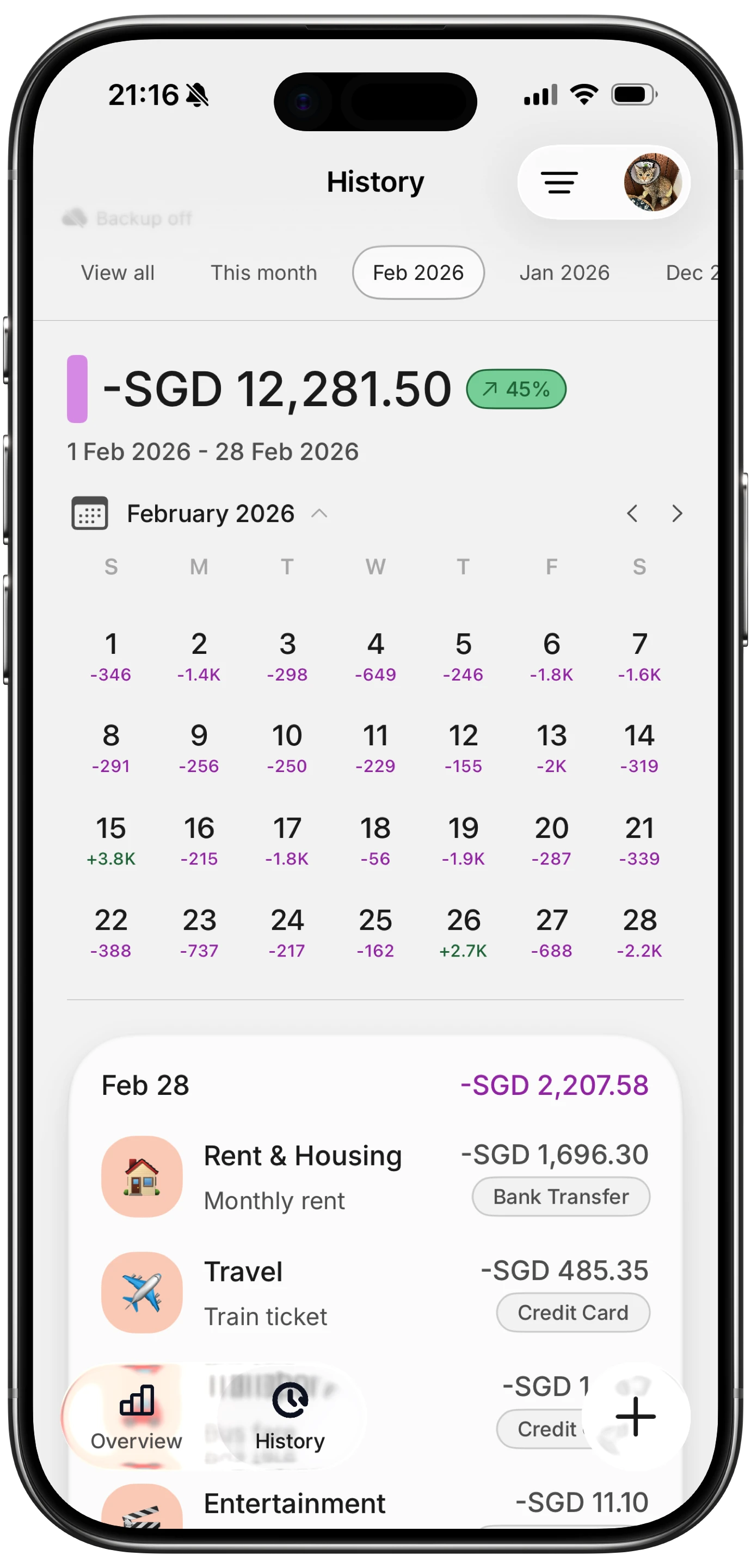
List every recurring charge on your bank and credit card statements. Cancel anything you have not used in 30 days. Our guide on stopping subscription creep walks through this process step by step.
22. Rotate streaming services
Subscribe to one streaming platform per month. Watch what you want, cancel, and switch to another. At $15 per service, rotating instead of stacking four services saves $540 per year.
23. Negotiate your internet bill
Call your provider and ask for a promotional rate. If they decline, ask to speak with the retention department. This works more often than people expect and can save $20 to $40 per month.
24. Switch to annual billing for services you keep
Most SaaS and streaming services offer 15% to 30% off when you pay annually instead of monthly.
25. Use free tiers before paying for premium
Many apps offer generous free tiers. Finny, for example, gives you unlimited manual expense tracking, custom categories, charts, and multi-currency support at no cost. Only upgrade when you genuinely need the extra features.
26. Cancel gym memberships you do not use
The average gym membership costs $40 to $60 per month. If you go fewer than four times a month, you are paying $10 to $15 per visit. Home workouts or pay-per-visit options may cost less.
27. Review insurance policies annually
Auto, renters, and health insurance rates change yearly. Shopping quotes from three to four providers takes an hour and saves $200 to $500 per year on average.
Bills and Utilities (Tips 28 to 34)
28. Adjust your thermostat by 2 degrees
Every degree of extra heating or cooling increases energy usage by 6% to 8%. A two-degree adjustment saves $100 to $200 annually without a noticeable comfort difference.
29. Switch to LED bulbs throughout your home
LEDs use 75% less energy than incandescent bulbs and last 15 to 25 times longer. Replacing ten bulbs saves roughly $75 per year.
30. Wash clothes in cold water
About 90% of the energy a washing machine uses goes to heating water. Cold water cleans effectively for most loads and extends the life of your clothes.
31. Unplug devices or use smart power strips
Phantom power draw from devices on standby costs the average home $100 to $200 per year.
32. Lower your water heater to 120 degrees Fahrenheit
Most water heaters default to 140 degrees, which wastes energy and creates scalding risk. The lower setting is sufficient for most households.
33. Use generic prescription drugs
Generic medications contain the same active ingredients as brand-name versions and cost 30% to 80% less. Ask your doctor or pharmacist if a generic alternative is available.
34. Bundle home and auto insurance
Most insurers offer 10% to 25% off when you bundle multiple policies. Get quotes from at least three providers to find the best rate.
Shopping (Tips 35 to 42)
35. Use a price tracking tool before buying online
Browser extensions like CamelCamelCamel for Amazon or Honey show price history so you know whether a "sale" is actually a good deal.
36. Buy refurbished electronics
Certified refurbished phones, laptops, and tablets from Apple, Samsung, or reputable resellers cost 20% to 40% less than new with comparable warranties.
37. Apply the cost-per-use rule
Before buying, estimate how many times you will use the item. A $100 jacket worn 100 times costs $1 per wear. A $30 jacket worn three times costs $10 per wear. The cheaper item is not always the better value.
38. Shop end-of-season sales for clothing
Winter coats in March and swimwear in September sell at 40% to 70% off. Plan ahead for items you know you will need.
39. Use credit card rewards strategically
If you pay your balance in full each month, cashback and points cards return 1% to 5% on every purchase. Never carry a balance for rewards, as the interest negates the benefit instantly.
40. Buy used for items that depreciate fast
Cars, furniture, baby gear, and exercise equipment lose 30% to 50% of their value in the first year. Buying gently used saves thousands with minimal quality difference.
41. Avoid convenience fees
ATM fees, delivery surcharges, and express shipping add up. Planning ahead and using your own bank's ATMs eliminates these small but persistent charges.
42. Set a "fun money" budget instead of going cold turkey
Complete spending restriction leads to burnout. Allocating a set amount for discretionary spending each month keeps you sane while maintaining overall discipline. The 50/30/20 budgeting rule offers a simple framework for balancing needs, wants, and savings.
Travel (Tips 43 to 47)
43. Book flights two to six months in advance
Domestic flights are cheapest when booked two to three months ahead. International flights hit their lowest point three to six months before departure.
44. Travel midweek and off-peak
Tuesday and Wednesday flights are consistently 15% to 30% cheaper than Friday and Sunday flights. Traveling in shoulder seasons saves on hotels and activities too.
45. Use hotel price comparison tools
Prices for the same room vary 20% to 40% across booking platforms. Check at least three sites, and always compare against the hotel's direct rate.
46. Make lunch your main meal when traveling
Restaurant lunch menus are often 30% to 50% cheaper than dinner menus for the same quality. Eat a bigger lunch, then do something light for dinner.
47. Track travel expenses in real time
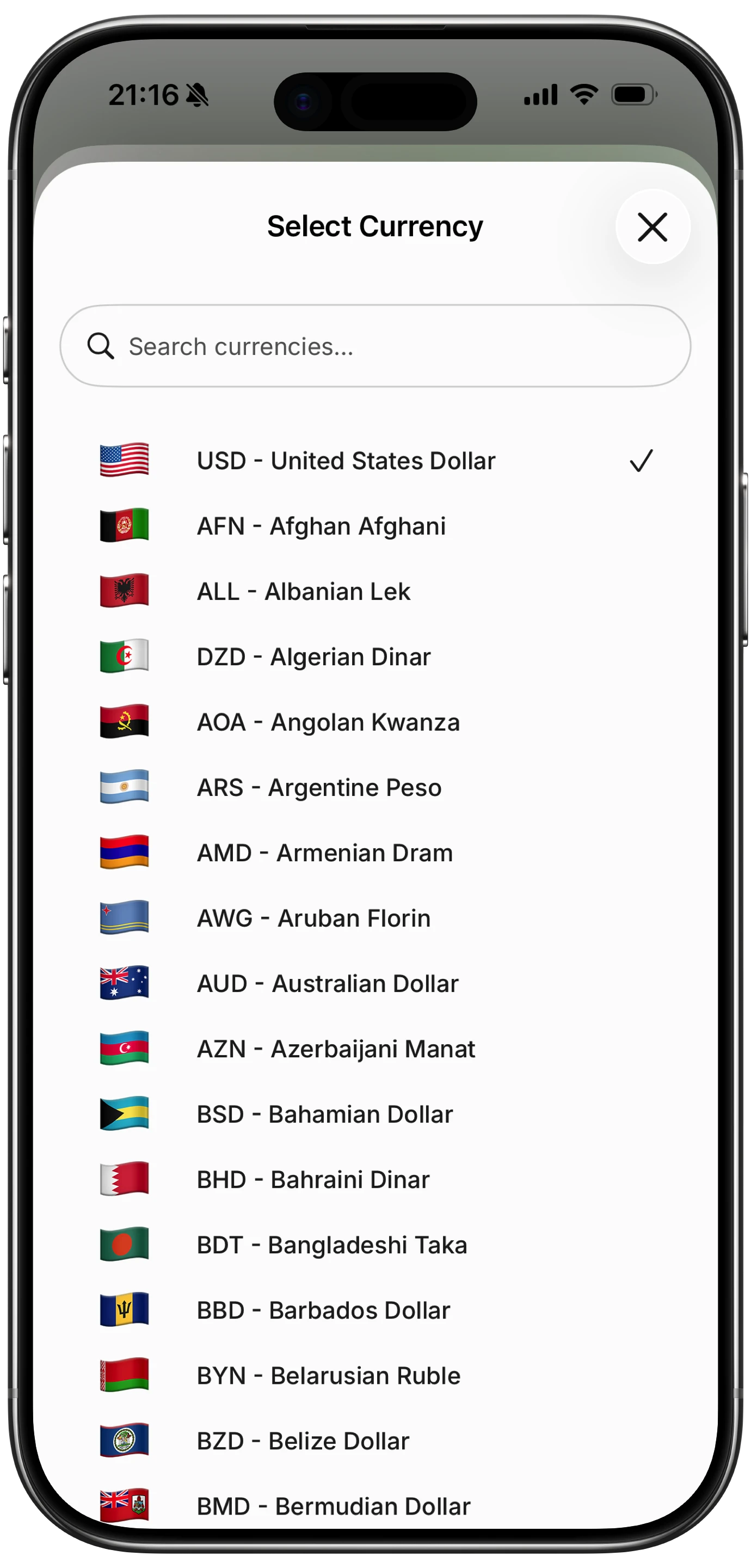
Vacation spending spirals when you lose track. If you travel internationally, an app with multi-currency support helps you see exactly what you are spending in your home currency. Finny's Unified Currency View keeps each transaction in the original currency while converting totals automatically, so you always know where you stand.
Long-Term Savings (Tips 48 to 50)
48. Automate your savings
Set up an automatic transfer from checking to savings on payday. Even $50 per week becomes $2,600 per year without any ongoing effort. Explore strategies for saving money quickly if you need to build a buffer in a hurry.
49. Build an emergency fund before investing
Three to six months of essential expenses in a high-yield savings account (currently earning around 4% APY) protects you from turning emergencies into debt. Our guide on what an emergency fund is and how much you need covers the details.
50. Increase savings when your income increases
When you get a raise, route at least half of the increase to savings or debt repayment before lifestyle inflation absorbs it. This single habit is the difference between earning more and actually keeping more. For additional strategies on a limited income, see our tips on saving money on a tight budget.
How to Make These Tips Stick
Reading a list is easy. Changing behavior is harder. Here are three principles that help:
Start with one category. Do not try to implement all 50 tips at once. Pick the category where you spend the most and focus there first.
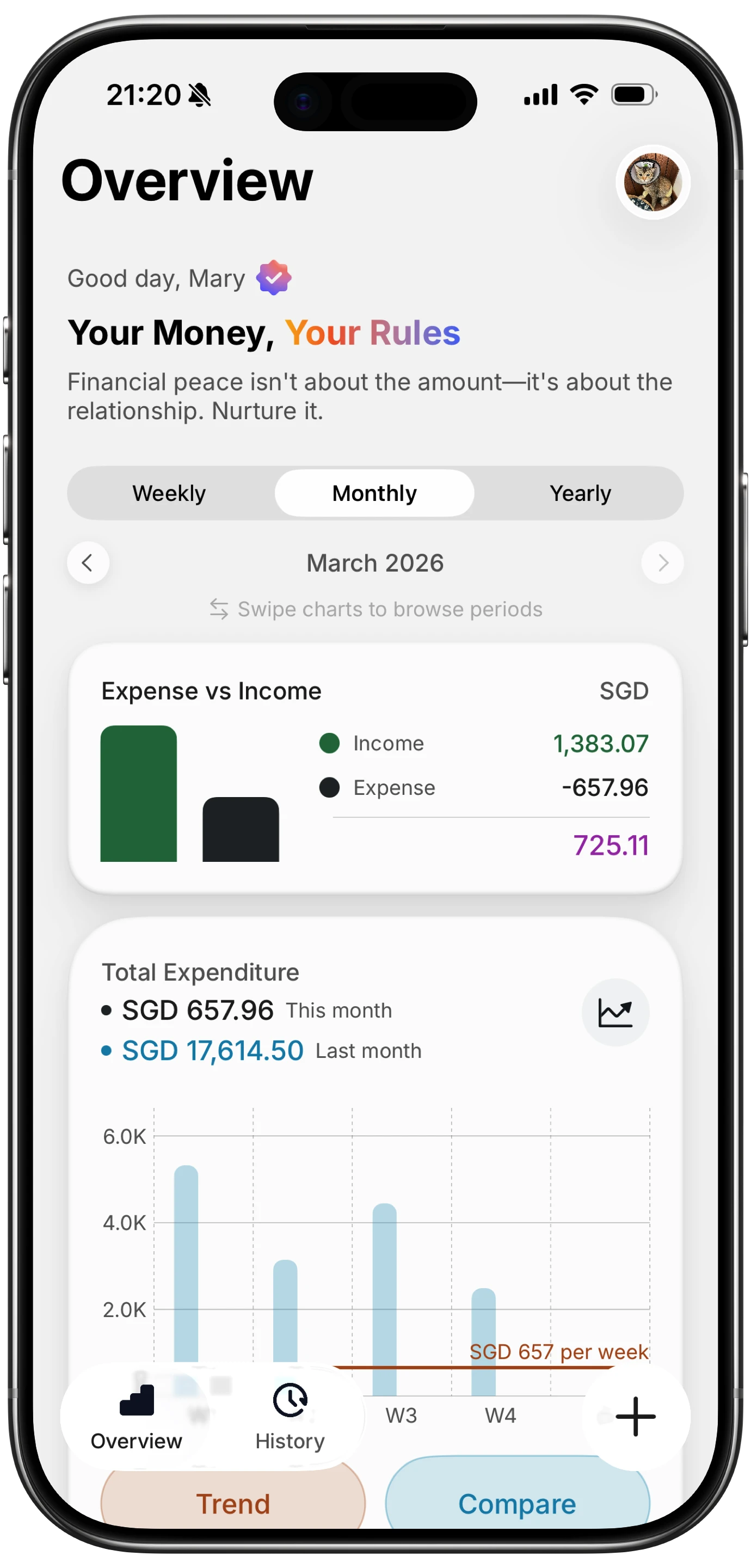
Track your progress. Seeing your spending decrease week over week creates momentum. Even five minutes reviewing your expense tracking data reinforces the habit.
Set specific targets. "Save more money" is too vague. "Reduce grocery spending to $400 per month" gives you something measurable to work toward.
Frequently Asked Questions
What is the simplest way to start saving money?
Track your spending for 30 days. Most people are surprised by how much goes to small, habitual purchases like daily coffee, convenience store snacks, and impulse online orders. Once you see where the money goes, reducing it becomes much easier.
How much should I aim to save each month?
A common guideline is the 50/30/20 rule: 50% of after-tax income to needs, 30% to wants, and 20% to savings and debt repayment. If 20% feels unreachable right now, start with 5% or 10% and increase gradually. Any consistent amount is better than nothing.
Do small savings like making coffee at home really add up?
Yes. A $5 daily habit costs $1,825 per year. Combine two or three small changes and you are looking at $3,000 to $5,000 annually, enough for an emergency fund, a vacation, or meaningful debt repayment.
What is the best way to track expenses without linking my bank?
Privacy-focused apps like Finny let you log transactions manually, by voice, or by scanning receipts without connecting any bank accounts. This gives you full visibility into your spending without sharing financial credentials with a third party.
How do I stop impulse buying?
Three strategies work well together. First, implement a 24-hour waiting period for any unplanned purchase over $50. Second, unsubscribe from retail marketing emails. Third, track your spending in real time so you see the impact of each purchase immediately rather than discovering it weeks later on a statement.