Simplifi vs YNAB 2026: Which Budget App Fits You?
Quicken Simplifi and YNAB both promise to show you where your money goes. In practice they ask for completely different amounts of your attention. One gives you a clean running number and mostly stays out of the way. The other asks you to sit down and give every dollar a job, and rewards you for it.
This Simplifi vs YNAB comparison covers what each costs in 2026, how the two budgeting methods actually feel week to week, bank syncing, sharing with a partner, and who should pick which. If you're weighing Monarch too, see our Monarch vs YNAB vs Simplifi three-way breakdown.
Simplifi vs YNAB at a glance
| Quicken Simplifi | YNAB | |
|---|---|---|
| Price | $3.99/mo promo, billed annually ($47.88 first year) | $14.99/mo or $109/yr |
| List / renewal price | $5.99/mo list, billed annually; renewal can be higher | Same price every year |
| Monthly billing | No, annual only | Yes |
| Trial | 30-day money-back guarantee | 34-day free trial, no card |
| Budgeting method | Spending plan: income minus bills and savings | Zero-based: assign every dollar |
| Effort per week | Low | Medium to high |
| Bank sync | Yes | Yes, or fully manual |
| Sharing | Invite others to your account | Up to 6 people on one subscription |
| Platforms | iOS, Android, web | iOS, Android, web |
| Best for | Hands-off overview at a low price | Breaking the paycheck-to-paycheck cycle |
Prices checked in September 2026. Simplifi's new-subscriber promo changes often, so check Quicken's pricing page before you buy.
Pricing: Simplifi is much cheaper, at least in year one
Price is the biggest gap between these two apps.
Simplifi is sold annually only. New subscribers usually see a promotional rate of $3.99 a month, billed as $47.88 for the first year. The list price is $5.99 a month billed yearly ($71.88), and several reviewers report renewals landing higher than that once the promo ends. There's no free tier and no free trial, but Quicken offers a 30-day money-back guarantee.
YNAB costs $14.99 a month or $109 a year, with a 34-day free trial that doesn't need a credit card. College students can get a free year. One subscription covers up to six people, which matters for families.
Over two years, Simplifi at promo-then-list pricing costs roughly $120. YNAB annual costs $218. For a single person who just wants visibility, that gap is hard to justify. For a household of four sharing one YNAB login, the per-person math looks very different. Our full breakdowns of YNAB pricing and Simplifi pricing cover the fine print.
Budgeting method: a spending plan vs zero-based budgeting
This is the real decision. The two apps are built on different philosophies.
How Simplifi's spending plan works
Simplifi starts from your income, subtracts recurring bills and savings goals, and shows what's left to spend this month as a single number. As transactions sync in, that number goes down. Watchlists let you keep an eye on specific categories, like dining out, without building a full budget around them.
It's close to effortless. You connect accounts, check the number now and then, and fix the occasional miscategorized transaction. The downside is that Simplifi tells you what happened more than it changes what you do. If you're already doing fine and want a dashboard, that's perfect. If you keep running short before payday, a passive number may not be enough.
How YNAB's zero-based method works
YNAB asks you to budget only money you already have. When a paycheck lands, you assign every dollar to a category (rent, groceries, the car insurance due in March) until nothing is left unassigned. When you overspend in one category, you move money from another to cover it. The app is built around four rules, and the core idea is to give every dollar a job.
It takes more work, especially in the first month, and there's a real learning curve. But many users say it's the first system that actually changed their behavior, because every overspend forces a visible trade-off. If the method appeals to you but the price doesn't, our explainer on zero-based budgeting shows how to run it in any app, or even a spreadsheet.
Bank sync and connection reliability
Both apps connect to US banks and credit cards through financial data aggregators.
Simplifi is designed around syncing. Transactions import automatically, get categorized, and feed the spending plan. It works well with large banks. Users with smaller credit unions, or with banks that change their login flows, report having to reconnect more often.
YNAB also syncs, but it's built so that bank sync is optional. You can enter every transaction by hand, import files, or mix the two. Many long-time YNAB users deliberately enter purchases manually because it keeps them aware of each one, then let the bank feed confirm them.
That flexibility matters if you'd rather not hand your bank credentials to an aggregator. For a longer look at that trade-off, see our guide to tracking expenses without linking your bank.
Sharing with a partner or family
YNAB covers up to six people on one subscription, each with their own login, all working in the same budget. For couples who want to plan together, that's one of its strongest features.
Simplifi lets you invite other people into your account, so a partner can see and edit the same spending plan. It covers shared visibility, but it's less built around joint planning than YNAB.
If splitting costs fairly on different incomes is the harder problem, our guide on how to split bills fairly helps regardless of which app you choose.
Learning curve and daily use
Simplifi takes about 20 minutes to set up and very little time after that. The mobile app is clean, and a weekly glance is enough for most people.
YNAB takes a few hours in the first week: setting up categories, assigning your first paycheck, and learning to "roll with the punches" when you overspend. After a month, most users find a rhythm of a few minutes a day or a longer weekly session. YNAB publishes a large library of free workshops and guides, which helps.
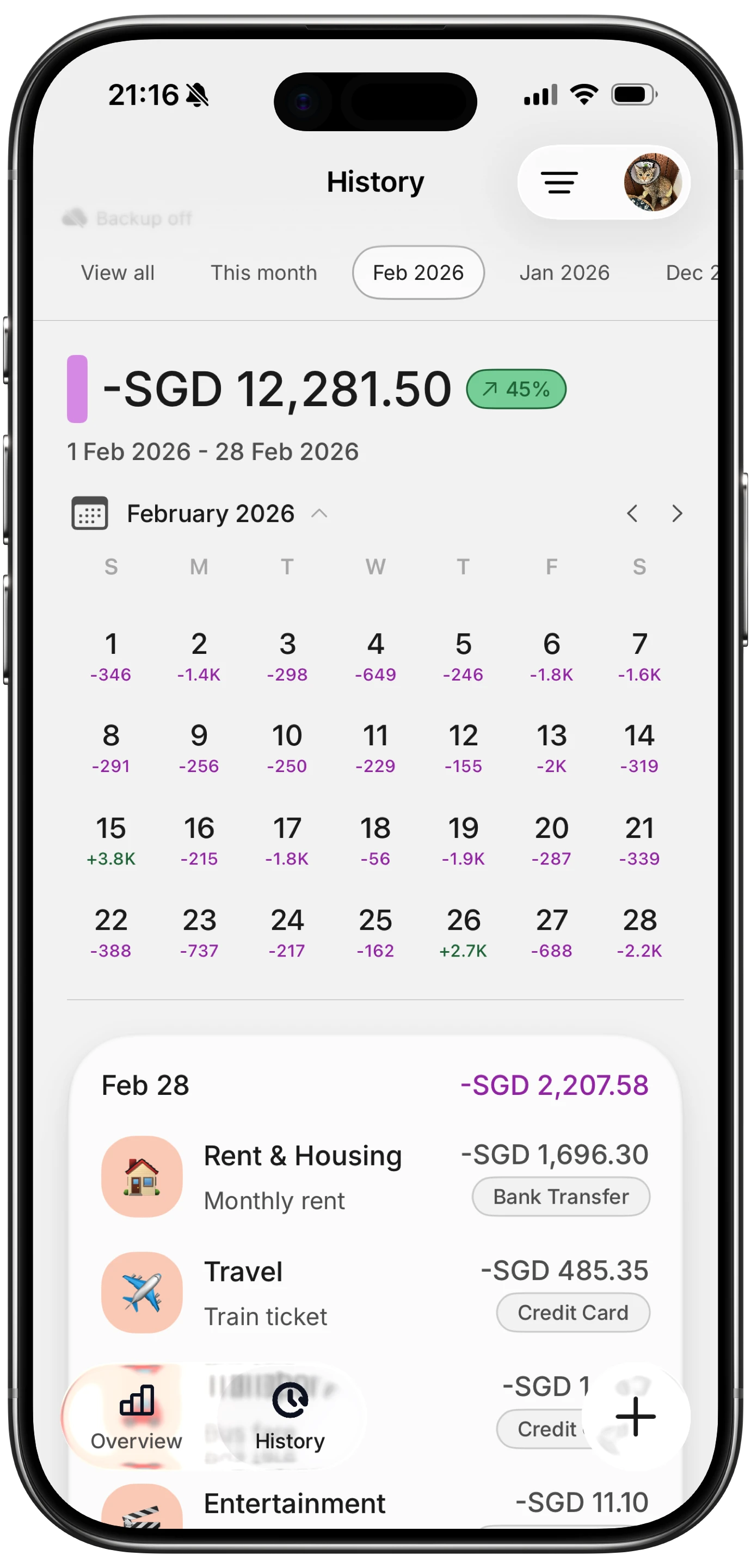
Neither app makes logging an individual purchase especially fast, because both assume the bank feed does the work. If you want spending captured the moment it happens without a bank connection, here's how Screen Log handles an online order or a transfer on your iPhone screen:
Who should choose Simplifi, and who should choose YNAB
Choose Simplifi if:
- You mostly want to see where your money goes, not overhaul how you spend it.
- You want the lowest price for a full-featured, bank-synced budget app.
- You're comfortable paying annually and linking your accounts.
- You prefer a single "left to spend" number over detailed categories.
Choose YNAB if:
- You live paycheck to paycheck and want a system that forces trade-offs.
- You share finances with a partner or family and want everyone in one plan.
- You want the option to enter transactions by hand instead of relying on sync.
- You're willing to spend a few weeks learning the method.
Consider neither if you mainly want to log spending quickly without linking a bank. A lightweight tracker like Finny captures card payments as you make them, logs online orders from your screen, and handles typed or spoken expenses, with a unified total across currencies. It isn't a zero-based budgeting tool, but it costs a low monthly or yearly price and needs no bank login.
Frequently Asked Questions
Is Simplifi better than YNAB?
Neither is better overall. Simplifi is better for people who want a low-cost, low-effort view of their spending with automatic bank sync. YNAB is better for people who want to actively change their habits with zero-based budgeting and are willing to spend time on it. If you've tried passive dashboards before and they didn't change anything, YNAB is the stronger choice.
How much does Simplifi cost compared to YNAB?
In 2026, Simplifi usually costs $3.99 a month billed annually ($47.88) for the first year, with a list price of $5.99 a month billed annually. YNAB costs $14.99 a month or $109 a year. YNAB covers up to six people per subscription, which narrows the gap for families. Simplifi is annual billing only, so check the renewal price before your first year ends.
Does Simplifi have a free trial like YNAB?
No. YNAB offers a 34-day free trial with no credit card required. Simplifi doesn't have a traditional free trial, but Quicken offers a 30-day money-back guarantee, so you can pay, try it for a month, and request a refund if it isn't a fit. Either way, test the app on one full month of real spending before deciding.
Can I use YNAB without linking my bank?
Yes. YNAB fully supports manual entry and file import, and many users prefer entering transactions themselves because it keeps them aware of each purchase. Simplifi is built around bank sync, so it's much less useful without connected accounts. You can also connect some accounts and keep others manual, which is a common middle ground for people who want sync on their main checking account only.
Which is better for couples, Simplifi or YNAB?
YNAB is generally better for couples. One subscription covers up to six people, each with their own login, all working in the same budget. Simplifi lets you invite someone into your account to view and edit the spending plan, which works for shared visibility but has fewer joint-planning features.
The bottom line
The Simplifi vs YNAB choice comes down to one question: do you want a dashboard or a discipline? Simplifi is the affordable, hands-off dashboard: link your accounts, watch one number, and adjust occasionally. YNAB is the discipline: more expensive and more work, but built to change how you spend. Pick the one that matches the problem you're actually trying to solve, and use the free trial or money-back window to test it on a real month.