YNAB vs EveryDollar 2026: Which Budget App Wins?
Both of these apps ask you to do the same core thing: give every dollar a job before the month begins. That is zero-based budgeting, and it is one of the most effective ways to stop money from quietly leaking out of your account. But the two tools get there in very different ways, and they charge very differently for the privilege.
YNAB vs EveryDollar really comes down to a handful of practical questions. How much are you willing to pay? Do you need a real free tier, or is a trial fine? How much hand-holding do you want? And does automatic bank syncing actually matter to you? YNAB is the rule-driven, all-in tool with no free version. EveryDollar is built around Dave Ramsey's Baby Steps and ships with a genuinely usable free plan. This guide breaks down pricing, philosophy, automation, and the learning curve so you can pick the one that fits your money and your patience.
YNAB vs EveryDollar at a Glance
Before the deep dive, here is how the two apps line up on the things most people care about. Both run on iOS, Android, and the web, and both are built on zero-based budgeting. The differences show up in price, free access, and how aggressively they automate.
| Feature | YNAB | EveryDollar |
|---|---|---|
| Budgeting method | Zero-based (Four Rules) | Zero-based (Ramsey Baby Steps) |
| Free tier | No (34-day trial) | Yes (manual only) |
| Monthly price | $14.99 | Free or $17.99 (Premium) |
| Annual price | $109 | Free or $79.99 (Premium) |
| Bank sync | All tiers | Premium only |
| Platforms | iOS, Android, web | iOS, Android, web |
| Learning curve | Steep | Gentle |
| Best for | Method-driven budgeters who want control | Ramsey followers and free-tier budgeters |
The short version: YNAB asks for more money and more effort up front, then rewards you with a powerful, flexible system. EveryDollar lets you start for free and follow a guided path, but it gates its most convenient feature, bank sync, behind a Premium subscription. Neither is "better" in the abstract. The right pick depends on which trade-off you can live with.
Budgeting Philosophy: Four Rules vs Baby Steps
Both apps use zero-based budgeting, where income minus expenses minus savings equals zero. Every dollar is assigned a job, so nothing sits around waiting to be wasted. That shared foundation is why the two get compared so often. The difference is the philosophy wrapped around the math.
YNAB's Four Rules
YNAB teaches a specific method through its Four Rules, and the whole app is designed to push you toward them:
- Give every dollar a job. Budget only the money you actually have, not money you expect to earn.
- Embrace your true expenses. Break large, irregular bills (insurance, car repairs, holidays) into monthly chunks so they never surprise you.
- Roll with the punches. When you overspend in one category, move money from another instead of blowing up the whole plan.
- Age your money. Work toward spending money that is at least 30 days old, which is how you finally break the paycheck-to-paycheck cycle.
This framework is YNAB's strongest selling point. It is less a budgeting app and more a system you learn, with the software keeping you honest. People who stick with it tend to become genuinely good at managing money.
EveryDollar's Ramsey Baby Steps
EveryDollar was built to accompany Dave Ramsey's Baby Steps, the seven-step plan that starts with a $1,000 starter emergency fund, moves through paying off all non-mortgage debt with the debt snowball, then builds a full emergency fund, invests for retirement, and so on. The app constantly points you back toward that path.
In January 2026, Ramsey Solutions relaunched EveryDollar with a more guided, coaching-style experience for Premium users. The framing is explicit: this is a behavior-change tool tied to a debt-payoff program, not a neutral spreadsheet. If you are working the Baby Steps, that focus is a feature. If you are not, the constant nudging toward Ramsey content can feel like friction.
Pricing and the Free Tier Difference
This is where the two apps diverge the most, and for a lot of people it is the deciding factor.
YNAB costs $14.99 per month or $109 per year, and there is no free tier. You get a 34-day trial, and when it ends you either pay or lose access. For a tool meant to help you spend less, that price tag creates an awkward tension, especially once you have already learned the method and are mostly paying for the software.
EveryDollar has a real free plan. You can build a complete zero-based budget and track every transaction manually without paying anything, on web and mobile. Premium runs $17.99 per month or $79.99 per year, and it adds bank syncing, paycheck planning, a Margin Finder that surfaces unallocated money, and the guided coaching content. EveryDollar Premium is also bundled into Ramsey+ at $129.99 per year, which includes Financial Peace University and the rest of the Ramsey course library.
So the headline is counterintuitive: EveryDollar's monthly Premium price is actually higher than YNAB's, but its annual price is lower, and crucially it has a free door that YNAB simply does not. If you are comparing YNAB or EveryDollar purely on cost, EveryDollar wins for anyone willing to enter transactions by hand.
Bank Syncing and Automation
Automation is the other big fork in the road, and it flips the script on pricing.
YNAB syncs your bank on every paid plan. There is no automation tier to upgrade to, because there is only one tier. Transactions import automatically, though you still categorize each one yourself, since YNAB deliberately keeps you involved in the budgeting decision. That manual approval is part of the method, not an oversight.
EveryDollar's bank sync is Premium-only. On the free plan, every transaction is entered by hand. That keeps the free tier genuinely useful, but it also means free users do the most tedious part of budgeting manually. To get automatic imports, you have to move up to the $79.99-per-year Premium plan.
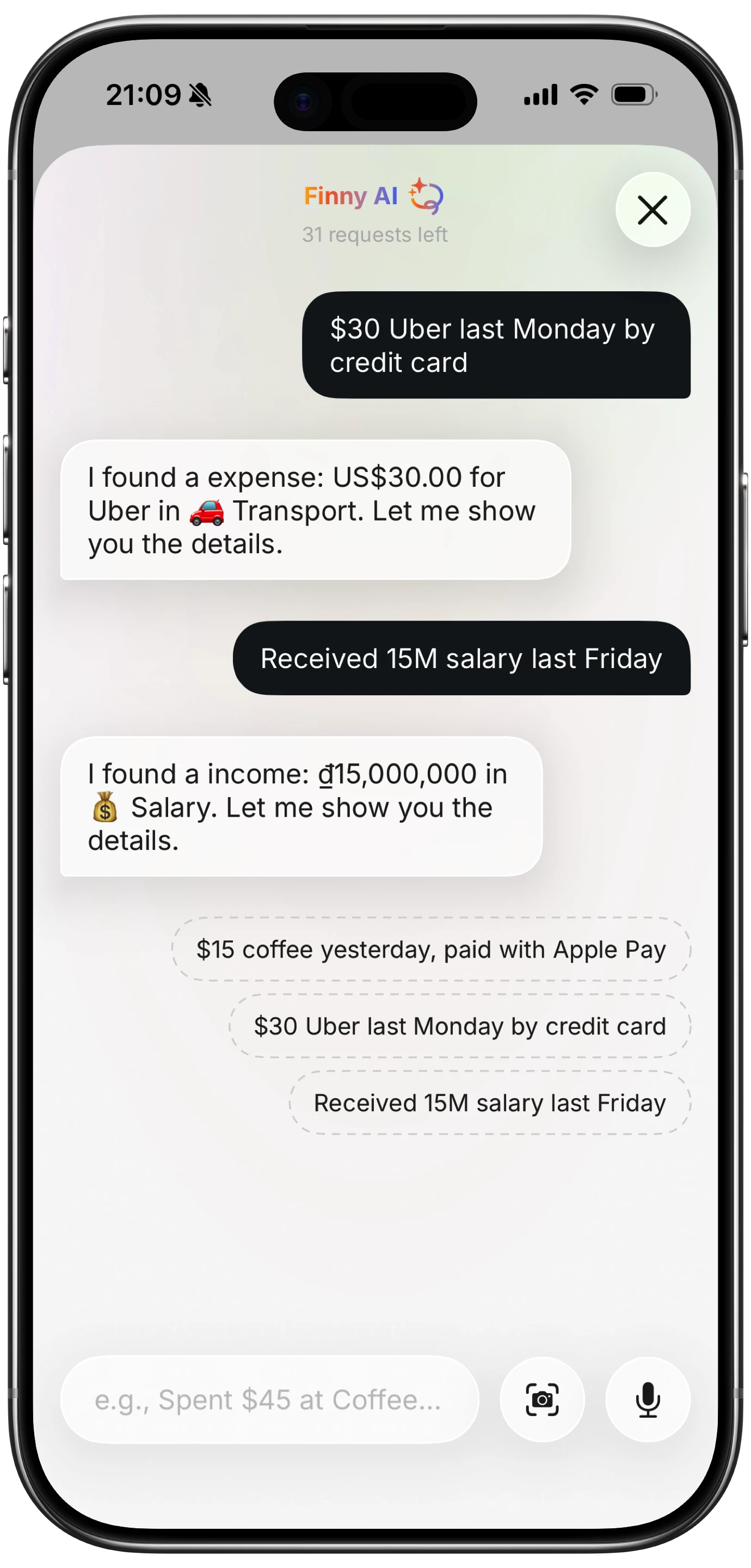
There is a quieter trade-off hiding inside bank syncing that neither app talks about much: linking your accounts means handing over your banking credentials to a third-party data aggregator. Plenty of people are uncomfortable with that, and automatic imports also tend to arrive a day or two late and with messy merchant names. Manual or AI-assisted entry, by contrast, creates awareness in the moment, which is half the point of budgeting. If you want to avoid bank links entirely, our guide to tracking expenses without linking a bank covers the options.
Learning Curve and Who Each Is For
The two apps feel very different the first week you use them, and that gap matters more than most feature lists admit.
YNAB has a steep learning curve. The Four Rules take time to internalize, and the interface assumes you are willing to invest in learning the system. The reward is real: once it clicks, YNAB is one of the most capable budgeting tools available, with deep reporting, goal tracking, and flexibility. But a meaningful number of people sign up, feel overwhelmed, and drift away before it pays off.
EveryDollar is gentle by design. Building your first budget takes minutes, and the layout is clean and approachable. It does less than YNAB, which is exactly why it is easier to stick with for beginners.
Here is a quick way to decide:
- Choose YNAB if you want to learn a rigorous method, you value control over every dollar, and you will use bank sync and detailed reports enough to justify $109 a year.
- Choose EveryDollar if you are following the Ramsey Baby Steps, you want a free or low-cost option, and you prefer a simple budget over a powerful one.
- Choose neither if both feel like too much work or too much money, which is a more common conclusion than the apps would like you to believe.
The Verdict: YNAB vs EveryDollar (and Cheaper Alternatives)
If you want the most powerful zero-based budgeting system and you will actually do the work, YNAB wins, full stop. If you want a free or affordable budget tied to a clear debt-payoff plan, EveryDollar wins, and its free tier is the strongest argument in the whole comparison.
But the honest answer for a lot of readers is that neither is ideal. YNAB's $109 a year feels steep once you know the method, and EveryDollar's most convenient feature lives behind Premium. If the friction or the price is what is holding you back, a faster, cheaper tool may keep you budgeting longer than the "best" app you abandon in March.
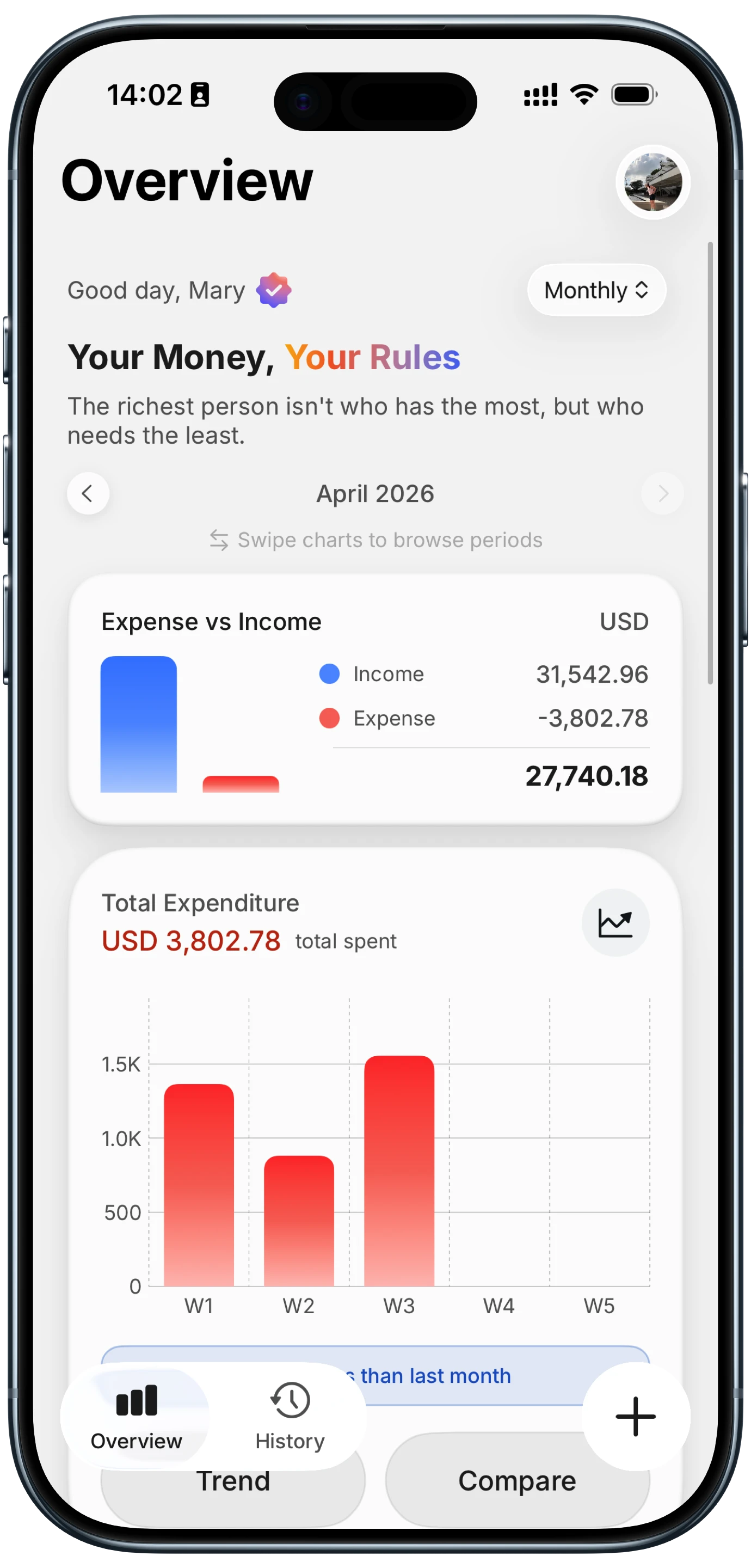
That is the gap apps like Finny aim to fill. Instead of bank links or manual typing, Finny logs expenses with AI from text, voice, or a receipt photo, and its Tap to Track feature auto-logs Apple Pay purchases without any bank login. At a low yearly price for Pro, it costs less than either app here while removing the slowest part of manual budgeting. It is not a full envelope system like YNAB, but for many people consistent tracking beats an elaborate budget they quit.
For more options in this lane, see the best YNAB alternatives for 2026, and if you want these two stacked against envelope apps, the YNAB vs EveryDollar vs Goodbudget vs Honeydue comparison goes wider.
Tired of budgets you abandon by mid-month? Try Finny and log spending in seconds with AI, no bank link required, so the habit actually sticks.
Frequently Asked Questions
Is YNAB or EveryDollar better?
Neither is universally better; it depends on what you value. YNAB is the more powerful tool, with a rigorous Four Rules method, deep reporting, and bank sync on every plan, but it costs $109 a year with no free option. EveryDollar is simpler, has a genuinely usable free tier, and ties into Dave Ramsey's Baby Steps. Pick YNAB for control and method, EveryDollar for affordability and guided simplicity.
Is EveryDollar free?
Yes, EveryDollar has a real free plan. You can build a complete zero-based budget and track every transaction manually on both web and mobile without paying. The free tier's main limitation is that bank syncing is not included. EveryDollar Premium ($17.99/month or $79.99/year) adds automatic bank imports, paycheck planning, the Margin Finder, and guided coaching content.
Is YNAB worth the price?
For committed budgeters who use the method, many say yes. YNAB's Four Rules genuinely change spending habits, and the reporting and flexibility are excellent. The catch is the $14.99/month ($109/year) price and the lack of a free tier after the 34-day trial. If you have already learned zero-based budgeting, a cheaper app may deliver most of the value for a fraction of the cost.
Can you use EveryDollar without paying?
Yes. EveryDollar's free plan lets you create a full zero-based budget and log transactions by hand indefinitely, with no charge. You only need to pay for Premium if you want automatic bank syncing, paycheck planning, the Margin Finder, or the coaching features. Premium costs $79.99 a year, or is bundled into Ramsey+ at $129.99 a year alongside Financial Peace University.
The YNAB vs EveryDollar decision is really a decision about you, not the apps. Both are solid zero-based budgeting tools built on the same sound idea of giving every dollar a job. YNAB asks for more money and more effort and returns more power. EveryDollar asks for less of both and meets you where you are, especially on its free tier. If the price or the learning curve of either one is what keeps stalling you, that is a signal worth listening to. The best budgeting app is the one you will still be using six months from now, even if it turns out to be a simpler, cheaper tool that just makes tracking effortless.