Actual Budget vs YNAB 2026: Is Free Good Enough?
YNAB costs $109 a year. Actual Budget costs nothing, runs the same zero-based method, and keeps your data on your own device. On paper that looks like an easy choice, and it's why Actual shows up in nearly every Reddit thread about YNAB's price.
In practice, the Actual Budget vs YNAB decision isn't about the budgeting method, since both do envelope budgeting well. It's about what you're paying for: polish, bank sync that just works, a strong mobile app, and support. This guide compares real costs, setup effort, daily use, and privacy so you can decide whether free is good enough for you. For a deeper look at Actual alone, read our Actual Budget review.
Actual Budget vs YNAB at a glance
| Actual Budget | YNAB | |
|---|---|---|
| Price | Free, open source (MIT license) | $14.99/mo or $109/yr |
| Real cost with sync | About $15/yr for SimpleFIN, plus hosting if you sync devices | $109/yr, everything included |
| Budgeting method | Zero-based envelope | Zero-based envelope |
| Bank sync | Optional, via SimpleFIN (US/Canada) that you set up | Built in |
| Multi-device sync | Needs a sync server (self-hosted or a hosted pod) | Built in |
| Mobile | Works, but secondary to desktop and web | Polished native apps |
| Data location | Local-first, on your device or your server | YNAB's cloud |
| Support | Community (Discord, GitHub) | Company support, free workshops |
| Sharing | Anyone with access to your server | Up to 6 people per subscription |
| Best for | Tinkerers, privacy-first budgeters | People who want it to just work |
Real cost: free isn't quite zero
YNAB's cost is simple: $14.99 a month or $109 a year after a 34-day free trial, with a free year for college students.
Actual's cost depends on how you use it:
- One device, manual entry or CSV import: $0. Download the desktop app, build your budget, and import bank files weekly.
- Sync across laptop and phone: you need a sync server. Actual's docs point to hosted options like PikaPods, which runs Actual for about $1.50 a month and gives new accounts a starting credit. You can also self-host on your own server or a small VPS.
- Automatic bank import in the US: Actual supports SimpleFIN, a separate service that costs roughly $15 a year. The European route through GoCardless stopped accepting new sign-ups in 2025.
So a fully synced, bank-connected Actual setup runs roughly $30 to $35 a year, against YNAB's $109. That's still a big saving. The trade is your time: YNAB's price includes setup, maintenance, and support that you'd otherwise handle yourself.
Same method, different feel
Actual was built as an open-source take on the envelope method YNAB made popular, so the core loop is nearly identical. Money comes in, you assign it to categories until nothing is left, and overspending one category means covering it from another. If you know YNAB, you'll understand Actual within an hour. Actual can even import an existing YNAB budget.
The differences are in the details:
- Interface. YNAB is polished and guided, with prompts and targets that nudge you. Actual is denser and closer to a spreadsheet. People coming from spreadsheets tend to love it, while people coming from consumer apps often find it plain.
- Rules and reports. Actual has powerful categorization rules and customizable reports. YNAB's reports are simpler but clearer out of the box.
- Targets. YNAB's target system (save $600 by June, spend $400 a month) is one of its best features. Actual supports goal templates, but they take more setup.
- Learning resources. YNAB runs free live workshops and has years of guides. Actual relies on its documentation and community.
If you like the method but aren't sure about either app, our guide to zero-based budgeting explains how it works in plain terms.
Bank sync and setup effort
This is where YNAB earns most of its price.
YNAB: connect your bank inside the app, and transactions start importing. When a connection breaks, you reconnect in a couple of taps, and support can help if it doesn't work.
Actual: bank sync is something you configure. You create a SimpleFIN account, connect your banks there, generate a token, and paste it into Actual. That's a one-time job, but when a bank connection breaks you troubleshoot it yourself. Many Actual users skip sync entirely and import CSV files once a week, which is free and reliable if you're disciplined about it.
If you've never run a server or used Docker, the multi-device setup is a genuine project. If you have, it's an afternoon.
Mobile and day-to-day logging
YNAB's iPhone and Android apps are polished. You can enter a transaction at the register, check a category balance before buying, and move money between categories from your phone.
Actual's mobile experience has improved, but it remains secondary to the desktop and web app. It's designed for a weekly sit-down session more than logging at the checkout.
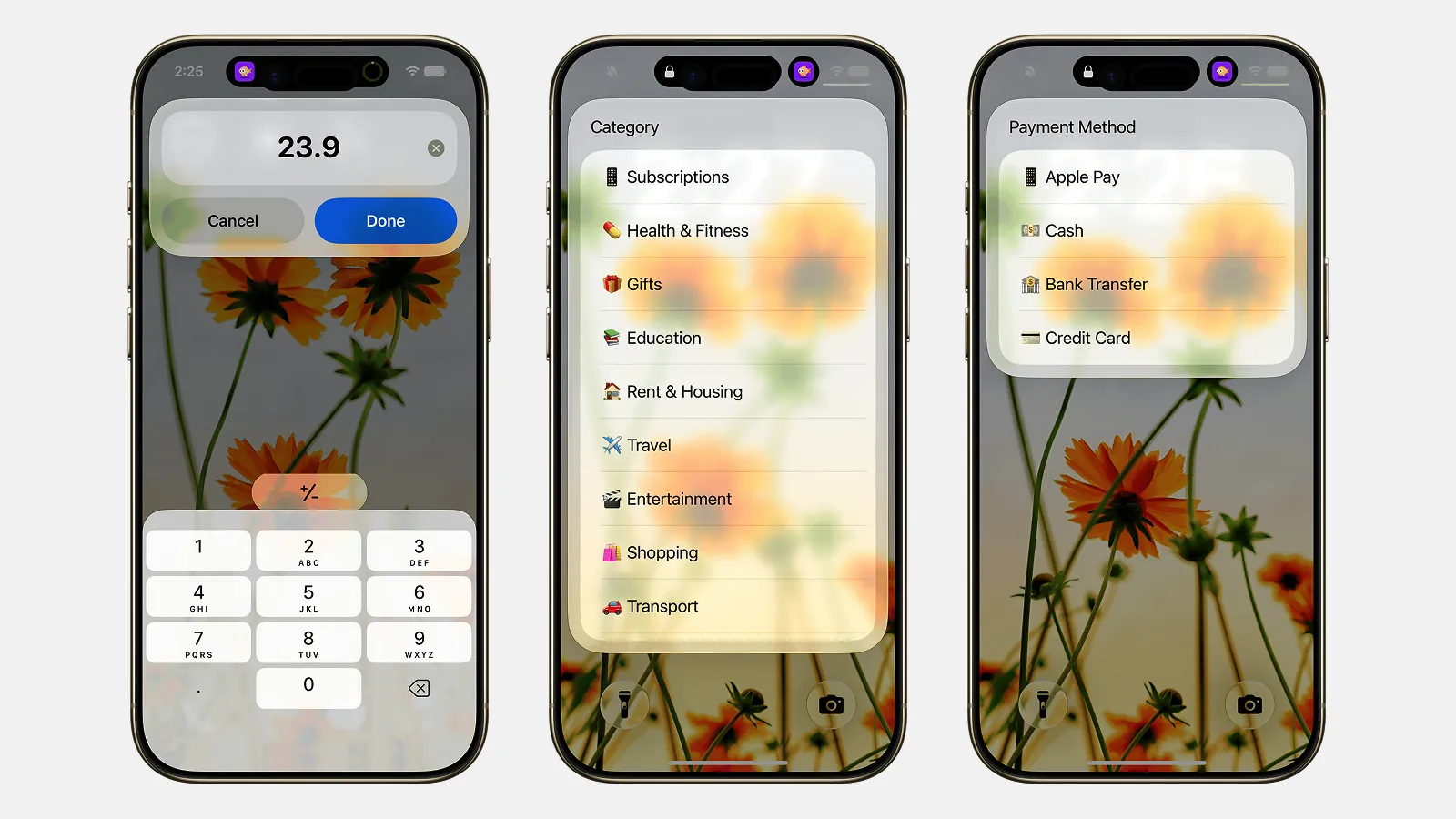
That gap leads some people to pair a zero-based budget on the desktop with a fast capture app on their phone. They log purchases as they happen, then export or reconcile once a week. Here's what automatic capture looks like on an iPhone:
Privacy and data ownership
Privacy is Actual's strongest argument. It's local-first: your budget lives on your device, and if you run a sync server, on a server you control. The code is open source, so anyone can check what it does. There's no company holding your financial history, and no business model built on it.
YNAB is a well-regarded company with a clear subscription model, and it doesn't sell user data. But your budget and any connected bank data live on its servers and pass through data aggregators.
If keeping bank credentials out of third-party hands is your main concern, there's a middle ground between the two: don't connect a bank at all. Our guide to tracking expenses without linking your bank covers how, and our finance app security and privacy explainer shows what to check in any app.
Who should choose Actual, and who should choose YNAB
Choose Actual Budget if:
- You enjoy setting up your own tools, or you already run a home server.
- Privacy and data ownership matter more to you than convenience.
- You're happy doing most of your budgeting on a laptop.
- You want the YNAB method without the $109 a year.
Choose YNAB if:
- You want bank sync and multi-device sync to work with no setup.
- You budget mostly from your phone.
- You want guided help, live workshops, and a support team.
- You share a budget with a partner or family (up to six people per subscription).
A third option: if what you actually want is a clear record of spending rather than a full envelope budget, a capture-first app like Finny logs card payments as you make them and typed or spoken expenses in seconds, with no bank login and no server to maintain. It has category budgets with optional rollover and exports to CSV whenever you want to reconcile.
Frequently Asked Questions
Is Actual Budget as good as YNAB?
For the budgeting method itself, Actual is very close. It implements the same zero-based envelope approach, and YNAB users usually adapt within a session or two. Where it falls short is polish: mobile apps, automatic bank sync, guided targets, and official support. If you're comfortable configuring things yourself, it's an excellent free alternative.
How much does Actual Budget really cost?
The app is free and open source. Costs only appear for extras: a sync server if you want your budget on several devices (hosted options start around $1.50 a month), and SimpleFIN for automatic US or Canadian bank import at roughly $15 a year. A fully synced setup typically costs $30 to $35 a year, compared with $109 for YNAB.
Can I move my budget from YNAB to Actual Budget?
Yes. Actual can import an existing YNAB budget, bringing over accounts, categories, and transaction history. Most people run both side by side for a few weeks to confirm the numbers match before canceling YNAB. Check Actual's documentation for the current import steps. Keep a YNAB export as a backup until you're confident the move worked.
Does Actual Budget have bank sync in the US?
Yes, through SimpleFIN, a separate paid service at roughly $15 a year. You connect your banks in SimpleFIN and link it to Actual with a token. It isn't built in the way YNAB's sync is, so expect some setup, and some troubleshooting if a connection breaks. Weekly CSV import from your bank is a free alternative that many Actual users prefer.
Is Actual Budget safe to use?
Actual is local-first and open source, so your data stays on your device or a server you control, and the code is public for anyone to review. The main risks are operational: if you self-host, keeping the server updated and backed up is your responsibility. Export regular backups either way.
The bottom line
Actual Budget vs YNAB isn't really a question about budgeting. Both run the same proven method. The question is whether $109 a year is worth paying for bank sync that just works, polished mobile apps, and someone to call when things break. If you enjoy owning your tools, Actual is one of the best free finance apps available. If your budget falls apart whenever setup gets complicated, YNAB's price is money well spent.