Best Budget App for College Students (2026)
College is one of the most financially complicated seasons of life. Your income arrives in lumps: a part-time shift here, a financial aid refund there. Expenses pile up in ways no one prepares you for: textbooks, meal plan overages, split rent, a broken laptop two weeks before finals. Most budgeting advice assumes a stable paycheck, which means most budgeting apps are not built with you in mind.
This guide covers the best budget app for college students in 2026. We focus on free or very cheap options, apps that handle irregular income and shared costs, and tools simple enough to actually use between classes. If you want a broader look at student money tools, check out our guide to the best budget apps for students.
What College Students Actually Need in a Budgeting App
Most budgeting apps are designed for people with a W-2 job and a mortgage. College life is different. Here is what actually matters when you are choosing an app.
Free or close to it. You are already spending money on tuition. Paying $14 a month for a budgeting app is a real trade-off when your total discretionary budget might be $150.
Handles irregular income. Financial aid refunds, part-time work, money from family, freelance gigs: your income does not arrive on the first and fifteenth. A good app lets you log money as it comes and plan around it, not around a fictional steady paycheck.
Tracks shared costs. Roommate utilities, split groceries, shared streaming subscriptions: college spending is often communal. Some apps handle this better than others.
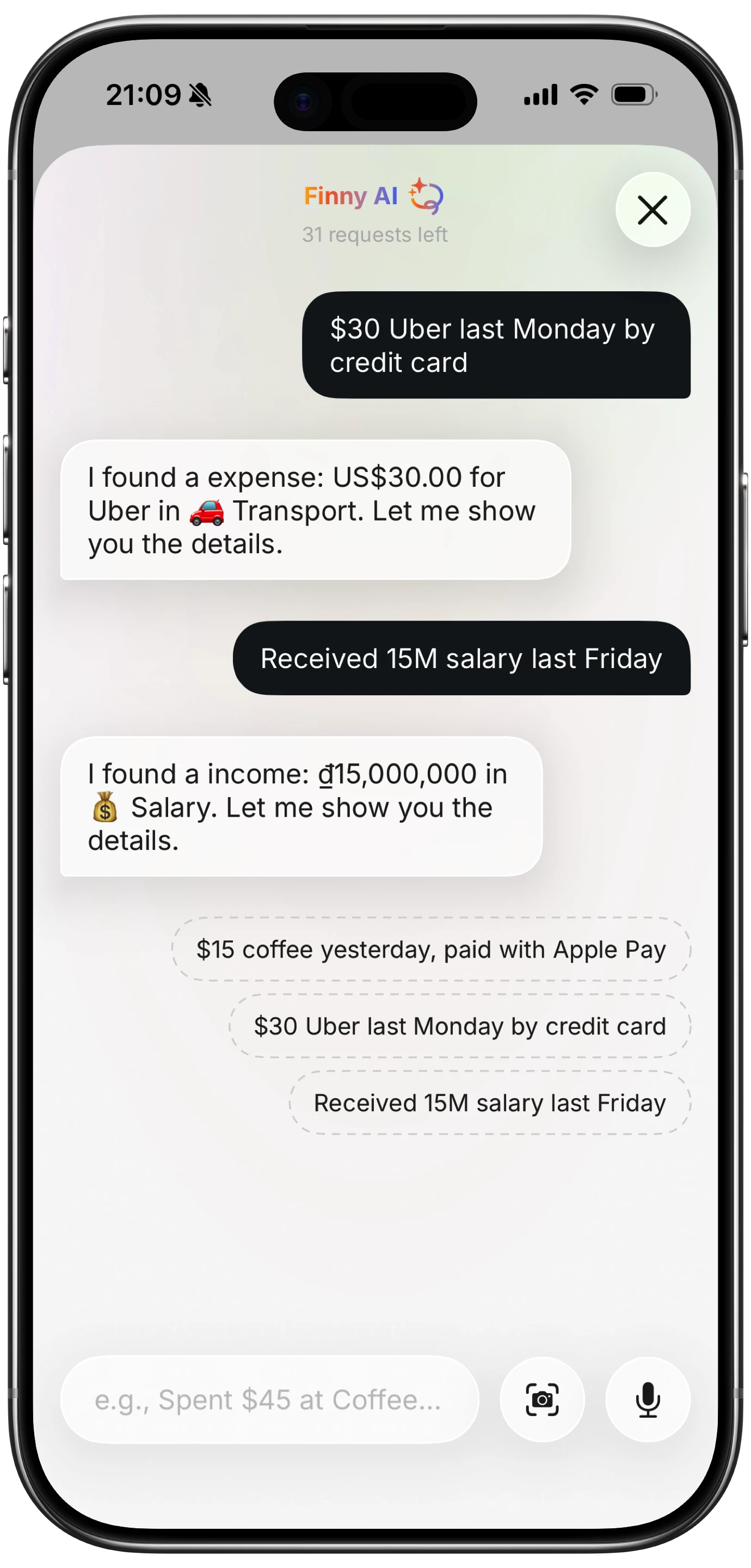
Fast to use. If logging an expense takes 45 seconds, you will stop doing it. The best apps for students make entry quick, whether by voice, text, or a single tap.
No bank link required. Connecting a bank account means handing your credentials or read access to a third party. For students who are new to managing their own finances, keeping that data private is a reasonable choice.
If you are new to budgeting concepts entirely, our budgeting for beginners guide is a good place to start before picking an app.
The Best Budgeting Apps for College Students in 2026
Here is a comparison of the apps worth considering. Below the table, each one gets a full breakdown.
| App | Monthly Price | Free Tier | Student Discount | Ease of Use | Roommate Splitting | Best For |
|---|---|---|---|---|---|---|
| Finny | Free / Optional Pro | Yes, unlimited tracking | No discount needed | Very easy | Manual split tracking | Privacy, AI logging, tight budgets |
| YNAB | $14.99/mo or $109/yr | 34-day trial | Free for 1 year (.edu) | Moderate | No native splitting | Learning zero-based budgeting |
| PocketGuard | $12.99/mo or $74.99/yr | Limited or none | None confirmed | Easy | No native splitting | Spending guardrails |
| Goodbudget | Free / $10/mo | Yes, 20 envelopes | None confirmed | Easy | Shared household sync | Envelope budgeting with a partner |
YNAB
YNAB (You Need A Budget) is the most well-known zero-based budgeting app. Every dollar you have gets assigned to a job before you spend it. The method is genuinely effective, and YNAB teaches it well with guides and live workshops.
The catch for most students is the price: $14.99 per month or $109 per year after the trial. That said, YNAB offers a genuine college student program: one full free year for anyone with a valid .edu email address. You submit proof of enrollment (a student ID or tuition statement), and you get 365 days free. After that, you are on the standard plan unless you cancel.
If you are willing to put in the learning curve and take advantage of the free year, YNAB is powerful. It does not link bank accounts in the traditional sense but does support bank imports. It does not have built-in roommate splitting. The zero-based approach takes a few weeks to internalize.
Best for: Students who want to build a lasting money habit and will actually use the educational resources. Claim the free year while you can.
PocketGuard
PocketGuard connects to your bank accounts and calculates how much you have left to spend after bills and savings goals, a number it calls "In My Pocket." The idea is simple and the interface is clean.
The pricing picture has gotten murkier recently. The free tier has become increasingly limited, and some sources indicate it may have been removed entirely for new users. As of 2026, the Plus plan runs $12.99 per month or $74.99 per year. There is also a one-time lifetime option that sometimes appears around $149.99, though it is not consistently advertised.
For college students, the bank-connection requirement is worth noting. PocketGuard's core value proposition depends on syncing your accounts, which means you are sharing financial data with a third party. There is no confirmed student discount.
Best for: Students who want a simple spending guardrail and are comfortable linking bank accounts.
Goodbudget
Goodbudget is a digital version of the envelope budgeting method. You allocate your money into virtual envelopes (rent, groceries, textbooks, fun) and track spending against each one. There is no bank sync, which means manual entry, but also no account credentials shared with anyone.
The free plan includes 20 envelopes and 1 account, enough to get started. The Plus plan at $10 per month or $80 per year unlocks unlimited envelopes, multiple accounts, and syncing across up to 5 devices. That last feature is useful for roommates or partners who want to share a budget.
Manual entry is either a feature or a bug depending on your habits. For students who want a simple, visual way to see where their money goes without connecting a bank, Goodbudget works well.
Best for: Students using envelope budgeting, especially those sharing expenses with a roommate who also wants visibility into the household budget.
College-Specific Budgeting Tips That Actually Work
Choosing an app is step one. Here is how to make it stick during the semester.
Budget by semester, not by month. Financial aid often arrives once or twice a semester. Drop that lump sum into your app as income on the day it lands, then divide it across the weeks until the next disbursement. This prevents the "I have money" feeling in September followed by panic in November.
Create a textbook envelope. Textbook costs are unpredictable and spiky. Set aside $50 to $100 each month into a dedicated category even before you know what you will need. When the semester starts and the syllabus reveals a $180 required text, you have something to draw from. See our guide on how to save money as a student for more tactics on cutting textbook costs specifically.
Log expenses the moment they happen. The main reason budgets fail is delayed entry. You buy coffee at 8 a.m., tell yourself you will log it later, and by evening you have forgotten three more transactions. Apps with fast input, whether a text entry, a voice note, or a single tap, make this dramatically easier. If an app takes more than a few seconds to record something, it is the wrong app for your schedule.
Treat your meal plan as a fixed cost, cash overages as variable. Your dining hall balance is already paid. The problem is the late-night delivery and the weekend coffee runs that add up outside the plan. Track those separately as discretionary food spending.
Split costs in writing, even with friends. Whether it is a shared Spotify subscription, utilities, or a Costco run, write down who owes what and when. Some apps let you track shared expenses manually; others integrate with tools like Splitwise. The important thing is having a record, not relying on memory.
For a foundational understanding of how budgets work before you get too deep into the tools, the what is a budget guide covers the basics clearly.
Which App Should You Actually Download?
Here is the short version.
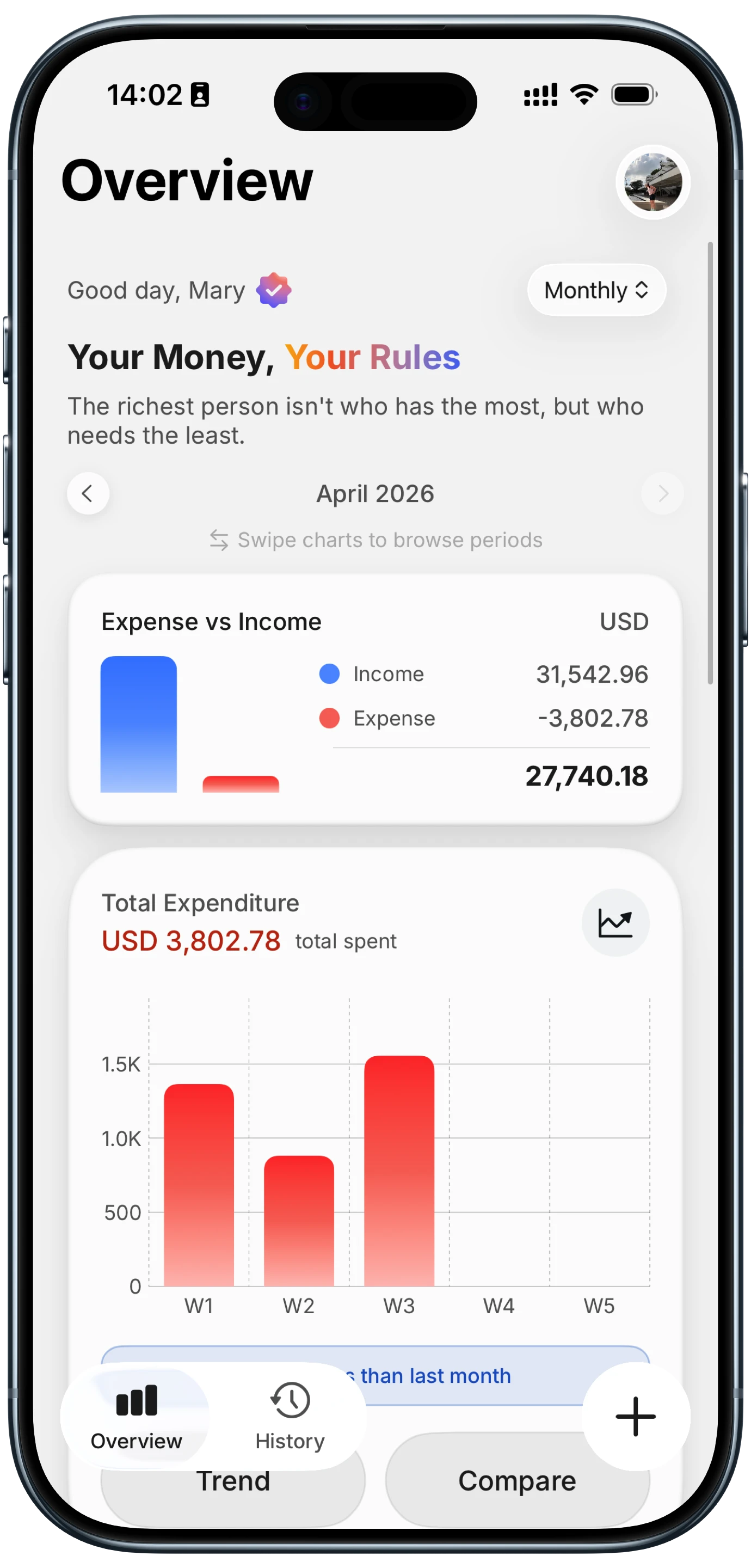
If cost is the main concern and you want something private that works offline, a free option with fast logging is the right fit. Finny is free, does not require a bank connection, and lets you log expenses by typing, speaking, or snapping a photo of a receipt: useful when you are rushing between classes. The Pro plan costs a low monthly price, which is cheaper than most budgeting apps by a significant margin. For a broader comparison of free tools, see best free budgeting apps.
If you are serious about learning zero-based budgeting and have a .edu email, claim YNAB's free year. Use those 12 months fully. Just set a calendar reminder before it ends so you are not charged unexpectedly.
If you are sharing a budget with a roommate and want the envelope method without bank syncing, Goodbudget's free tier is a reasonable starting point.
There is no single right answer. The best app is the one you will actually open every day.
Common Questions About Budgeting Apps for College Students
Is there a completely free budgeting app for college students?
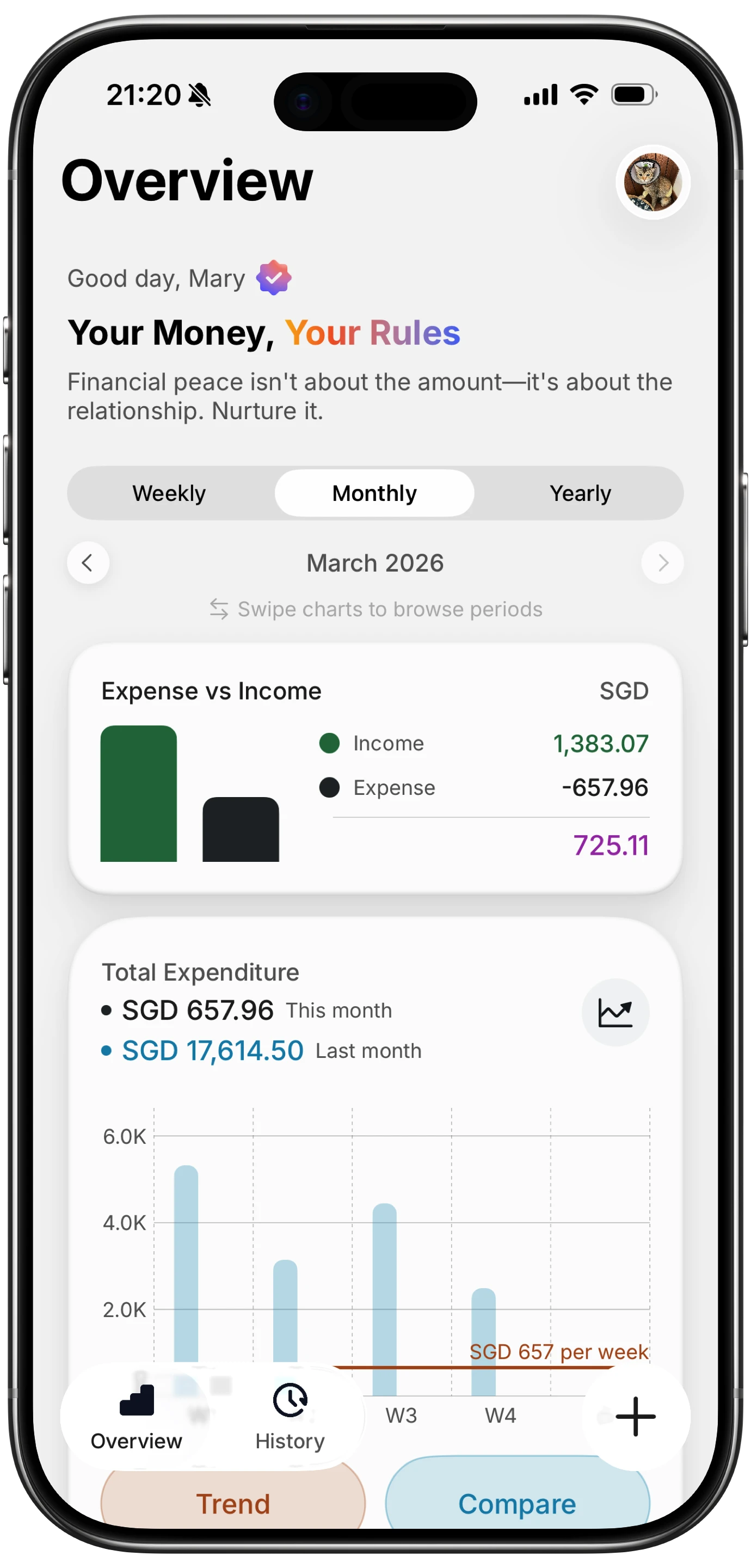
Yes. Several apps offer genuinely free tiers, not just free trials. Goodbudget's free plan covers 20 envelopes and one account. Finny's free tier includes unlimited manual transaction tracking, custom categories, and spending charts. YNAB offers a free year for verified college students with a .edu email. Start free, and upgrade only if you hit a real limit.
Do budgeting apps require you to connect a bank account?
No. Apps like Goodbudget and Finny are built around manual entry, which means you log transactions yourself without giving the app access to your bank. Bank-connected apps like PocketGuard and YNAB (via bank import) automate some of that work but do require you to share account access. If privacy matters to you, manual-entry apps are the better fit.
How do I budget on a college student income?
Start by listing every source of money you expect: financial aid, part-time job, family contributions. Assign that total across your real expenses: rent, food, transportation, subscriptions, textbooks, and a small emergency buffer. Log every purchase against those categories. You do not need a large income to budget well. You just need to know where your money is going before it disappears.
What should I do when my financial aid refund hits?
Treat it like a paycheck, not a windfall. Before spending anything, divide the refund across the weeks or months until your next expected income. Cover your fixed costs first: rent, utilities, phone. Then allocate amounts for food, supplies, and a small discretionary cushion. Log the full amount as income in your budgeting app on day one.
Can I use a budgeting app to split expenses with roommates?
Some apps handle this natively, most do not. Goodbudget allows household members to share a budget across devices, which helps with visibility. For actual splitting and tracking who owes whom, a dedicated tool like Splitwise works alongside your budgeting app. Log the full expense in your budget when you pay it, then record the reimbursement as income when your roommate pays you back.
Ready to take control of your money this semester? Download Finny for free. No bank connection, no subscription required to get started, and you can log your first expense in under ten seconds.