Does Rocket Money Sell Your Data? 2026 Privacy Check
The short answer: Rocket Money states that it does not sell your personal information, and its own policy language is explicit about it. The company says it does "not accept payment of any kind in exchange for your personal information or financial data."
That settles the narrow question and leaves the more useful one open. Does Rocket Money sell your data is not the same question as what happens to your data, because "we do not sell it" is compatible with a good deal of sharing. This piece covers what the policy actually permits, where the aggregated data caveat matters, what the Plaid layer adds, and what you can do if the arrangement does not suit you.
For the broader security picture, see our companion piece on whether Rocket Money is safe.
Selling and Sharing Are Different Things
Under most US privacy law, "selling" means exchanging personal information for money or other valuable consideration. A company can accurately say it does not sell data while still sharing that data widely, provided no payment flows in the other direction.
Rocket Money's policy describes several categories of sharing:
- Service providers. Companies that operate parts of the product, including the bank connection layer and the people who negotiate bills on your behalf.
- Aggregated and de-identified data, shared with partners for research and analytics.
- Personal information shared with third parties for those parties' own services and marketing, as described in the policy.
The third category is the one people mean when they ask this question. It is disclosed, it is legal, and it is common across the industry. It is also not what most users picture when they read "we do not sell your data."
The Aggregated Data Caveat
"Aggregated and de-identified" sounds reassuring and mostly is, with one caveat worth understanding.
Anonymized transaction data is genuinely valuable. Knowing that spending at a retail category rose 4% across a million users is worth money to research firms, hedge funds, and advertisers, and selling that pattern does not identify you. This is standard practice at nearly every consumer finance app, not a Rocket Money peculiarity.
The caveat is that de-identification is not a permanent property. Research has repeatedly shown that transaction records with enough detail can sometimes be re-linked to individuals when combined with other datasets. The risk to any specific person is low. It is not zero, and it is worth knowing that "de-identified" describes a process rather than a guarantee.
The Plaid Layer
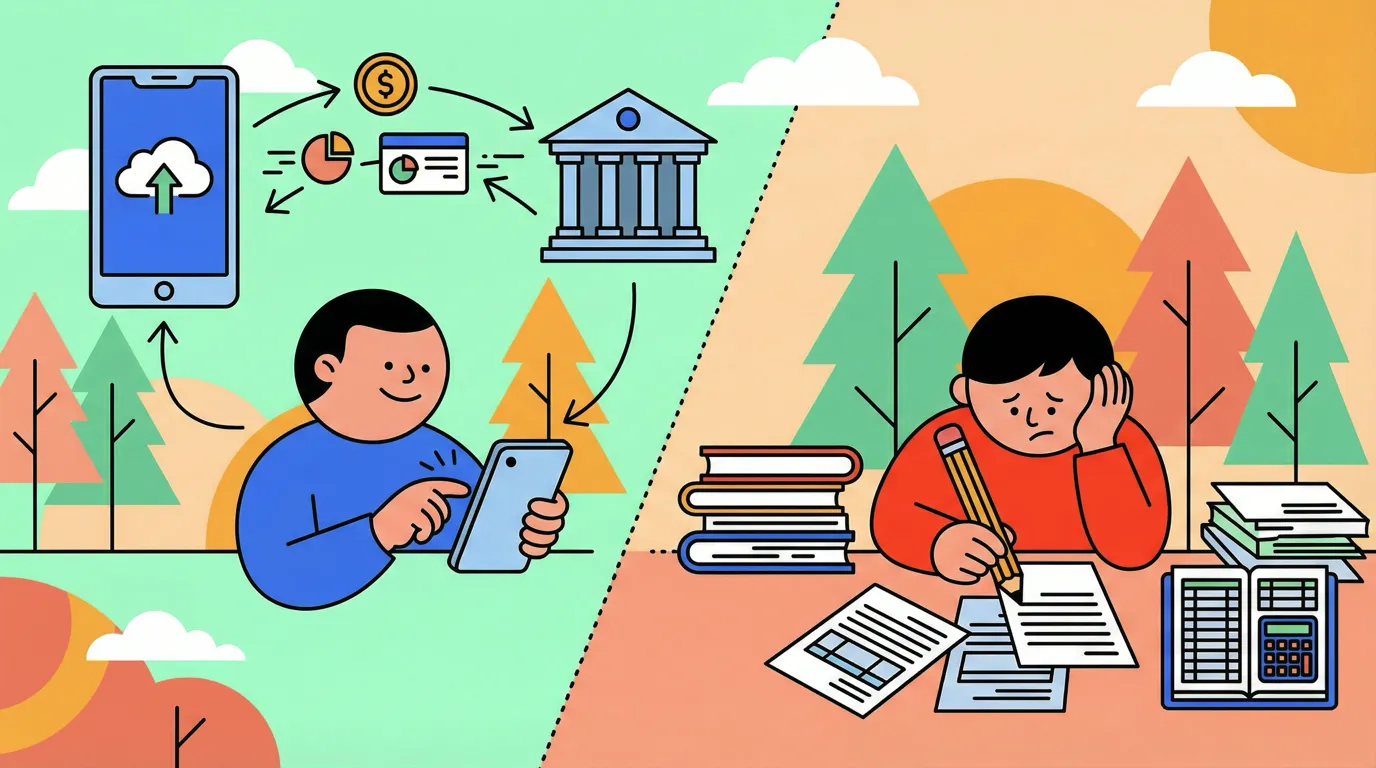
Rocket Money uses Plaid to connect bank accounts. Plaid generates an encrypted token that provides read-only access to transaction data, so Rocket Money does not store your banking password.
This is the industry standard approach and it is meaningfully safer than the alternative. It also means a second company now sits between you and your bank, with its own privacy policy and its own data practices. Anyone evaluating Rocket Money's privacy is really evaluating two policies.
Read-only access is a real limit: the token cannot move money. But it does grant a continuous view of your transaction history for as long as the connection stays active, which is the part worth being deliberate about.
The Ownership Question
Rocket Money was formerly Truebill, acquired by Rocket Companies, the parent of Rocket Mortgage. That ownership is public and relevant.
A financial services group that sells mortgages owning an app that observes your complete spending, income, and debt picture is a structure worth being aware of. Nothing about it is hidden or improper, and the disclosed policy governs what can happen. But if your objection is to marketing based on your financial behavior, the corporate structure is part of what you are evaluating, not an incidental detail.
What You Can Actually Do
Four options, in order of how much they change.
Read the policy sections on sharing. They are the ones that matter, and they change. Policy summaries written by others, including this one, age quickly.
Use the privacy controls. Rocket Money provides opt-outs, and residents of states with comprehensive privacy laws have additional rights to limit sharing and to request deletion. These require you to act; none of them are default.
Disconnect accounts you do not need connected. Every linked institution is an ongoing data flow. If you connected five accounts to solve a problem involving one, disconnect the other four.
Use something that does not require the connection at all. This is the only option that changes the structure rather than the settings.
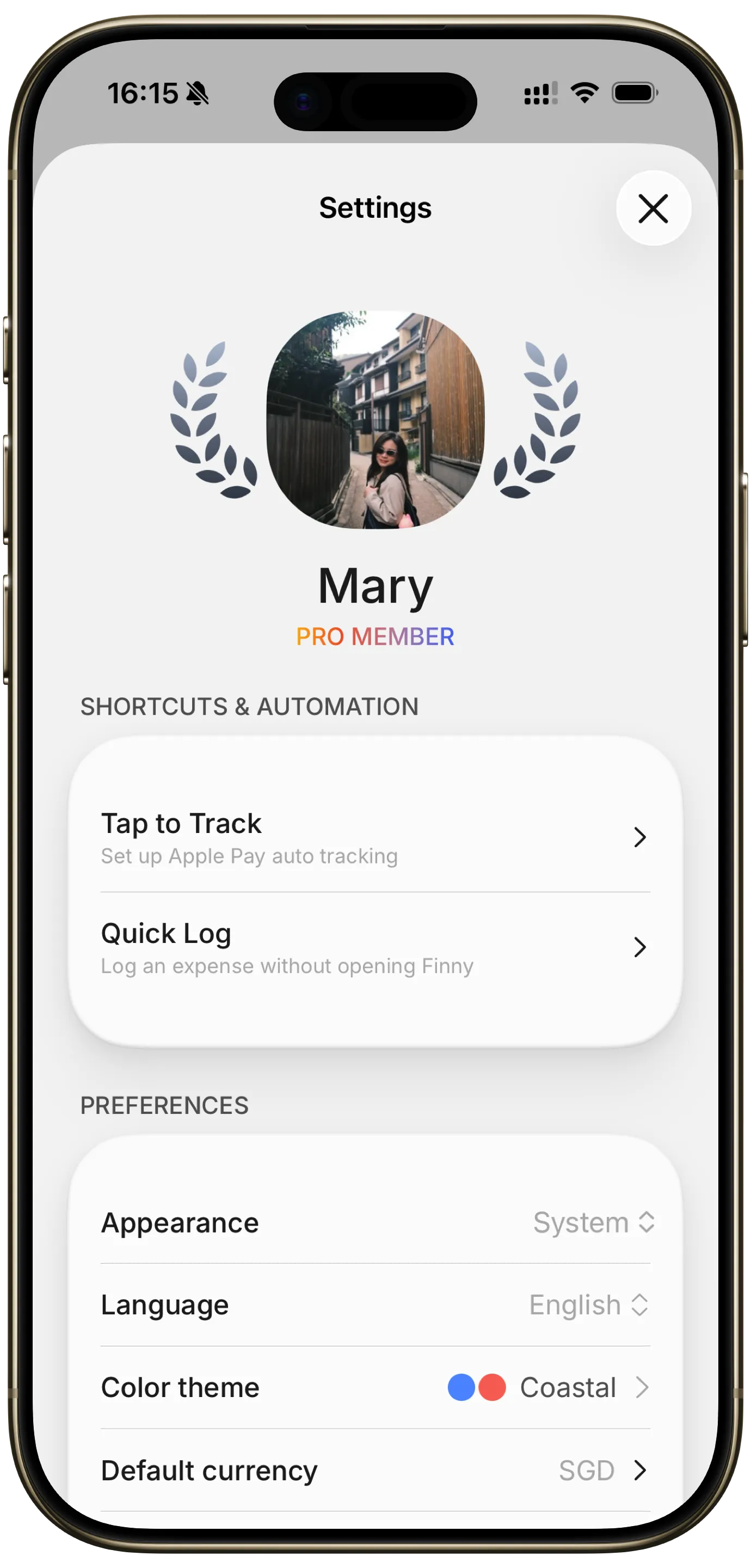
Finny app's Settings feature
Tracking Without the Bank Connection
The whole privacy question above exists because of one design decision: the app needs read access to your bank to work. Remove that and most of the question disappears.
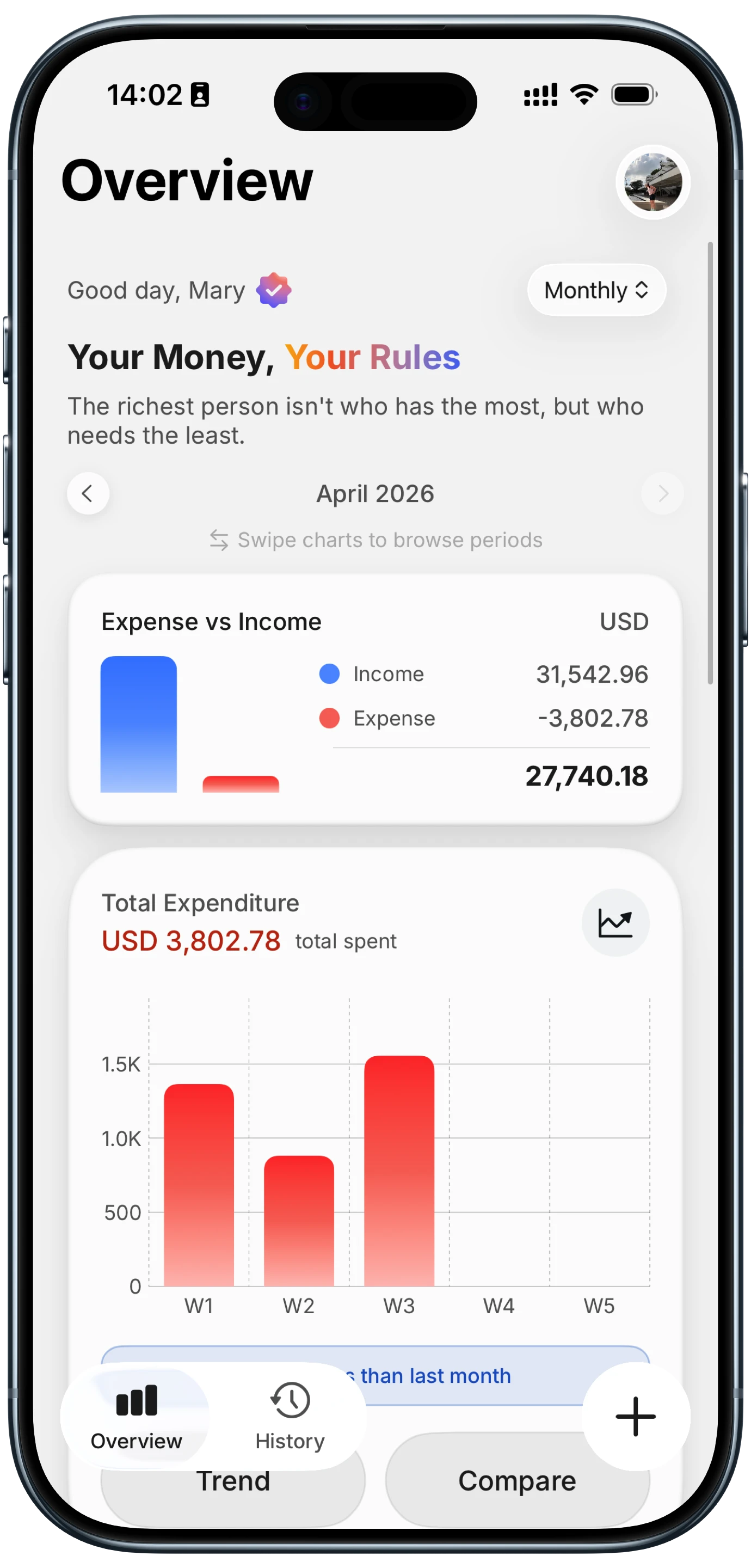
Finny takes that approach. Card payments get logged as you make them, receipts get captured from your photo library, and payments showing on your screen can be logged from what is displayed, with no bank connection and no aggregator in between.
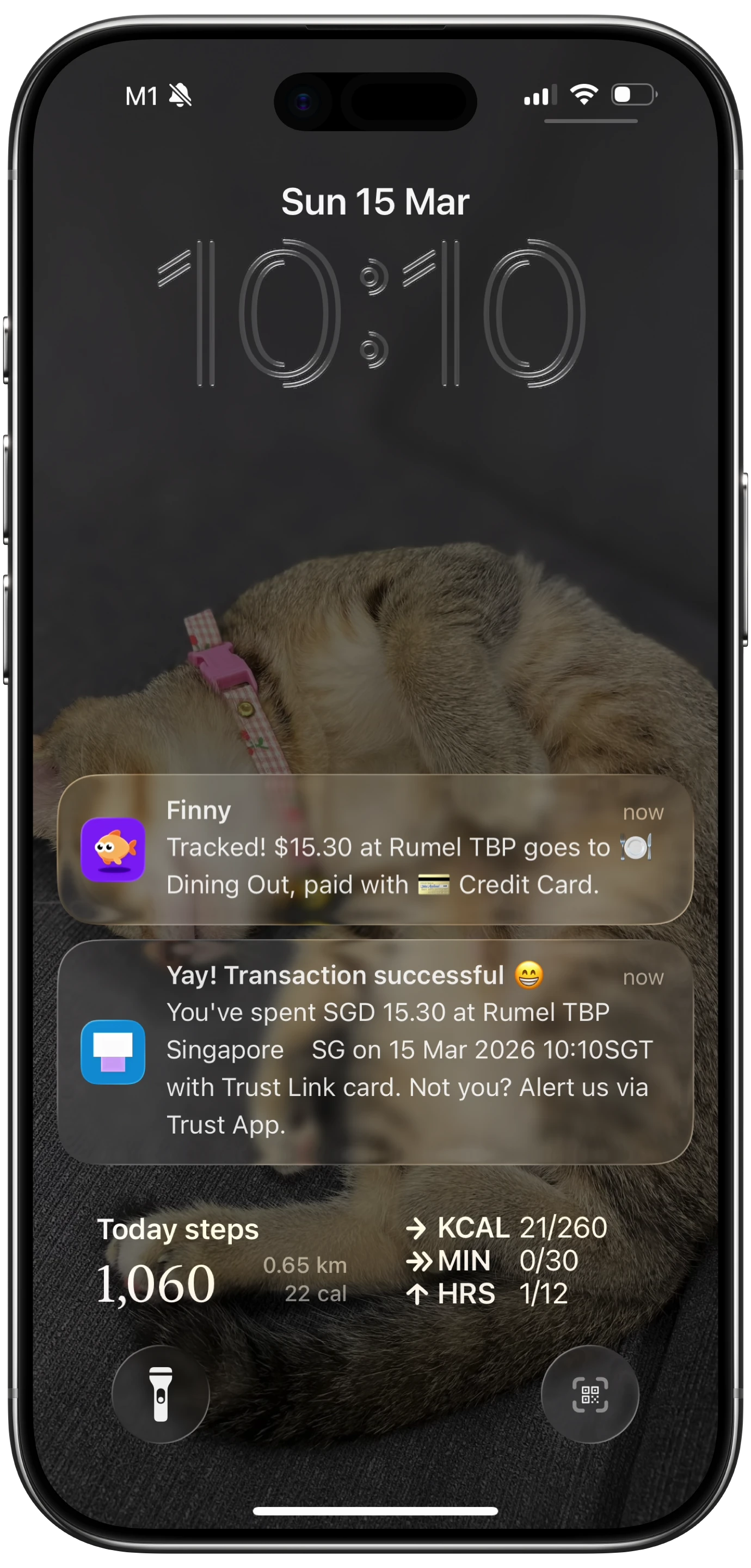
Finny app's Tap to Track feature
The tradeoff is honest: without a bank feed, an app cannot negotiate your bills or cancel subscriptions on your behalf, which is the main reason people use Rocket Money in the first place. If those services are the point, the data sharing is the price. If you mainly want to see where your money goes, you can have that without the exchange.
This video shows what capture looks like without an account connection:
If you want alternatives that keep the subscription features, our guide to apps like Rocket Money compares the field, and privacy-focused subscription trackers covers the narrower set that treats data more conservatively.
The Bottom Line
Rocket Money says it does not sell your personal information, and there is no public evidence contradicting that statement. But the policy does permit sharing with service providers, sharing of aggregated and de-identified data with analytics partners, and sharing of personal information with third parties for their own services and marketing.
That is a normal arrangement for a free-tier financial app, and it is the actual price of the product. Whether it is acceptable depends on what you get back. If Rocket Money is cancelling subscriptions and negotiating bills for you, many people will consider that a fair exchange. If you only wanted to see your spending, you are paying with data for services you are not using.
Policies change. Before relying on any summary, including this one, read the current sharing sections yourself.
Common Questions About Rocket Money and Your Data
Does Rocket Money sell your personal information?
Rocket Money states that it does not accept payment of any kind in exchange for personal information or financial data, which under most US privacy law means it does not sell your data. The policy does permit sharing in several forms: with service providers who operate parts of the app, as aggregated and de-identified data for research and analytics, and with third parties for their own services and marketing. Not selling and not sharing are different claims.
Is Rocket Money safe to connect to my bank?
The connection itself uses Plaid, which issues an encrypted read-only token rather than storing your banking password, so the app cannot move money from your accounts. That is the industry standard and is meaningfully safer than credential sharing. The residual considerations are that a second company's privacy policy now applies, and that the connection provides an ongoing view of your transactions for as long as it stays active.
Who owns Rocket Money?
Rocket Money was previously called Truebill and was acquired by Rocket Companies, the parent company of Rocket Mortgage. The ownership is public. It is worth knowing because a financial services group that sells mortgages has visibility, within the bounds of the disclosed privacy policy, into an app that observes users' spending, income, and debt. Nothing about the arrangement is concealed, but it is part of what you are evaluating.
How do I stop Rocket Money from sharing my data?
Start by reading the current sharing sections of the privacy policy, then use the opt-out controls the app provides. If you live in a state with a comprehensive privacy law, you have additional rights to limit sharing and to request deletion, though you have to exercise them yourself. Disconnecting any accounts you do not actively need reduces the ongoing data flow. The only structural fix is using a tracker that never requires a bank connection.
Ready to track expenses with less friction?
Download Finny to log expenses using AI, receipts, or text. No bank connections, offline support, and full control over your financial data.