Expat Budgeting: Earn in One Currency, Spend in Another
Your paycheck arrives in dollars. Your rent is in euros, your groceries in euros, your phone plan in euros. But your student loan, your US credit card, and three subscriptions still bill in dollars. Every month you move money across, the exchange rate is a little different, and the question "am I on budget?" has no single answer because there's no single currency.
Expat budgeting is regular budgeting with one extra decision: which currency is the budget in? Get that right and the rest becomes normal money management. This guide covers choosing a home currency, tracking spending on both sides, timing transfers, and keeping the US obligations that follow you abroad in view. If you move between countries often, our guide for digital nomads tracking multiple currencies goes further.
The two-currency problem
Living on two currencies creates three recurring headaches:
- No single total. Spending in euros and dollars doesn't add up on its own, so "how much did I spend this month?" needs a conversion every time.
- Moving targets. A rent of EUR 1,400 costs a different number of dollars each month as the rate moves. A budget set in dollars in January can quietly break by June.
- Split obligations. Some bills stay in the old country and some start in the new one, often on different cards and accounts.
The goal is one number you trust, in one currency, that includes everything.
Step 1: Choose your home currency
Pick one currency as the currency of your budget. Everything else gets converted into it. Two good rules:
- Budget in the currency you earn in if your income is steady and most of your savings goals are there. A US remote worker paid in dollars might budget in USD even while living in Lisbon.
- Budget in the currency you spend in if most of your costs are local and you plan to stay. Someone settling in Germany long-term, even with some US income, may find EUR more natural.
There's no wrong answer, but switching back and forth is. Pick one and keep it for at least a year so month-to-month comparisons mean something.
Step 2: Track every expense in its original currency
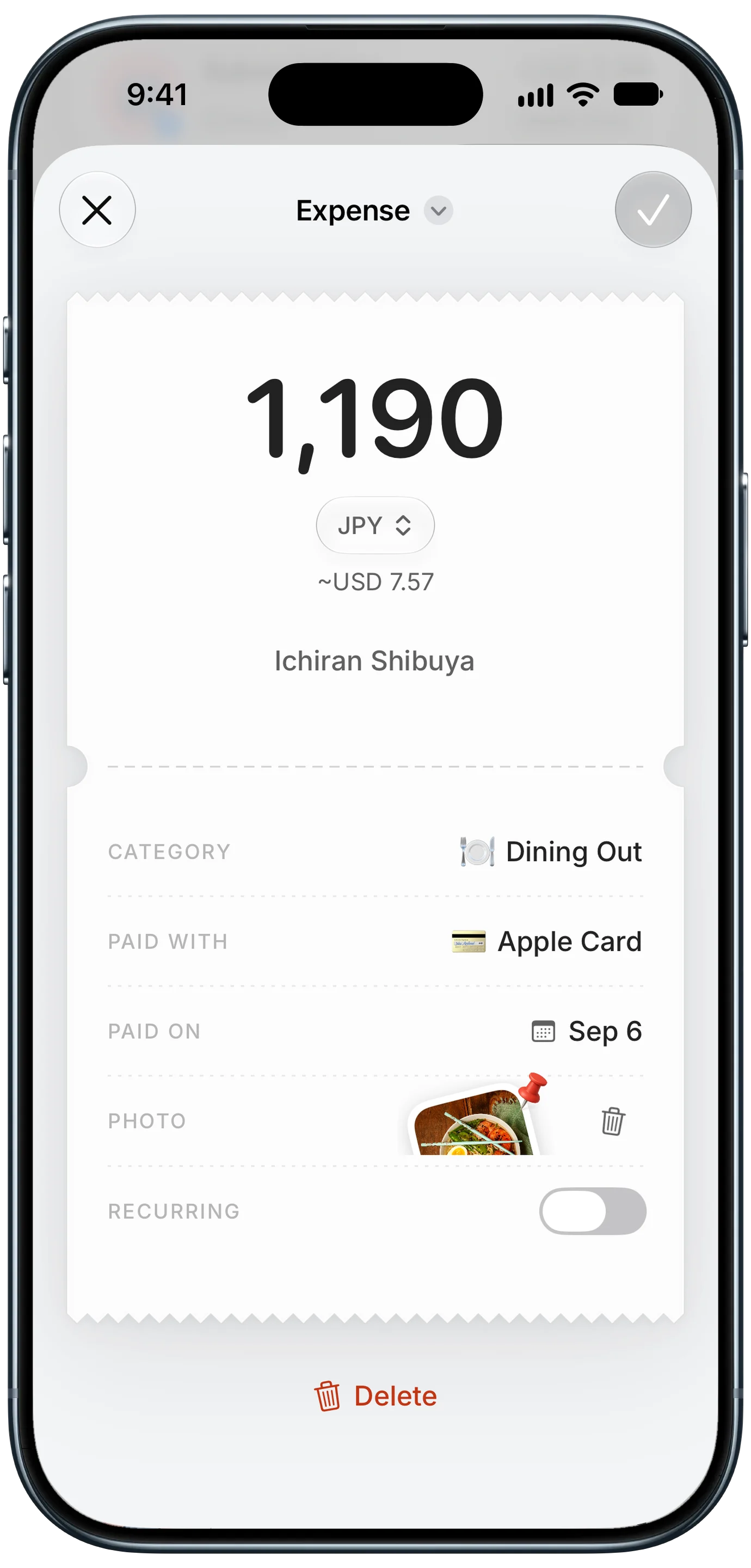
Log each expense in the currency you actually paid: EUR 62.40 at the supermarket, USD 11.99 for Spotify, GBP 45 for a weekend train ticket. Don't convert it yourself at the time. Let your tracker do the conversion into your home currency at the rate of the day.
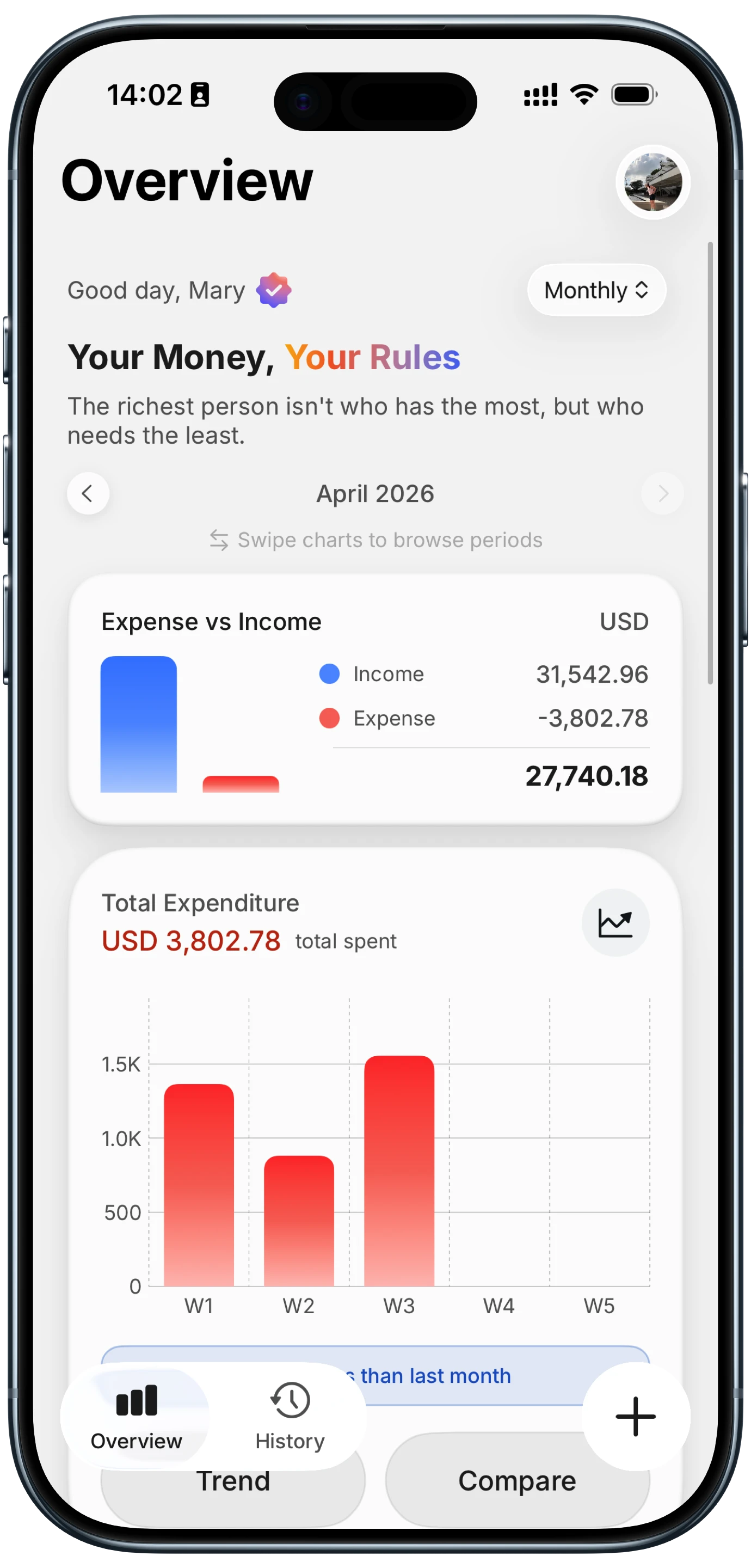
This keeps two things intact: the real amount you paid, and an accurate home-currency total. In Finny, every expense keeps its original currency, shows its approximate home-currency value, and rolls into one total in your home currency at live rates, across 150+ currencies. Setting your home currency correctly matters, because that's what every total and budget is measured in.
For the mechanics in more detail, see our guide to tracking expenses in multiple currencies.
Step 3: Budget your local costs in the local currency
Fixed local costs, like rent, utilities, and a transit pass, are easiest to manage in the currency they're billed in. A local-currency budget for these doesn't move when rates do, which makes the monthly plan stable.
Then keep a small dollar budget for the obligations that stay in dollars:
| Obligation | Typical currency | Tip |
|---|---|---|
| Rent, utilities, groceries | Local | Budget in local currency |
| US student loans, US credit cards | USD | Pay from a US account to avoid conversion |
| Streaming and app subscriptions | Often USD | Check whether a local-currency plan is cheaper |
| Flights home | Varies | Save for them as a sinking fund |
| Emergency fund | Split | Keep some in each currency you have bills in |
If you're moving a large sum each month, the exchange rate becomes one of your biggest line items. Track it.
Step 4: Time and track your transfers
Moving money from your home currency to your local one is where expats lose the most without noticing. A few habits help:
- Compare the total cost, not the advertised fee. A "free" transfer with a poor exchange rate can cost more than a transparent fee with a close-to-market rate.
- Transfer on a schedule. A fixed monthly transfer, rather than reacting to rate news, keeps the budget predictable and avoids trying to time the market.
- Log the transfer as a transfer, not spending. The money only becomes spending when it leaves your local account.
- Use a card with no foreign transaction fee for anything you pay in a currency other than the card's own. Our guide on avoiding foreign transaction fees covers the options.
Here's Screen Log recording a payment from the iPhone screen, handy for local bank transfers and bills that never touch a card:
Step 5: Keep US obligations in view
Americans abroad keep some US paperwork wherever they live. This isn't tax advice, but two items belong on every expat's calendar:
- US tax returns. US citizens generally file a US tax return while living abroad, even if they owe nothing. The IRS publishes guidance for US citizens and resident aliens abroad.
- FBAR. If the combined balance of your foreign accounts exceeded $10,000 at any point in the year, you generally need to file an FBAR (FinCEN Form 114). The IRS FBAR page explains who files and when.
Your budget helps here too. If you track account balances in their original currency, you'll know when you're close to thresholds like the FBAR one, and you'll have the records a tax preparer asks for.
Frequently Asked Questions
Which currency should an expat budget in?
Budget in the currency you earn in if your income is steady and your savings goals live there, or in the currency you spend in if most of your costs are local and you plan to stay. Pick one, convert everything else into it, and stick with it for at least a year so month-to-month comparisons stay meaningful.
How do I track expenses in two currencies?
Log each expense in the currency you paid, and let your expense tracker convert it into your home currency at the day's rate. This keeps the real amount and an accurate total. Budget fixed local costs in the local currency, and keep a separate small budget for obligations that stay in your home currency.
How do I handle exchange rate changes in an expat budget?
Budget fixed local costs in the local currency so they don't move with rates, and move money across on a fixed schedule rather than trying to time the market. Track the cost of each transfer, including the exchange rate, so you know what currency conversion actually costs you each month.
Do Americans living abroad still need to file US taxes?
Generally yes. US citizens are typically required to file a US tax return while living abroad, even if they owe no tax, and may need to file an FBAR if their foreign accounts total more than $10,000 at any point in the year. Check the IRS guidance for citizens abroad or talk to an expat tax professional for your situation.
The bottom line
Expat budgeting works once you stop asking "am I on budget?" in two currencies at once. Choose one home currency, log every expense in the currency you paid, budget local costs locally, and treat transfers as a cost worth tracking. Keep the US paperwork on your calendar, and the two-currency life becomes one budget with a few extra columns.