Goodbudget vs EveryDollar: Which Budget App? (2026)
Most people who search for a budget app already have a gut feeling about how they want to manage money: either by sorting cash into spending categories before they spend it, or by accounting for every dollar after it hits their account. The app you choose should match that instinct, because fighting your own system is the fastest way to quit.
Goodbudget vs EveryDollar is the clearest version of that choice. Goodbudget is built around the envelope method; EveryDollar is Dave Ramsey's zero-based budgeting tool. Both are free to start, both require manual effort, and both work best for people who are serious about getting intentional with spending. If you want to see how they stack up against YNAB and other envelope-style apps, the four-way comparison of YNAB, EveryDollar, Goodbudget, and Honeydue covers that ground in detail. This post stays focused on just these two.
Two Different Budgeting Philosophies
Before comparing features, it helps to understand what each app is actually teaching you to do.
Goodbudget: The Digital Envelope Method
Goodbudget is a direct translation of the old cash-envelope system into an app. You create envelopes, you fill them with a set amount each pay period, and you spend from them. When an envelope is empty, you stop spending in that category, or you make a conscious choice to move money from another envelope.
The envelope method works because it forces allocation before spending. You decide at the start of the month that groceries get $500 and dining out gets $150. That decision is made once, calmly, and then the app keeps score. Learn more about how this approach works in our guide to envelope budgeting.
Goodbudget does not connect to your bank. Every transaction is entered manually. For many people, that is a bug. For others, it is the feature: manual entry creates awareness that automatic syncing erodes.
Free plan: Up to 20 envelopes, 1 account, 2 devices, 1 year of transaction history.
Plus plan: $10/month or $80/year. Unlimited envelopes, up to 5 accounts, 5 devices, and 7 years of history.
No live bank connection on either plan. The Plus plan does allow manual import via QFX/OFX file export from your bank, which is one step above full manual entry.
EveryDollar: Zero-Based Budgeting with a Ramsey Backbone
EveryDollar uses zero-based budgeting, which means income minus expenses and savings equals zero. Every dollar is assigned a job. The mechanics are similar to the envelope method, but the framing is different: you are giving every dollar a name at the start of the month, not just limiting category spending.
EveryDollar was built to accompany Dave Ramsey's Baby Steps financial program. The free tier lets you create a full budget and track spending manually. The Premium tier adds bank syncing, a Margin Finder feature (which surfaces unallocated money), paycheck planning, budget insights, and live group coaching.
In January 2026, Ramsey Solutions relaunched the app with a more guided, coaching-style experience for Premium subscribers. The philosophy is explicit: EveryDollar is not just a tracker, it is a behavior-change tool tied to Ramsey's debt-payoff framework.
Free plan: Full zero-based budgeting with manual transaction entry, web and mobile access.
Premium plan: $17.99/month or $79.99/year, with a 14-day free trial. Bank sync, Margin Finder, paycheck planning, and coaching content are all Premium-only. EveryDollar Premium is also included in Ramsey+ at $129.99/year, which bundles Financial Peace University courses.
Head-to-Head Comparison
| Feature | Goodbudget | EveryDollar |
|---|---|---|
| Budgeting method | Envelope | Zero-based |
| Free tier | 20 envelopes, 1 account | Full budget, no bank sync |
| Paid price | $10/mo or $80/yr | $17.99/mo or $79.99/yr |
| Bank sync | No (manual or file import) | Premium only |
| Web app | Yes | Yes |
| Mobile | iOS and Android | iOS and Android |
| Household sharing | Up to 5 devices (Plus) | Single account, no native couples mode |
| Philosophy tie-in | Standalone | Dave Ramsey / Baby Steps |
A few details worth noting from the table. Goodbudget has a cleaner couples story on the Plus plan: you can share the same budget across up to five devices, so both partners see real-time envelope balances. EveryDollar does not have a dedicated couples or household-sharing feature built into the app itself, though both partners can access the same account if credentials are shared.
EveryDollar's bank sync is a meaningful convenience if you are on Premium, but it comes at a higher price than Goodbudget Plus. If you are committed to manual entry, Goodbudget is the cheaper option with a more established envelope structure.
Who Should Use Goodbudget
Goodbudget fits people who want a clean, low-tech budgeting habit without a bank connection. It is a good choice if you are privacy-conscious, if you have had bad experiences with apps that pull transactions automatically and miscategorize them, or if you want a shared budget for a household without sharing bank login credentials.
It also works well if you already understand the envelope method and just need a digital version. The free tier is genuinely functional. For a solo budgeter with straightforward finances, 20 envelopes is more than enough.
The limitations are real: no bank sync means every purchase requires a manual entry, and the UI feels dated compared to newer apps. If you miss entries, your budget drifts quickly.
Who Should Use EveryDollar
EveryDollar is the better fit if you are working through the Ramsey Baby Steps or want coaching content alongside your budget. The free tier is solid for zero-based budgeting. The Premium tier is worth considering if bank sync saves you enough time to offset the cost, and if you want the Margin Finder and paycheck planning features.
It is less suitable if you are not already bought into Ramsey's philosophy. The app's design and content point constantly toward the Baby Steps framework. If you want a neutral tool, that push can feel like friction.
Premium pricing is the highest of the two apps covered here. If budget (pun intended) is a concern, you can get a capable zero-based budgeting experience on EveryDollar's free tier, or look at YNAB alternatives that may offer more for less.
The Third Option: Apps Without Bank Connections
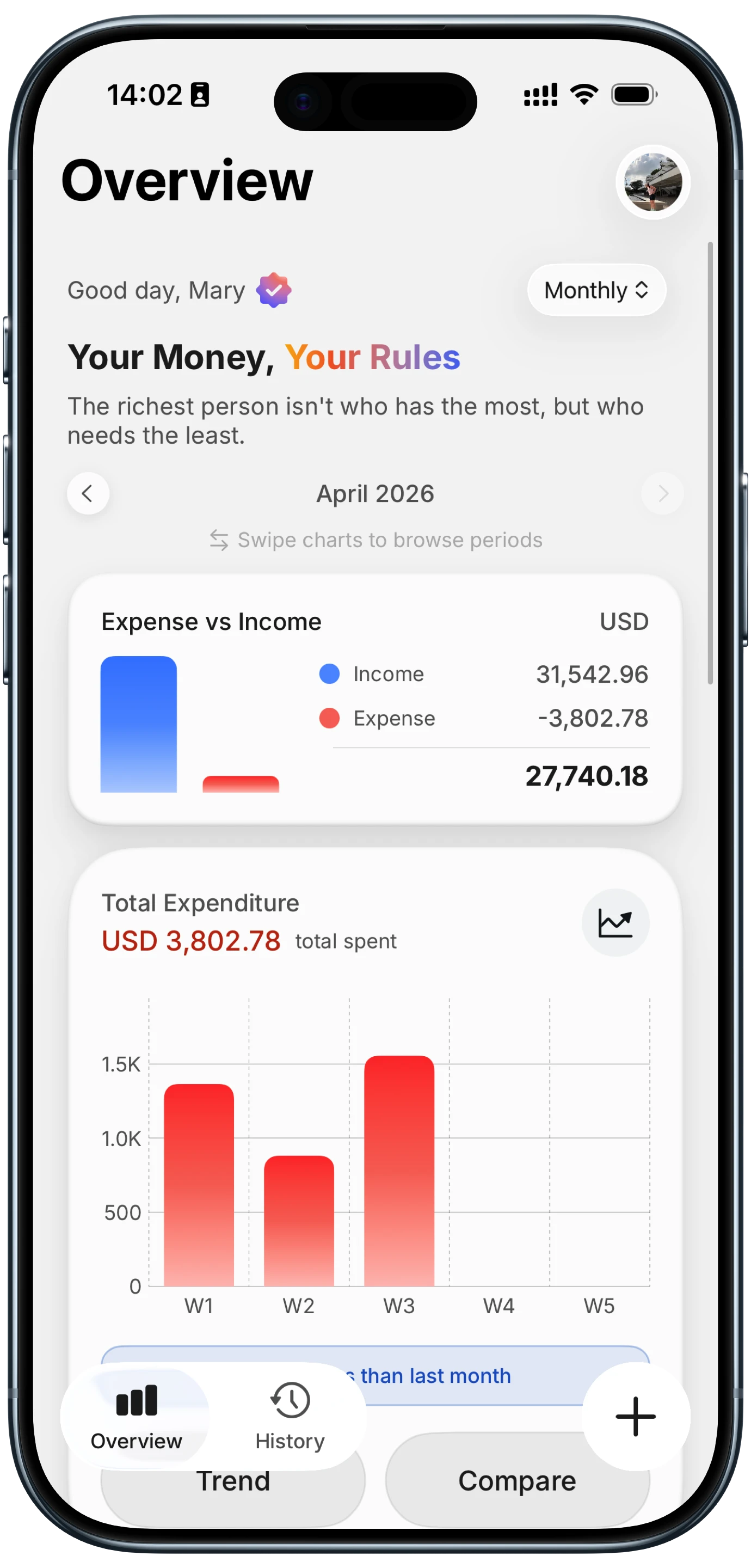
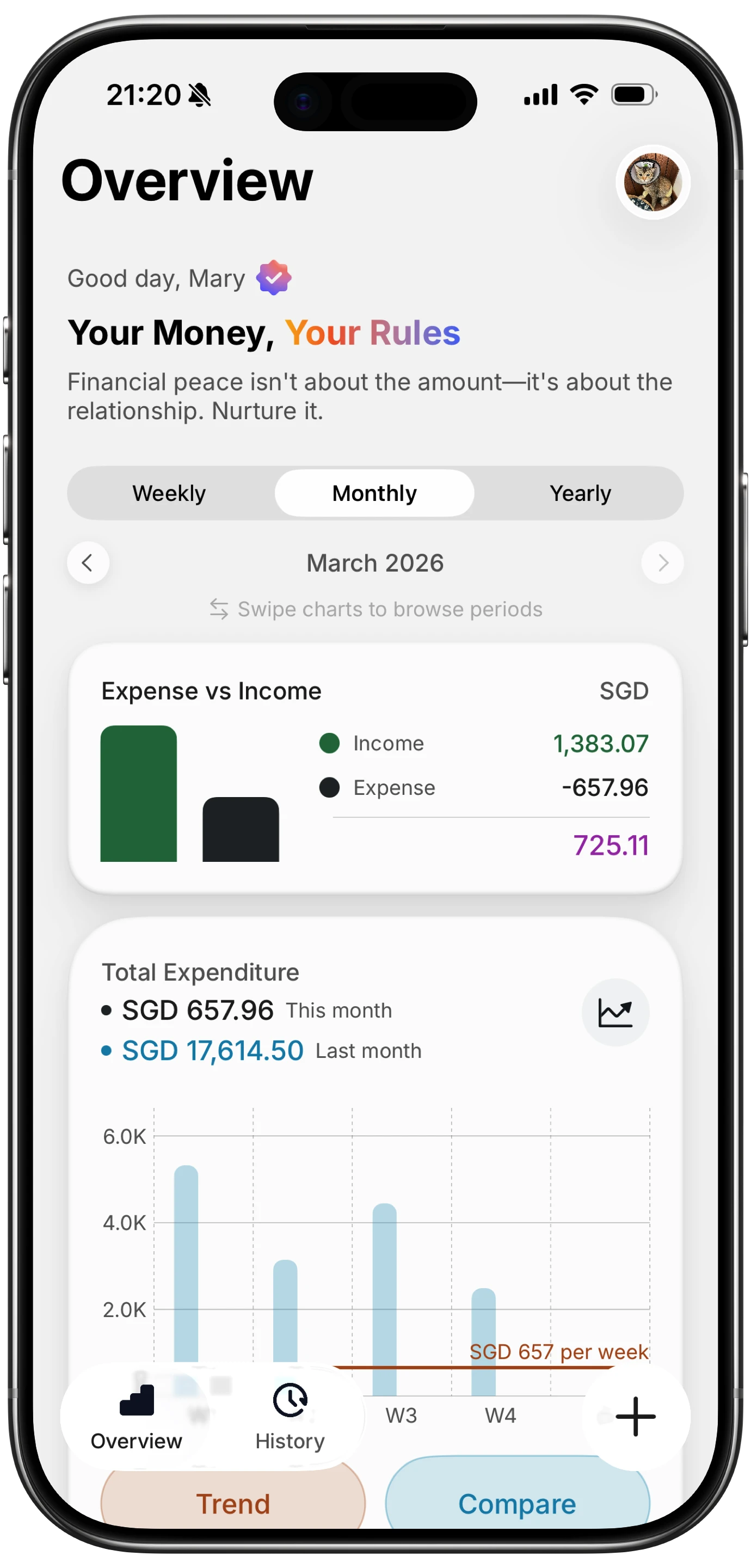
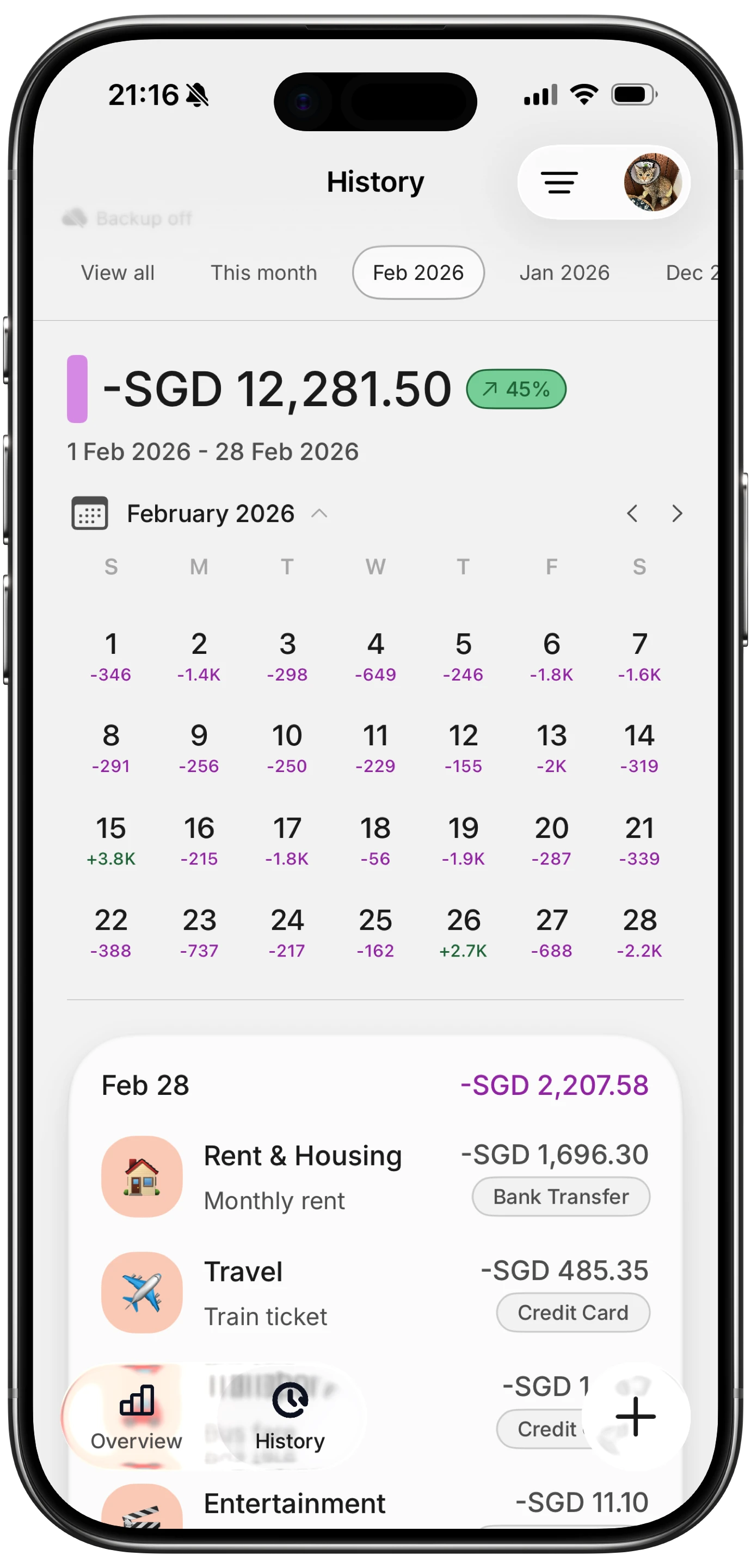
Both Goodbudget and EveryDollar lean on the assumption that you are okay with manual entry, at least at the free tier. If that resonates but you want faster entry, apps like Finny use AI input, including text, voice, and receipt scanning, to make manual logging much faster. Finny also supports Tap to Track, which auto-logs Apple Pay transactions via iOS Shortcuts and NFC, so you never miss a purchase even without a bank connection.
For anyone evaluating options beyond these two, the best free budgeting apps in 2026 covers a wider set of tools across different needs and price points.
Common Questions About Goodbudget vs EveryDollar
Is Goodbudget really free?
Yes. Goodbudget's free plan includes 20 envelopes, 1 account, and 2 devices. It is functional for a solo budgeter or a couple who can share one device. The main limitations are the single account and 1-year transaction history. The Plus plan at $80/year unlocks unlimited envelopes, more accounts, and 7 years of history.
Does EveryDollar connect to your bank for free?
No. Bank sync is a Premium-only feature on EveryDollar. The free tier supports full zero-based budgeting with manual transaction entry. Bank sync costs $79.99/year (or $17.99/month) as part of the Premium plan, or is bundled in the broader Ramsey+ membership at $129.99/year.
Which app is better for couples?
Goodbudget has a clearer household-sharing model. The Plus plan allows up to 5 devices on one shared budget, so two partners see the same envelope balances in real time. EveryDollar does not have a native couples or shared-budget feature; partners would share a single account login.
Do I need to follow Dave Ramsey's program to use EveryDollar?
No, but the app is designed with the Baby Steps framework in mind. The free tier is a capable standalone zero-based budget tool. Premium content, coaching, and features like paycheck planning are oriented toward Ramsey's debt-payoff approach. If that framework is not useful to you, you can ignore it and just use the budgeting features.
Can Goodbudget import bank transactions automatically?
Not in the traditional sense. Goodbudget Plus allows you to import a QFX or OFX file that you download manually from your bank's website. There is no live API connection to your bank, so imports are not automatic. Every transaction still requires a deliberate action on your part.
Ready to track spending without connecting your bank? Download Finny and use AI input, receipt scanning, or Tap to Track to log purchases in seconds, with your data staying on your device.