How Long to Keep Receipts: Taxes, Returns, Warranties
Most people keep receipts in one of two ways: everything forever in a shoebox, or nothing at all. Both fail. The shoebox becomes impossible to search, and the empty drawer leaves you stuck the day a laptop dies two weeks before its warranty ends, or the IRS asks about a deduction from three years ago.
The real answer to how long to keep receipts depends on what the receipt is for. A coffee receipt can go in the trash tonight. A receipt that backs up a tax deduction needs to survive at least three years. This guide gives you the timelines in one table, explains the IRS rules in plain English, and shows how to keep the receipts that matter as digital copies, so you can throw the paper away. If returns and warranties are your main concern, our guide to keeping receipts for returns and warranties goes deeper on that side.
How long to keep receipts: the quick answer
Here is the timeline for each kind of receipt most US households deal with:
| Receipt type | How long to keep it | Why |
|---|---|---|
| Everyday purchases (groceries, coffee, gas) | Until it shows up correctly on your statement | Only needed to check the charge |
| Items you might return | Until the return window closes | Usually 14 to 90 days |
| Electronics, appliances, furniture | For the life of the warranty | Proof of purchase date and price |
| Tax-deductible expenses | At least 3 years after you file | IRS standard audit window |
| Business and freelance expenses | At least 3 years, often 7 to be safe | Deductions, plus 1099 income questions |
| Home improvements | Until 3 years after you sell the home | They raise your cost basis |
| Big-ticket items for insurance | As long as you own the item | Proves value after theft or damage |
| Medical expenses you deduct or claim from an HSA | At least 3 years after the tax year | Supports the deduction or reimbursement |
Two rules of thumb cover nearly everything. If a receipt only proves a charge, keep it until the charge is confirmed. If it proves a tax deduction, a warranty, or a value, keep it for as long as someone could ask you to prove it.
The IRS rules, in plain English
The IRS sets the clock for any receipt that supports a number on your tax return. According to the IRS guidance on how long to keep records, the periods are:
- 3 years from the date you filed: the standard rule for most people.
- 3 years from filing or 2 years from paying the tax, whichever is later, if you file a claim for a credit or refund after you file.
- 6 years if you leave out income that is more than 25% of the gross income on your return.
- 7 years if you claim a loss from worthless securities or a bad debt deduction.
- Indefinitely if you never file a return, or file a fraudulent one.
- 4 years for employment tax records, if you have employees.
For property, including a home, the clock starts later. Keep the purchase records and improvement receipts until the limitation period runs out for the year you sell or dispose of it. A $14,000 kitchen remodel from 2019 can reduce the taxable gain when you sell in 2034, but only if you can still prove it.
The IRS accepts electronic copies, as long as they are legible and complete. That is the part that makes a digital system worth building: you get to keep the record without keeping the paper. Our guide to tracking expenses for taxes covers which expenses are worth recording in the first place.
Receipts you can throw away right now
Plenty of receipts have no job after a few days. Once you have confirmed the amount on your card or bank statement, you can shred:
- Grocery, restaurant, and coffee receipts that are not business meals.
- Gas station receipts for personal driving.
- ATM slips once the withdrawal shows on your account.
- Receipts for consumables you will never return: toiletries, cleaning supplies, snacks.
- Duplicate receipts for anything you already have an email confirmation for.
One caveat applies to all of these. If you budget by category, the receipt is still useful until you have logged it. The point of tracking is to know where the money went, and a receipt you never recorded is a purchase your budget never saw. Log it, then let the paper go.
Shred anything with a full card number, account details, or a signature. Most modern receipts only show the last four digits, but older ones and some small merchants print more.
Receipts you should keep for years
These are the receipts worth protecting, because losing them costs real money:
Tax deductions. Charitable donations over $250 need a written acknowledgment from the charity. Business meals, home office supplies, and freelance equipment all need proof of the amount, date, and business purpose. If you are self-employed, treat every business receipt as a seven-year record. It costs nothing extra to keep a digital copy that long.
Warranties and big purchases. A manufacturer warranty often asks for proof of purchase date. Keep the receipt for a TV, laptop, appliance, or mattress for the whole warranty period, and for anything valuable, for as long as you own it. After a burglary or a fire, an insurer will ask what the item cost and when you bought it.
Home improvements. New roofs, additions, and remodels add to your home's cost basis. Repairs generally do not, so note which is which when you save the receipt.
Medical and HSA expenses. If you pay out of pocket and reimburse yourself from an HSA later, you need the receipt to prove the expense was qualified, potentially years after you paid it.
Paper fades, so go digital
Most store receipts are printed on thermal paper, which fades with heat, light, and time. A receipt in a hot car or a wallet can be blank within months. That makes "keep the paper for seven years" a plan that quietly fails, even if you are organized.
The fix is to keep a photo or scan instead. A clear image of the full receipt, showing the store, date, items, and total, is a legible record the IRS accepts. The best moment to capture it is right after you pay, before the ink has had any time to fade.
Where the image lives matters. Receipts reveal where you shop, what you buy, and sometimes your address, so a private home for them beats a shared cloud folder full of random files. Finny attaches the receipt photo to the expense itself, saved on your device and backed up to your own iCloud, never on Finny's servers. The photo and the logged amount stay together, so finding a receipt means finding the expense, not scrolling a camera roll.

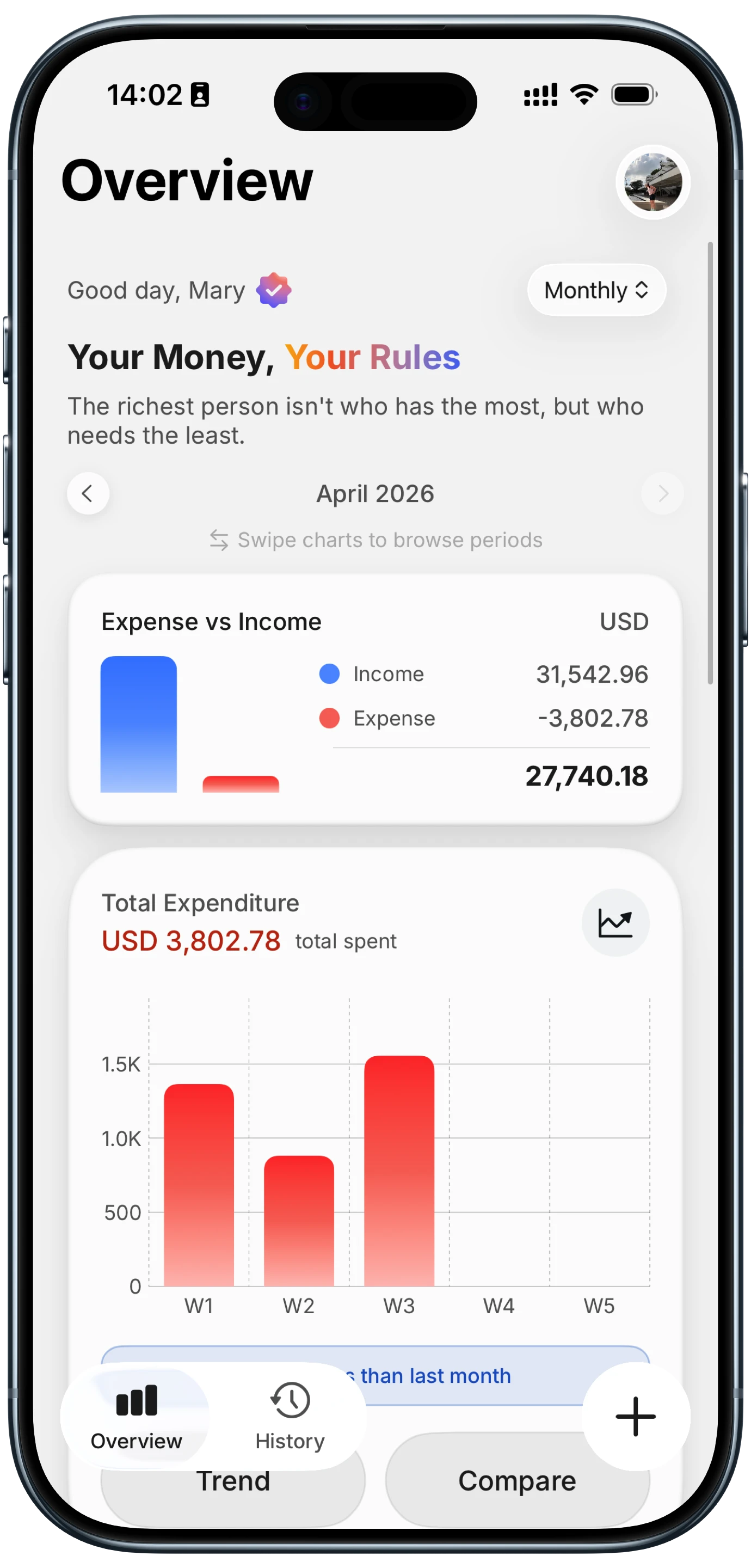
Finny app's private photo storage feature
E-receipts can be kept the same way. Here is Screen Log saving a payment straight from the screen, with the capture attached to the entry:
Find any receipt in seconds
Keeping receipts is only half the job. The other half is finding one when you need it, which is usually years later and under pressure. A few habits make retrieval fast:
- Attach the receipt to the transaction, not to a folder. You remember roughly when you bought something and how much it cost, so search by date or amount.
- Use real categories. "Home improvement" and "Medical" are searchable. "Misc" is not.
- Add a short note to anything tax-related: "client lunch, Acme project" or "new water heater, capital improvement."
- Export once a year. At tax time, export the year's expenses to CSV and keep that file with your return.
- Back up off the phone. A receipt that lives only on one device disappears with it.
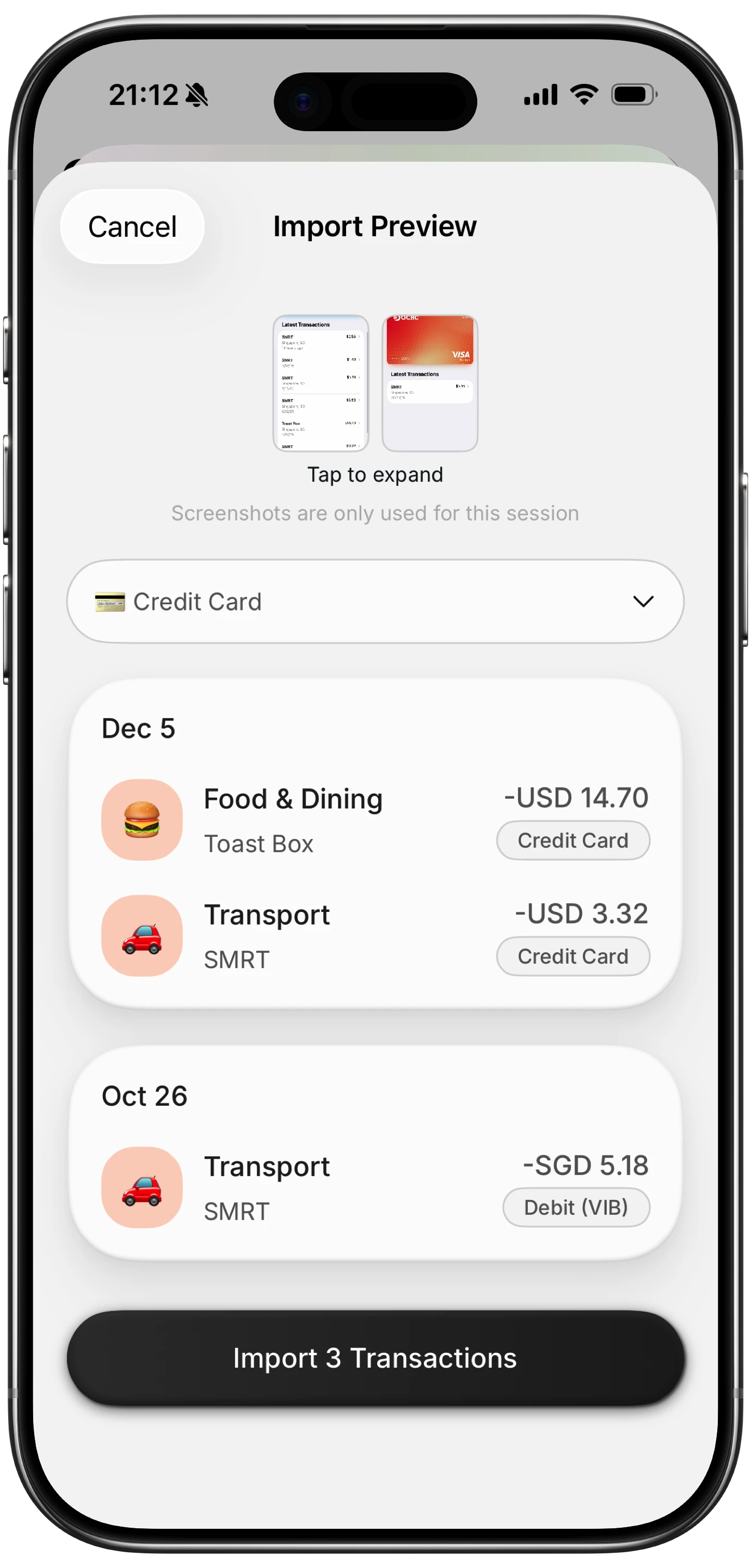
Finny app's screenshot import feature
A calendar view helps here too. When every receipt sits on the day it was spent, you can scan a month visually and spot the one you need. For a full comparison of capture tools, see our roundup of the best receipt scanner apps for iPhone.
Frequently Asked Questions
How long should I keep receipts for taxes?
Keep receipts that support a deduction or credit for at least 3 years after you file the return. Extend that to 6 years if you may have underreported income by more than 25%, and 7 years if you claim a bad debt or worthless securities loss. Self-employed people often keep everything for 7 years, since a digital copy costs nothing to store.
Do I need to keep paper receipts, or are photos OK?
Photos and scans are fine for most purposes, including the IRS, as long as the image is legible and shows the store, date, items, and total. Capture the receipt soon after purchase, because thermal paper fades. Keep the original paper only when a specific store or warranty provider insists on it.
How long should I keep grocery receipts?
Only until you have logged the purchase and confirmed the charge on your statement, which usually means a few days to a month. Grocery receipts are rarely needed after that, unless part of the purchase was a business expense or something you might return.
Should I keep receipts after a return window closes?
Keep it if the item has a warranty, if it is valuable enough that you might need to prove its value to an insurer, or if it supports a tax deduction. Otherwise, once the return window closes and the charge is confirmed, you can shred it.
The bottom line
How long to keep receipts comes down to the job each one does. Everyday receipts can go once the charge is confirmed and logged. Return receipts last as long as the return window. Warranty and big-purchase receipts last as long as you own the item. Tax receipts need at least three years, and up to seven for business expenses. Keep digital copies attached to the expenses they prove, back them up somewhere private, and the shoebox can finally go.