Personal Finance Strategy: A Step-by-Step Plan That Actually Works
Most people know they should "be better with money." The problem is not motivation. The problem is that vague goals produce vague results. A personal finance strategy gives you a concrete framework: a set of ordered steps that turn good intentions into measurable progress.
This guide walks you through building a personal finance strategy from scratch. It covers budgeting, expense tracking, saving, debt management, and the basics of investing. Whether you earn $30,000 or $130,000 a year, the sequence is the same. Only the numbers change.
Why You Need a Personal Finance Strategy
Earning more money does not automatically fix financial stress. Without a plan, higher income often leads to higher spending, a pattern known as lifestyle creep. A personal finance strategy prevents that drift by giving every dollar a job before it arrives.
Here is what a strategy does that willpower alone cannot:
- Creates priorities. You decide in advance what matters most: paying off a credit card, building a safety net, or saving for a home. Understanding what a financial goal is helps you define these priorities clearly.
- Removes daily decisions. When the system is set up, you do not have to think about whether you can afford something. The budget answers that question for you.
- Makes progress visible. Tracking your numbers over weeks and months reveals trends that feelings cannot detect.
The rest of this guide breaks down the five pillars of a solid personal finance strategy: budgeting, tracking, saving, debt payoff, and investing.
Step 1: Audit Your Current Financial Picture
Before you build anything, you need a baseline. Spend 30 minutes collecting the following:
- Monthly take-home pay. Use the amount that actually hits your bank account after taxes and deductions.
- Fixed expenses. Rent or mortgage, insurance premiums, loan payments, subscriptions.
- Variable expenses. Groceries, dining out, transportation, entertainment.
- Outstanding debts. List each balance, interest rate, and minimum payment.
- Savings and investments. Include checking, savings, retirement accounts, and brokerage balances.
Write these numbers down. They do not have to be perfect. An approximate picture is far better than no picture at all. If you want a deeper look at where you stand financially, calculating your net worth is a useful exercise.
Step 2: Choose a Budgeting Method
A budget is the steering wheel of your personal finance strategy. Without one, you are driving blind. The best budget is one you will actually follow, so choose a method that matches your personality.
The 50/30/20 Rule
This is the most popular starting point. Allocate 50 percent of take-home pay to needs, 30 percent to wants, and 20 percent to savings and debt repayment. It is simple, flexible, and works well for people who dislike rigid tracking. Read our full breakdown of the 50/30/20 rule to see if it fits your situation.
Zero-Based Budgeting
Every dollar gets assigned to a category until your income minus your expenses equals zero. This method works best for people who want maximum control and are willing to plan each pay cycle in detail.
Envelope Budgeting
You set spending limits for each category and stop spending once the "envelope" is empty. This approach is effective for variable expenses like groceries and entertainment.
No matter which method you pick, the goal is the same: know how much comes in, decide where it goes, and stick to the plan.
Step 3: Track Every Expense
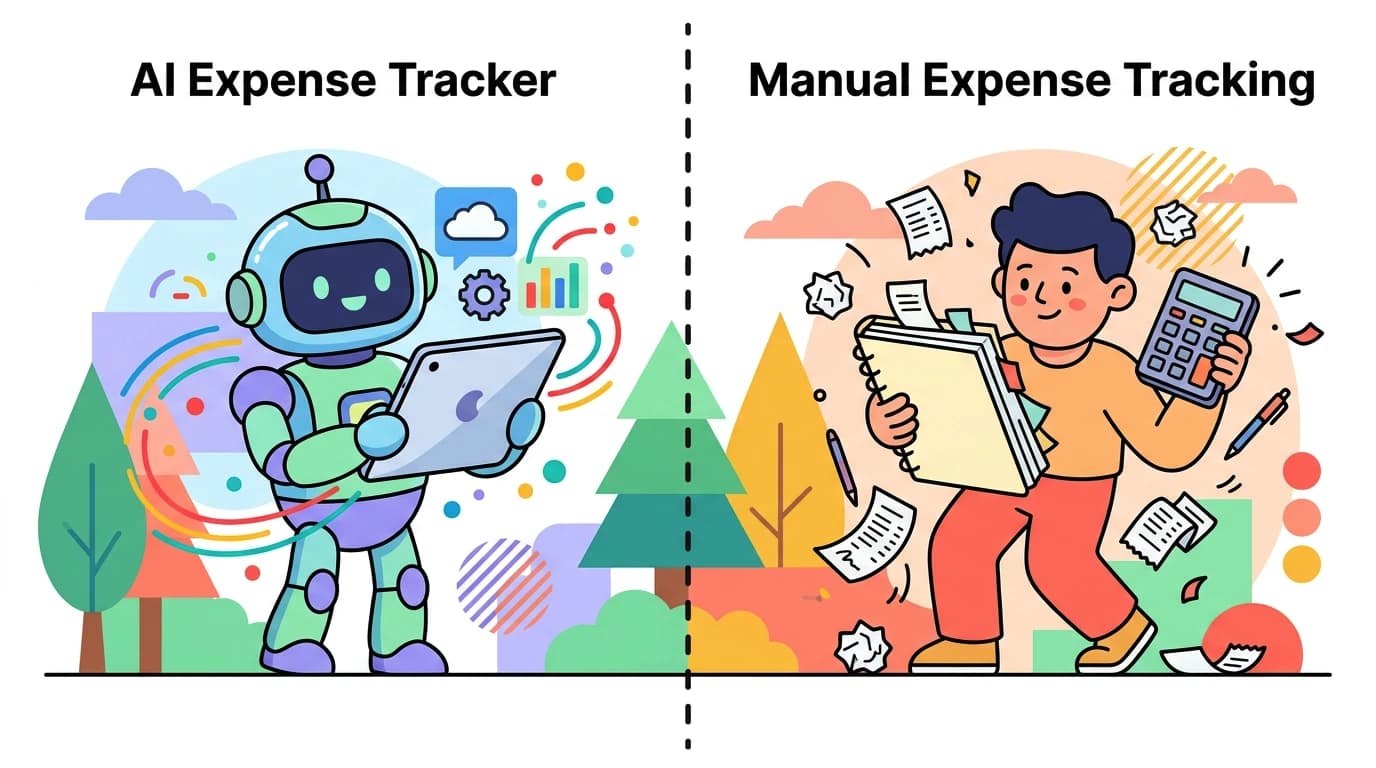
A budget without tracking is just a wish list. You need a system that captures what you actually spend, not what you planned to spend.
Why Tracking Matters
Small, unnoticed purchases are the most common budget breakers. A $5 coffee, a $12 impulse buy, a $3 app subscription. Individually, they are harmless. Over a month, they can add up to hundreds of dollars. The only way to catch these leaks is to track every expense consistently.
How to Make Tracking Stick
The biggest reason people stop tracking is friction. If logging an expense takes more than a few seconds, you will skip it. Here are three ways to reduce that friction:
- Log expenses immediately. The longer you wait, the more you forget.
- Use voice or quick-entry tools. Speaking "lunch $14" is faster than opening a spreadsheet.
- Review weekly. A five-minute weekly review catches mistakes early and keeps you accountable.
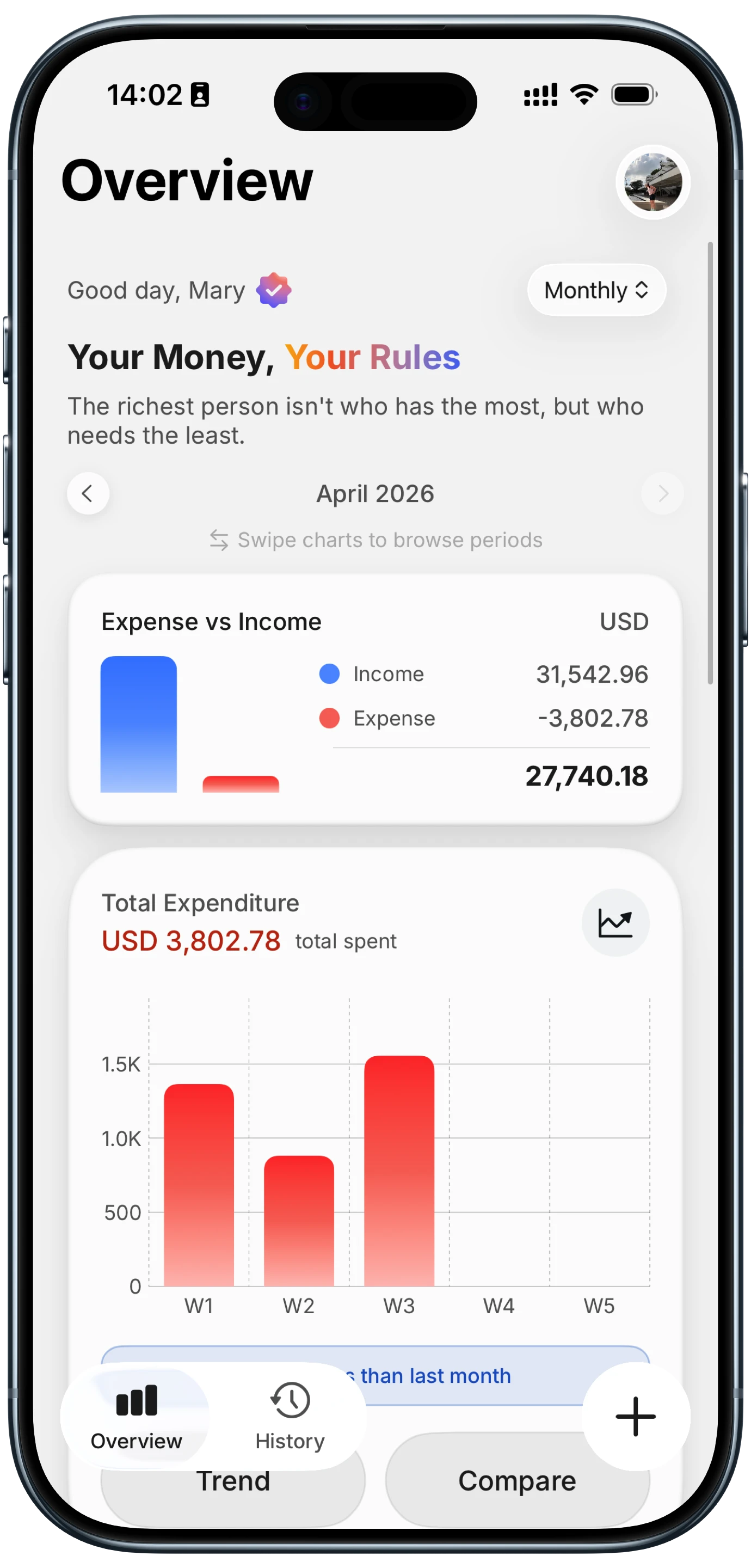
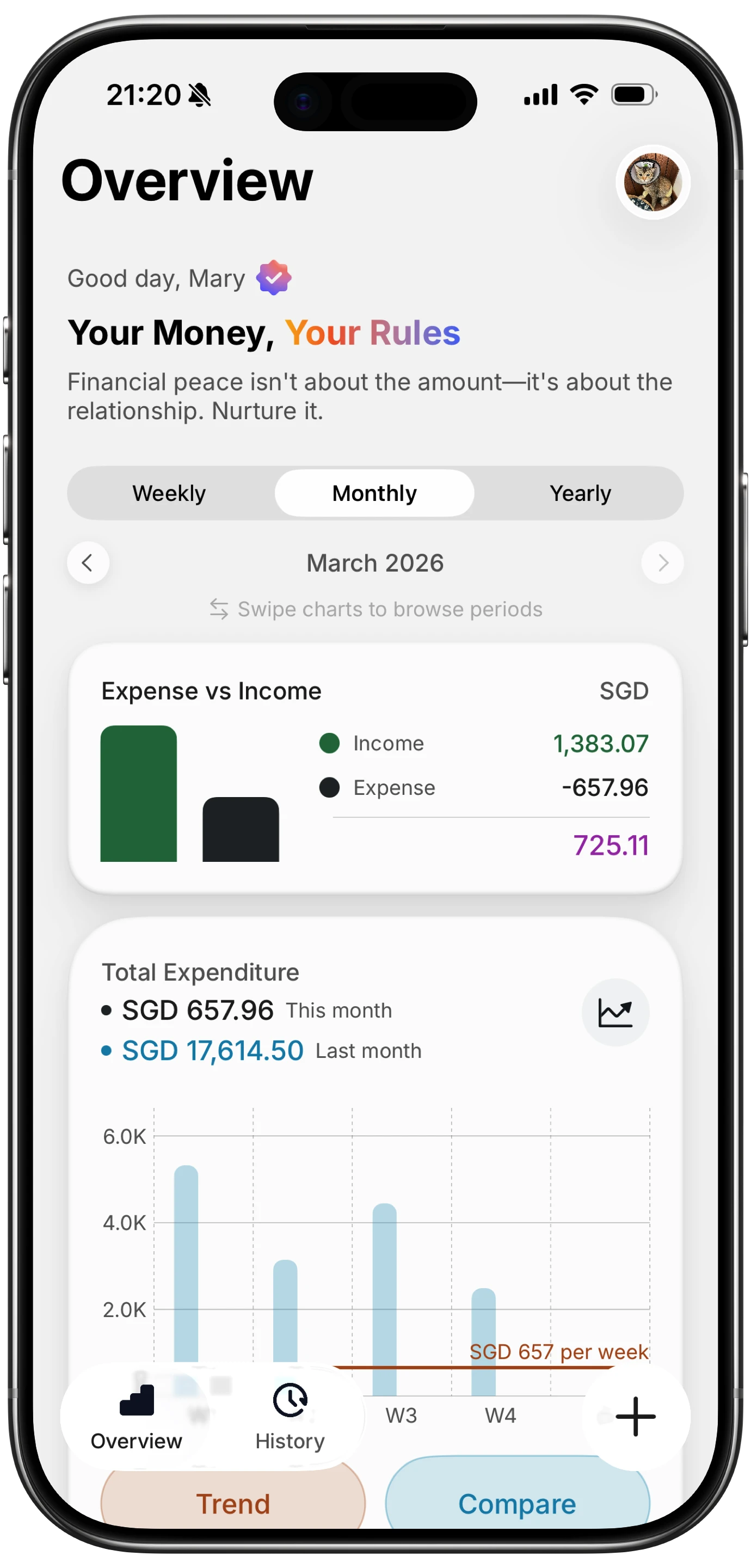
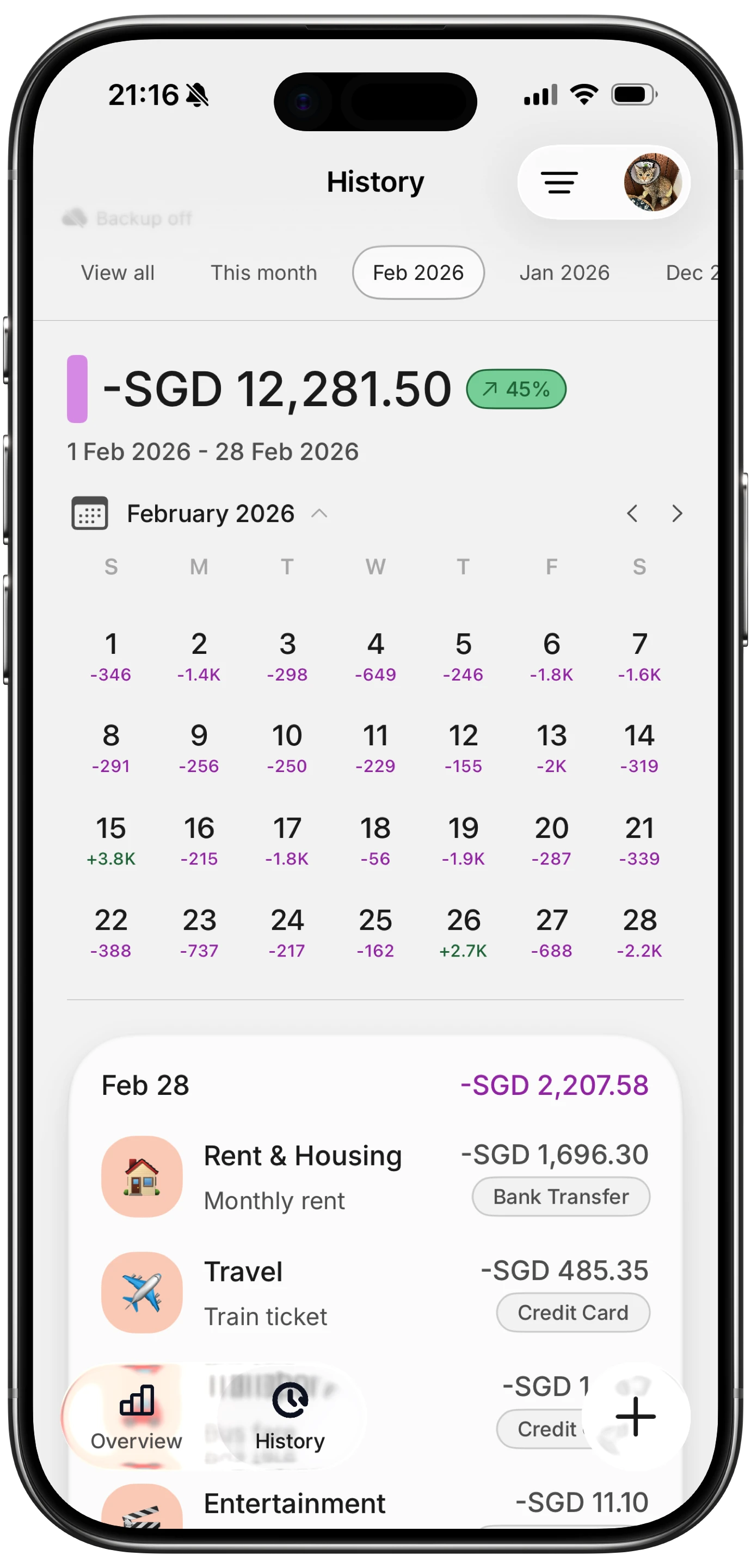
Apps like Finny are designed to remove the friction from tracking. Features like Tap to Track and voice input let you log expenses in seconds, so the habit actually sticks.
Step 4: Build Your Emergency Fund
An emergency fund is the foundation of financial security. Without one, a single unexpected expense (a car repair, a medical bill, a job loss) can undo months of progress and push you into high-interest debt.
How Much to Save
The standard recommendation is three to six months of essential living expenses. If you are a single-income household, freelancer, or have variable income, aim for six months or more.
Calculate your target by adding up your monthly needs: rent, utilities, groceries, insurance, minimum debt payments. Multiply that number by your target number of months. That is your emergency fund goal.
Where to Keep It
A high-yield savings account is the best place for an emergency fund. Your money stays accessible, earns interest, and remains separate from your checking account so you are less tempted to spend it.
How to Build It Fast
If saving three to six months of expenses feels overwhelming, start smaller:
- Set a starter goal of $1,000. This covers most minor emergencies and builds momentum.
- Automate a fixed transfer. Even $50 per paycheck adds up to $1,300 a year.
- Redirect windfalls. Tax refunds, bonuses, and cash gifts can accelerate your timeline dramatically.
Once your emergency fund is in place, every other part of your personal finance strategy becomes easier because you are no longer one bad month away from a crisis.
Step 5: Create a Debt Payoff Plan
Debt is the most common obstacle to financial progress. Carrying high-interest balances means a portion of every dollar you earn goes to interest rather than building wealth. A deliberate payoff plan changes that.
Two Proven Methods
Debt avalanche: Pay minimums on all debts except the one with the highest interest rate. Throw every extra dollar at that balance. This method saves the most money over time.
Debt snowball: Pay minimums on all debts except the one with the smallest balance. Clear it first, then roll that payment into the next smallest debt. This method builds psychological momentum.
Both methods work. The avalanche saves more on interest. The snowball keeps you motivated. Pick the one you are more likely to stick with.
Key Principles
- Never miss a minimum payment. Late fees and credit score damage make the problem worse.
- Stop adding new debt. Paying off a credit card while still using it is like bailing water without plugging the hole.
- Track your payoff progress. Watching balances shrink is one of the most motivating parts of a personal finance strategy.
Step 6: Start Investing (Even Small Amounts)
Investing is how you turn income into long-term wealth. Thanks to compound interest, time matters more than the amount you start with. A 25-year-old who invests $200 per month at an average 8 percent annual return will have over $700,000 by age 65. Waiting until 35 to start would require nearly double the monthly contribution to reach the same number.
Where to Begin
- Employer retirement plan. If your employer offers a 401(k) with a match, contribute at least enough to get the full match. It is free money.
- Roth IRA. If you qualify, a Roth IRA lets your money grow tax-free. In 2026, you can contribute up to $7,000 per year (or $8,000 if you are 50 or older).
- Index funds and ETFs. These provide broad market exposure with low fees. They are the simplest way to invest for beginners.
Principles That Matter More Than Stock Picks
- Diversify. Spread your money across different asset types so one bad investment does not sink your portfolio.
- Stay consistent. Invest the same amount on a regular schedule regardless of market conditions. This is called dollar-cost averaging.
- Think long term. Short-term market swings are noise. The trend over decades is upward.
You do not need to become a financial expert to invest wisely. You just need to start, stay consistent, and avoid panic selling.
Step 7: Review and Adjust Quarterly
A personal finance strategy is not a set-it-and-forget-it document. Life changes: you get a raise, move to a new city, have a child, or pay off a debt. Your plan should change with it.
Set a quarterly reminder to review the following:
- Budget accuracy. Are your categories still realistic? Do you consistently overspend in one area?
- Savings rate. Are you hitting your target percentage? Can you increase it?
- Debt progress. How much closer are you to being debt-free?
- Investment contributions. Can you bump them up, even by a small amount?
- Net worth. Calculate your net worth each quarter. Watching it trend upward over time is one of the best indicators that your strategy is working.
These reviews do not need to take long. Fifteen to thirty minutes once every three months is enough to keep your finances on track.
Common Mistakes to Avoid
Even with a solid personal finance strategy, certain mistakes can slow your progress:
- Waiting for the "right time" to start. There is no perfect moment. Start with what you have now.
- Ignoring small expenses. They compound just like investments do, except they compound against you.
- Comparing your progress to others. Social media makes everyone look wealthier than they are. Focus on your own trajectory.
- Setting goals that are too aggressive. A budget that leaves zero room for enjoyment will not last. Build in some flexibility.
- Not tracking consistently. The data from tracking is what makes every other step possible. Without it, you are guessing.
Frequently Asked Questions
How do I start a personal finance strategy with a low income?
The steps are the same at any income level. Start by tracking every expense to find where money is going. Even saving $25 per month builds the habit. Focus on reducing high-interest debt first, since interest payments eat into limited income the most. The key is consistency, not the dollar amount.
How long does it take to see results from a personal finance strategy?
Most people notice meaningful changes within 60 to 90 days. In the first month, you gain awareness of your spending patterns. By month two, you start making adjustments. By month three, you can see measurable progress in your savings balance or debt reduction. Long-term wealth building takes years, but the feeling of control comes much sooner.
Should I pay off debt or save first?
Do both simultaneously, but prioritize based on interest rates. Always maintain a small emergency fund (at least $1,000) to avoid going deeper into debt when surprises happen. After that, focus extra money on high-interest debt (anything above 7 to 8 percent), since the interest you save outpaces what you would earn in a savings account.
What is the best budgeting method for beginners?
The 50/30/20 rule is the easiest starting point. It requires minimal setup, gives you clear spending boundaries, and leaves room for both enjoyment and savings. As you get more comfortable, you can switch to a more detailed method like zero-based budgeting.
Do I need a financial advisor to build a personal finance strategy?
Not necessarily. The fundamentals covered in this guide (budgeting, tracking, saving, debt management, and basic investing) can be handled on your own with the right tools and information. A financial advisor becomes valuable when you have complex situations: significant assets, business income, estate planning, or tax optimization needs. For a broader overview, check out our complete personal finance guide.
Build Your Strategy One Step at a Time
A personal finance strategy does not require perfection. It requires a starting point and the willingness to adjust as you learn. Begin with a budget, track your spending, build a safety net, tackle debt, and let compound interest do the heavy lifting over time.
The hardest part is the first week. After that, the system carries you forward.
If you want a simple way to start tracking your expenses today, download Finny and log your first expense in seconds. The sooner you see where your money goes, the sooner you can tell it where to go instead.