Rocket Money vs YNAB 2026: Which Should You Pick?
Rocket Money and YNAB both show up at the top of every "best budgeting app" list, but they solve different problems. Rocket Money finds the money leaking out of your accounts: forgotten subscriptions, overpriced bills, charges you didn't notice. YNAB changes how you decide where the rest of your money goes.
This Rocket Money vs YNAB comparison covers what each app actually does, the real cost of each in 2026, how much effort they take, and how each handles your data. It ends with a clear recommendation for each type of user. If you're also weighing Monarch, see our Monarch vs Rocket Money comparison.
Rocket Money vs YNAB at a glance
| Rocket Money | YNAB | |
|---|---|---|
| Core idea | Find and cut recurring costs | Give every dollar a job |
| Free option | Yes, a permanent free tier | 34-day free trial, no card needed |
| Paid price | Premium: pay what you choose, about $7 to $14/mo; Premium+ $15/mo | $14.99/mo or $109/yr |
| Extra fees | Bill negotiation: 35% to 60% of first-year savings (not charged on Premium+) | None |
| Budgeting | Category budgets (limited on free) | Full zero-based budgeting |
| Subscription cancelling | Yes, on Premium | No |
| Bank link | Required for core features | Optional |
| Sharing | Account sharing on Premium | Up to 6 people |
| Effort | Low | Medium to high |
Prices come from each company's own pricing pages, checked in September 2026.
What each app actually does
Rocket Money: finds and cuts recurring costs
Rocket Money connects to your bank and card accounts, scans your transactions, and pulls out every recurring charge: subscriptions, memberships, utilities, insurance. You get a clear list of what you're paying each month, alerts when a bill goes up, and a few ways to act on it:
- Subscription cancelling (Premium): Rocket Money will cancel unwanted subscriptions for you.
- Bill negotiation (all tiers): Rocket Money negotiates bills like internet or phone on your behalf. If it succeeds, you pay 35% to 60% of the first year's savings, unless you're on Premium+.
- Budgets, net worth, and credit score: basic budgeting on the free tier, with unlimited budgets, net worth tracking, and credit monitoring on Premium.
YNAB: changes how you plan money
YNAB doesn't try to find savings for you. It gives you a method. You budget only the money you already have, assign every dollar to a category until nothing is left, and move money between categories when plans change. The idea is that visible trade-offs change behavior: when dining out runs over, you choose what gives instead of ignoring it.
YNAB works with bank sync or fully manual entry, has targets for irregular expenses like car insurance, and covers up to six people per subscription. There's a learning curve, and YNAB runs free workshops to help.
Pricing: what each really costs
Rocket Money has a genuine free tier covering subscription tracking, upcoming bills, basic budgets, and bill negotiation. Premium uses a pay-what-you-think-is-fair model, typically $7 to $14 a month, with the same features at every price. A newer Premium+ tier at $15 a month adds the Rowan AI assistant and bill negotiation without the success fee. The negotiation fee is the cost people miss: if Rocket Money cuts your internet bill by $240 a year, you might pay $84 to $144 of that saving. Our Rocket Money pricing breakdown covers every tier.
YNAB costs $14.99 a month or $109 a year after a 34-day free trial, and college students can get a free year. There are no add-on fees or premium tiers. See our YNAB pricing guide for details.
In the first year, a Rocket Money user who cancels three forgotten $12 subscriptions saves $432, far more than Premium costs. A YNAB user's savings are harder to predict, but they come from every category, not only recurring charges.
Effort and learning curve
Rocket Money is low effort. Link your accounts, review the recurring list, cancel what you don't need, and check in when an alert arrives. Most of the value comes in the first week.
YNAB takes real effort, especially at first. Expect a few hours in the first week and a few minutes most days after that. People who stick with it often call it life-changing. People who don't usually quit in the first month.
A reasonable approach for many people: use Rocket Money's free tier once to find and cut recurring charges, then decide whether you need a real budget on top.
Privacy and bank linking
Rocket Money is built around linked accounts. That's how it finds recurring charges, and while Premium lets you add manual transactions, the core features depend on a bank connection. Rocket Money (formerly Truebill) is owned by Rocket Companies, the parent of Rocket Mortgage, and its privacy policy describes how your information can be shared. Our deep dives on whether Rocket Money is safe and whether Rocket Money sells your data go through the details.
YNAB makes bank linking optional. You can enter every transaction by hand or import bank files, and the company runs on subscriptions rather than financial product offers.
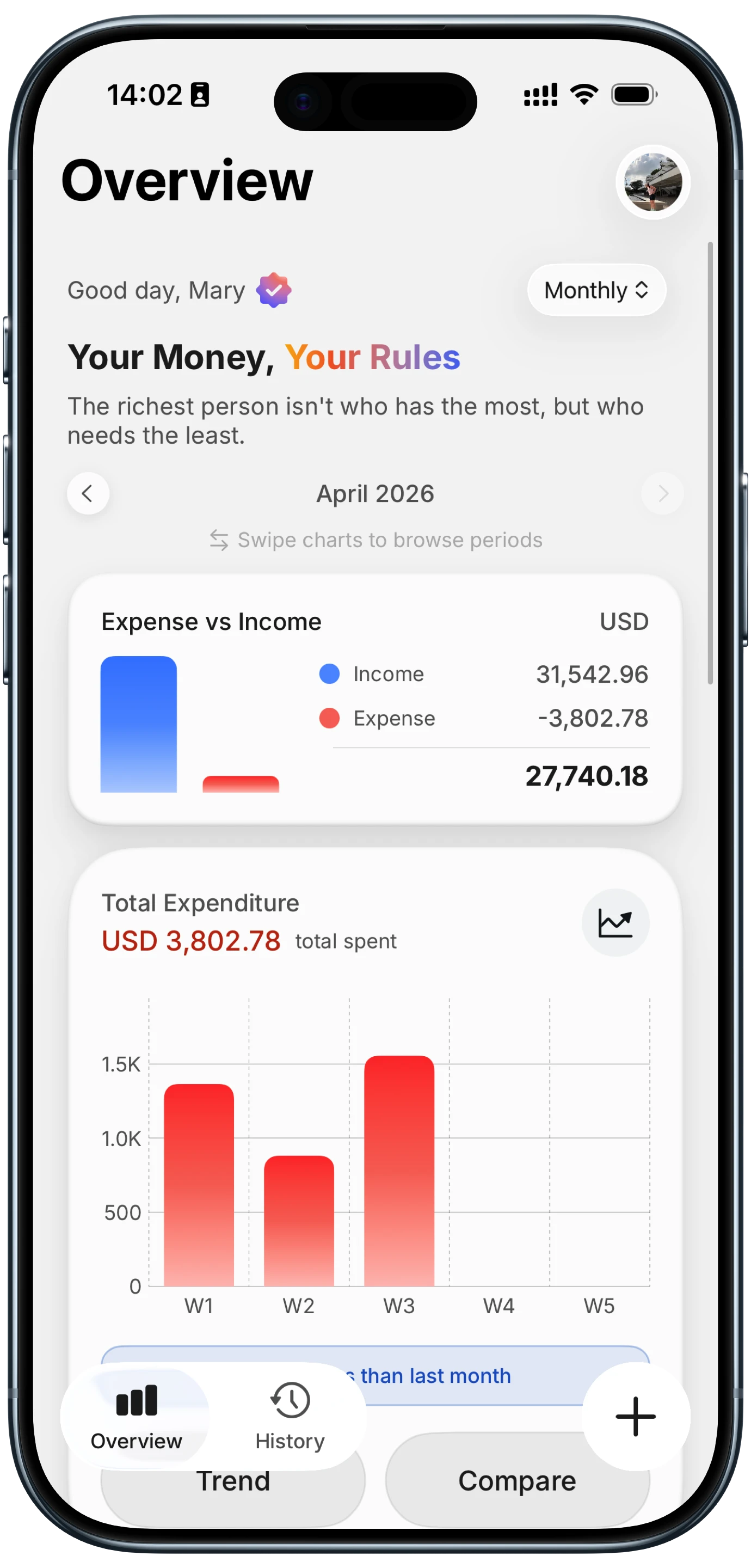
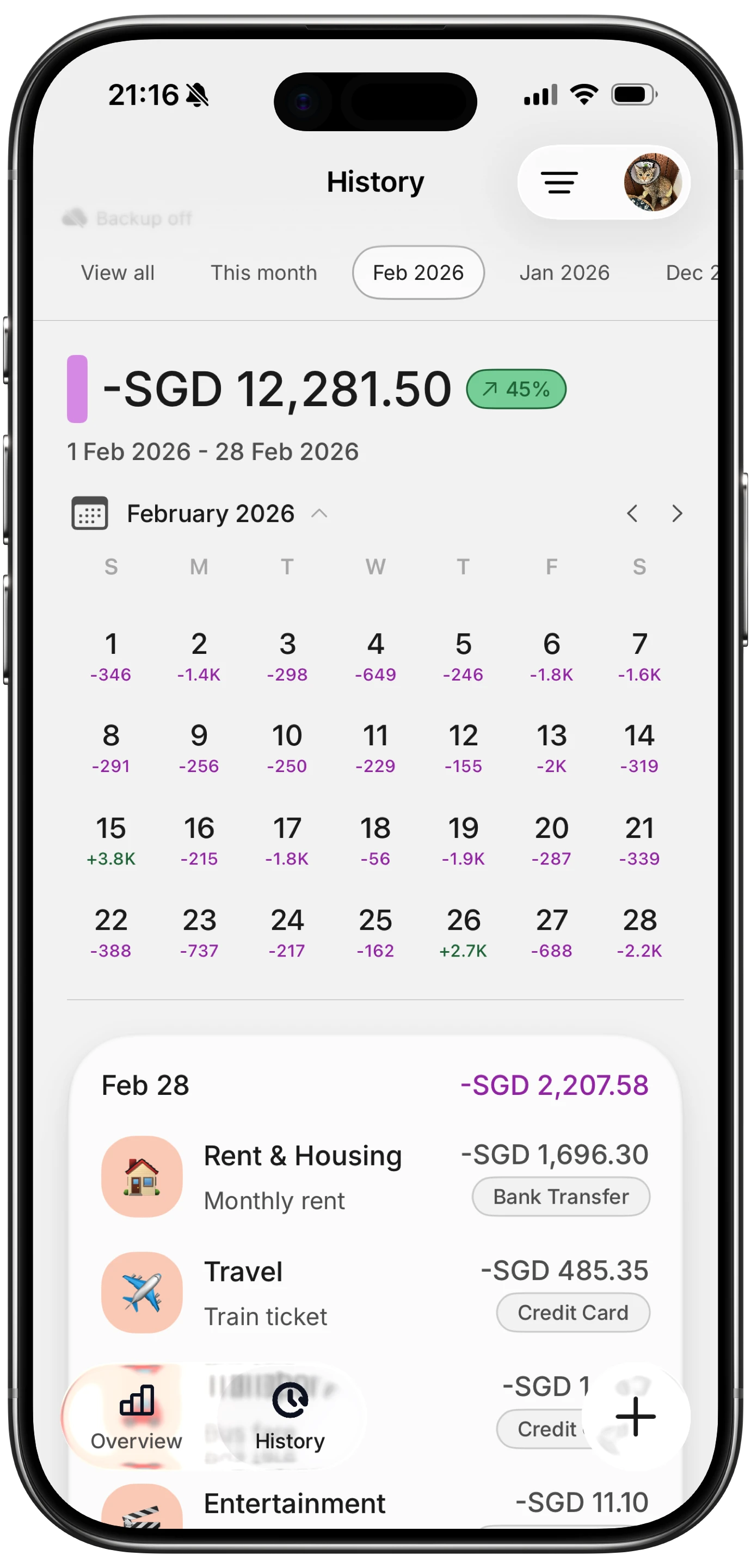
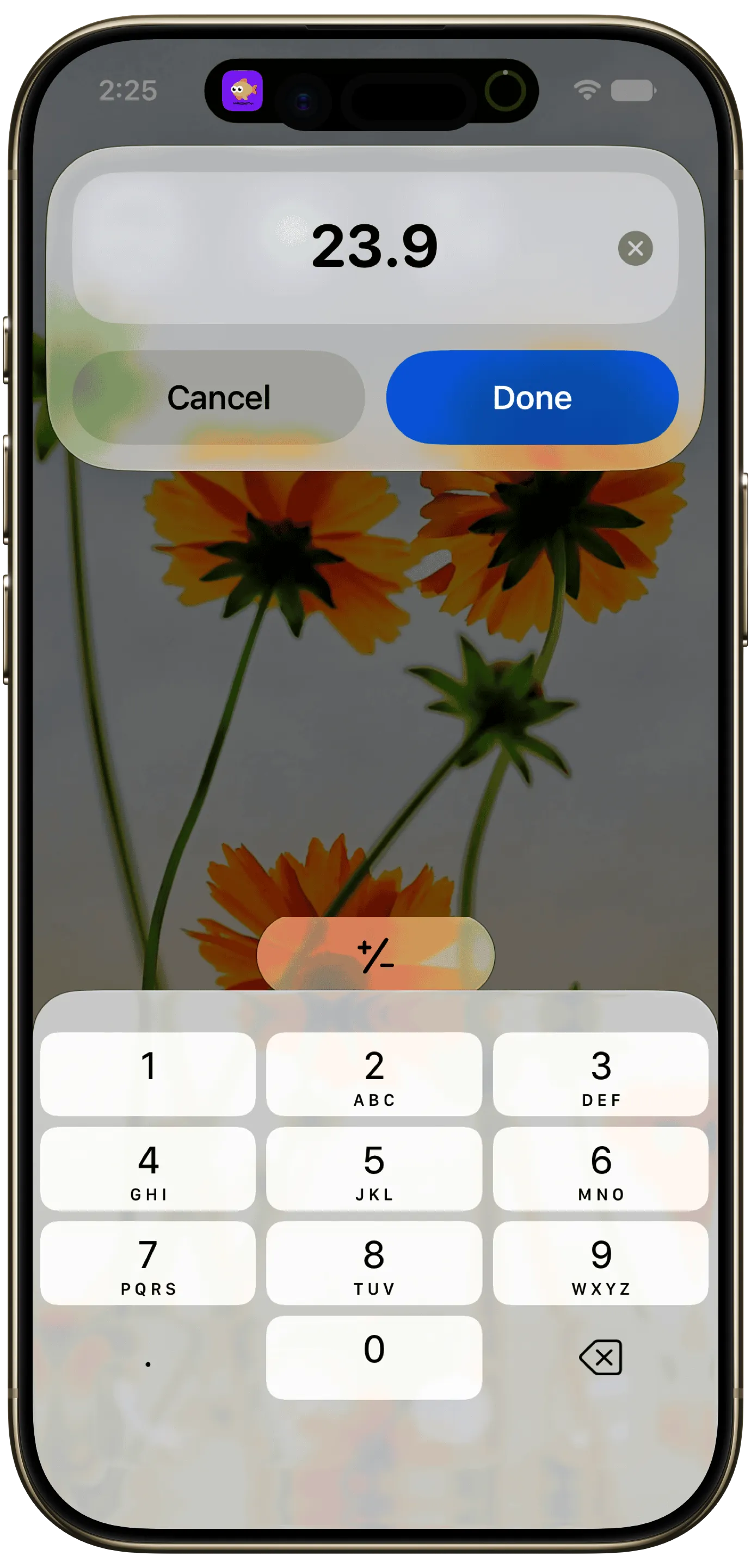
If keeping bank credentials out of any app is your priority, neither is ideal. A tracker that doesn't need a bank at all is a third path. Finny logs card payments as you make them and records subscription charges and online payments from your screen, with recurring entries and reminders before each renewal, and never asks for a bank login. Here's Screen Log recording a payment with no bank connection:
Who should choose Rocket Money, and who should choose YNAB
Choose Rocket Money if:
- You suspect you're paying for subscriptions you've forgotten.
- Your bills (internet, phone, insurance) haven't been renegotiated in years.
- You want a free tool and very little ongoing effort.
- You're comfortable linking your bank and card accounts, which Rocket Money depends on.
Choose YNAB if:
- You run short before payday even though your income should cover your costs.
- You want to plan irregular expenses instead of being surprised by them.
- You share money with a partner or family and want one plan.
- You're willing to spend a few weeks learning a method.
Use both if you have leaky subscriptions and a planning problem. Run Rocket Money once to clean up recurring costs, then budget what's left in YNAB. You can drop Premium once the cleanup is done.
If what you really want is a clear, private record of where your money goes, without bank links or a budgeting method to learn, a lightweight tracker covers that for a low monthly or yearly price. Our roundup of the best subscription tracker apps compares the no-bank options.
Frequently Asked Questions
Is Rocket Money better than YNAB?
They're built for different jobs. Rocket Money is better at finding and cancelling recurring charges and negotiating bills, with a free tier and little effort required. YNAB is better at changing how you spend, through zero-based budgeting that makes every trade-off visible. If your problem is forgotten subscriptions, start with Rocket Money. If your problem is running out of money before payday, choose YNAB.
Can Rocket Money replace YNAB?
Not for most YNAB users. Rocket Money has category budgets, but it doesn't use zero-based budgeting, and it doesn't ask you to assign every dollar before you spend it. If you like YNAB's method, Rocket Money won't replace it. If you only used YNAB to see where your money goes, Rocket Money's tracking may be enough.
How much does Rocket Money cost compared to YNAB?
Rocket Money has a free tier. Premium is pay-what-you-choose, typically $7 to $14 a month, and Premium+ costs $15 a month. Bill negotiation charges 35% to 60% of the first year's savings unless you're on Premium+. YNAB costs $14.99 a month or $109 a year after a 34-day trial, with no additional fees.
Do Rocket Money and YNAB require linking a bank account?
Rocket Money effectively does. Finding recurring charges depends on reading your transactions, so the app isn't designed to be used without linked accounts, even though Premium allows manual entries. YNAB doesn't require it: you can enter transactions yourself or import bank files, and bank sync is optional. If you want to avoid bank linking entirely, choose YNAB with manual entry or a tracker that doesn't connect to banks.
The bottom line
Rocket Money vs YNAB comes down to the problem you're solving. Rocket Money is the fastest way to stop paying for things you don't use, and its free tier is worth running once for almost anyone. YNAB is the stronger tool for changing how you spend the rest, if you'll put in the time to learn it. Clean up first, then plan: that order works for most people.