Black Friday Budget: How Not to Overspend in 2026
Black Friday falls on November 27 in 2026, with Cyber Monday on November 30. Treating those as two separate events understates the problem, because the sales now run for most of November and the psychological pressure runs continuously: a countdown timer, a stock warning, a price crossed out next to a lower one.
A Black Friday budget is a defense against a specific mechanism. The sales are engineered to convert browsing into buying by making the decision feel urgent and the price feel like a gain. This guide covers the ceiling, the pre-approved list, how to check whether a discount is real, and how to keep a running total across a four-day window where spending is unusually fast.
Set your overall seasonal number first if you have not, using our holiday budget planner. Black Friday spending should come out of that total, not sit beside it. If you are hosting the day before, our Thanksgiving budget guide covers dinner and travel costs.
The Trap Is the Framing, Not the Price
A normal purchase asks "do I want this at this price?" A sale purchase asks "do I want to miss this discount?" Those are different questions, and the second one is much easier to answer yes to.
That is why people come home from Black Friday having spent $400 and feeling like they saved $250. Both statements are true. Only one of them affects the bank balance.
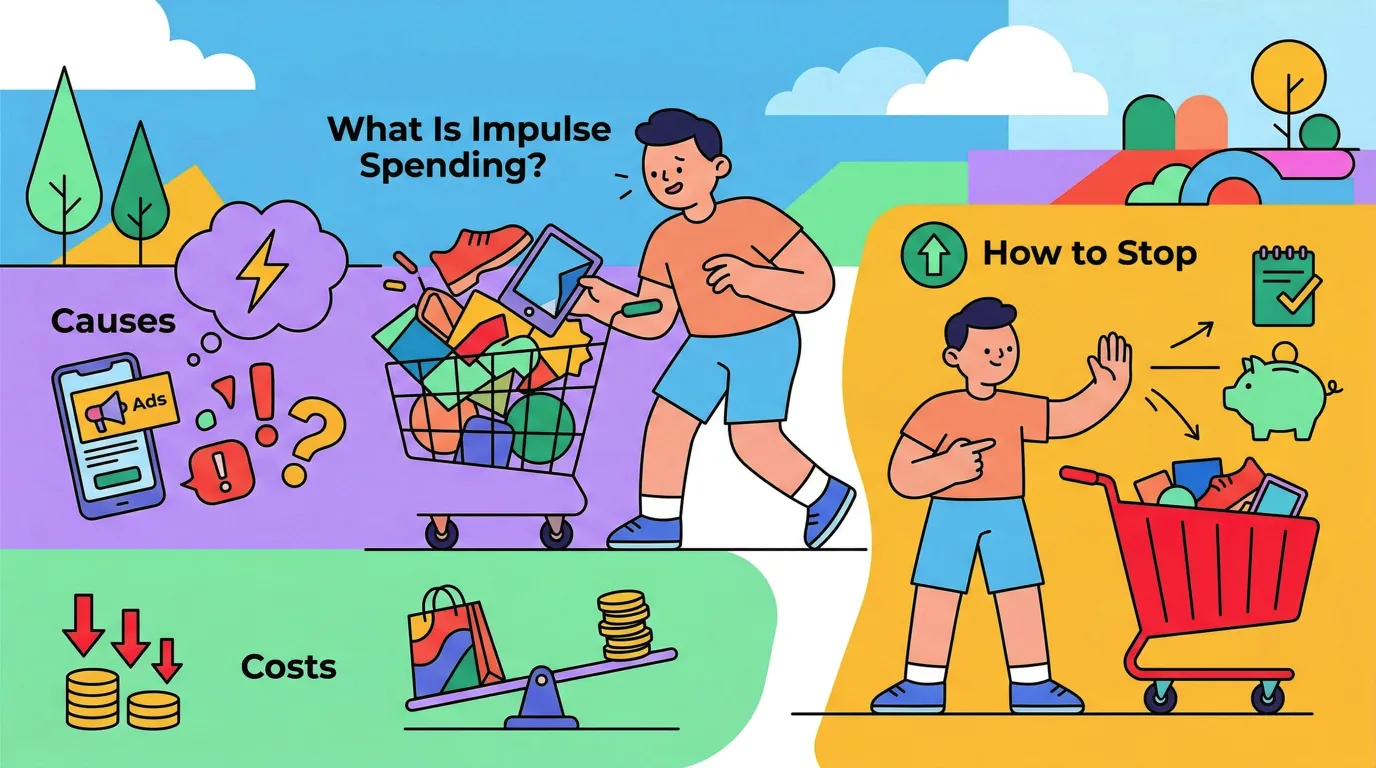
The practical consequence: savings on things you were not going to buy are not savings, they are spending with a discount attached. Our explainer on impulse spending covers the mechanism in more detail.
Set a Ceiling and Write It Down
One number for the entire Black Friday through Cyber Monday window, decided before any sale goes live.
Two rules make it hold:
- It comes out of the holiday total, not in addition to it. If your season budget is $900 and you spend $350 over Black Friday weekend, you have $550 left, not $900.
- It is a spending limit, not a savings target. "I'll spend up to $300" is checkable. "I'll save 40%" is not, and it rewards buying more.
Write the number where you will see it while shopping. The notes app on your phone is fine. A budget you have to recall from memory at 11pm during a flash sale is not a budget.
Build the Pre-Approved List in Advance
This is the single most effective tactic, and almost nobody does it.
Before the sales start, list the specific items you already intended to buy, with the price you consider acceptable for each. A winter coat you need, a gift already chosen, a replacement for something broken.
| Item | Target price | Actual | Buy? |
|---|---|---|---|
| Winter coat | under $120 | ||
| Gift for Dad | under $60 | ||
| Replacement headphones | under $80 |
Anything not on this list requires the same deliberation it would in June. The list does not stop you buying other things. It stops you buying them without noticing, which is the actual failure mode.
Check Whether the Discount Is Real
Reference prices are frequently inflated ahead of sale periods so the discount looks larger. A few checks take under a minute:
- Look at price history. Browser extensions and price tracking sites show what an item actually sold for over the past few months. A "was $200, now $120" that was $130 all autumn is not a deal.
- Compare to a different retailer, not to the crossed-out price on the same page.
- Watch for spec downgrades. Doorbuster models of appliances and electronics are sometimes lower-specification variants made for sale events, with model numbers that differ by a character.
- Ignore percentage claims and look only at the amount you would pay.
Use a Waiting Period, Even a Short One
The 30-day rule is the standard advice and it is unusable during a four-day sale. Compress it instead.
For anything not on the pre-approved list over about $50: put it in the cart, close the tab, and set a timer for one hour. Most impulse purchases do not survive an hour. The ones that do were probably worth buying.
This works because the urgency is manufactured. The stock warnings are usually not real, and items that sell out during Black Friday reappear at similar prices in December. Our guide to the 30-day rule explains why the delay works even when shortened.
Track the Running Total in Real Time
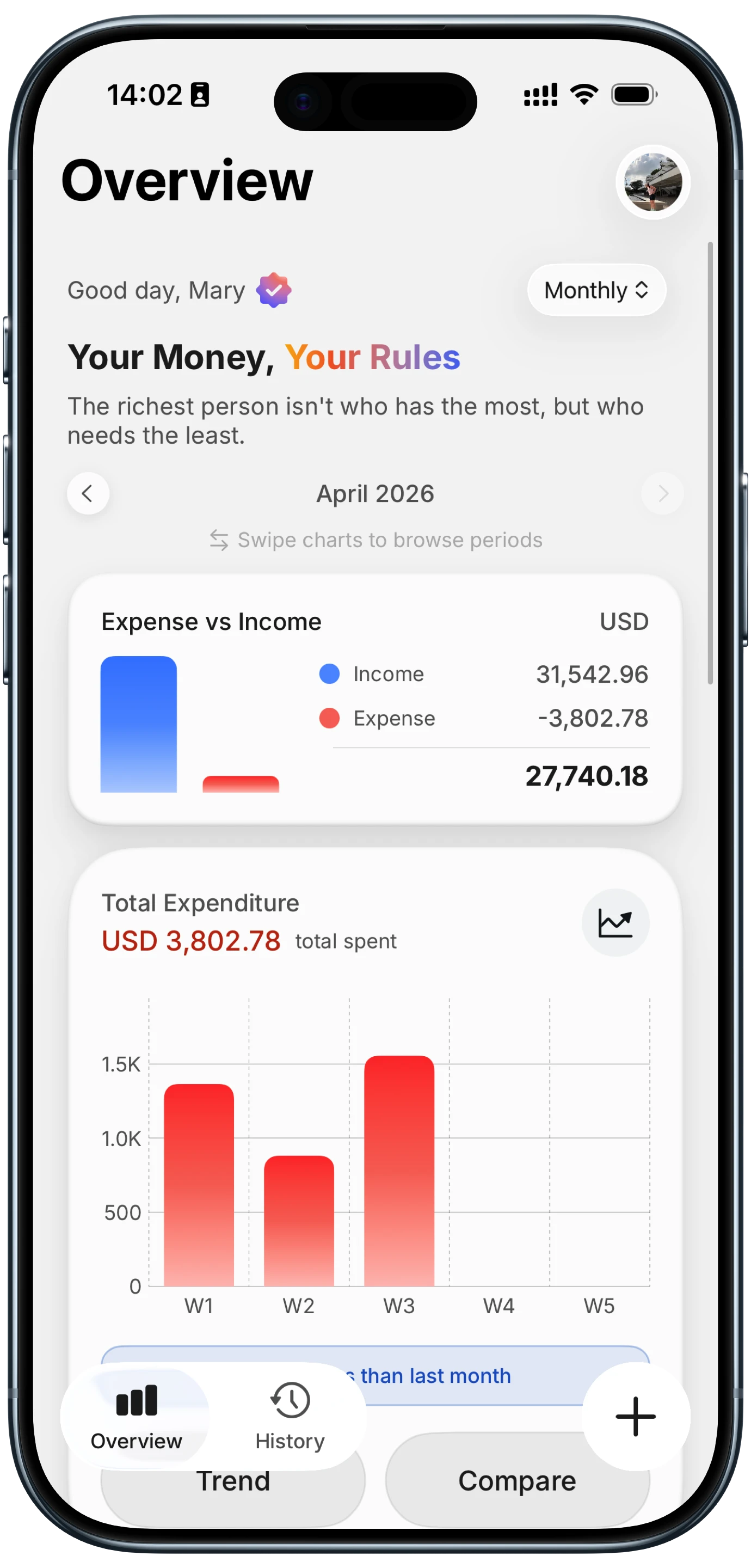
Four days of concentrated buying across multiple retailers is where budgets are lost quietly. Card statements will not catch up until the following week, by which point Cyber Monday is over.
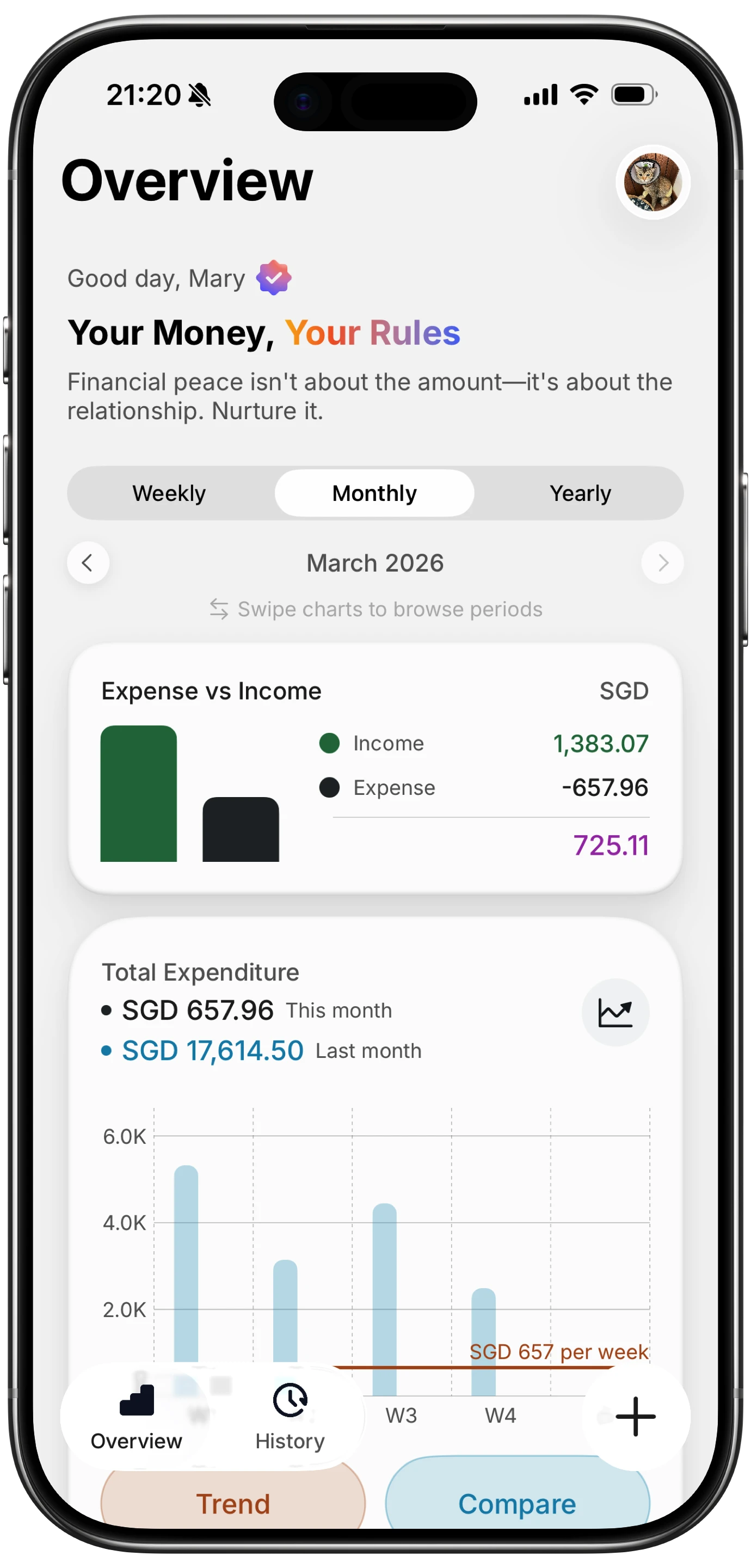
Finny app's Overview feature
Log each purchase the moment you confirm it. Not at the end of the day, when you will forget two of them, and not from the bank feed, which is days behind.
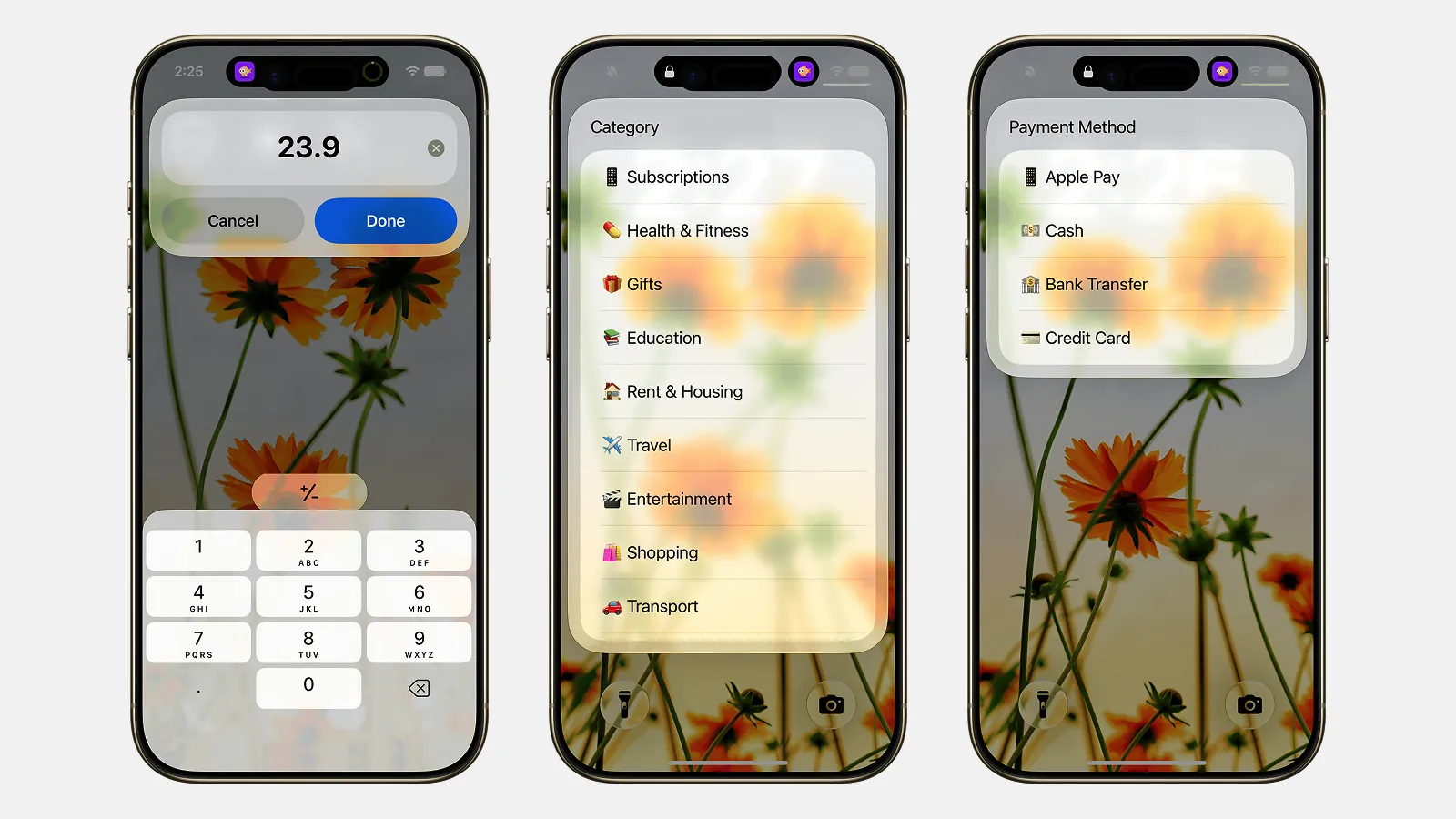
Finny app's Quick Log feature
Finny handles this without a bank connection: card payments get logged as you make them, and online orders can be logged from the confirmation on your screen. The running total stays current while you are still deciding whether to buy the next thing, which is the only moment the number can change an outcome. Our guide to tracking online shopping spending covers split shipments, pay-later plans and returns.
For in-store spending over the weekend, this video shows how card purchases get captured:
Watch the Payment Method
Buy now, pay later options are pushed hardest during sale periods, and they are the cleanest way to spend money you have not budgeted. Four payments of $37.50 does not feel like $150, which is the entire point of the presentation.
If you use them, log the full amount as spent on the day you buy it, not as instalments. Otherwise your running total understates what you have committed, and January arrives with obligations you never recorded.
The same applies to store cards offered at checkout for an extra discount. The discount is real. So is the interest rate, and so is the credit inquiry.
After the Weekend
Reconcile on the Tuesday. Total what you spent, compare it to the ceiling, and subtract it from the remaining holiday budget.
If you went over, adjust the rest of the season rather than pretending it did not happen. Refusing to look is what turns a $100 overspend into a $600 one by December 20th. Our guide on how to stop overspending covers the patterns worth interrupting.
The Bottom Line
Set one ceiling for the whole weekend and take it out of the holiday total. Write a pre-approved list before the sales start, and treat everything else as a normal purchase decision. Check price history rather than the crossed-out price. Use a one-hour delay for anything unplanned. Log purchases as you make them so the running total is real.
Black Friday is not a problem to avoid entirely. Buying something you already needed at a genuinely lower price is a good outcome. The budget exists to keep that separate from buying things because they were discounted.
Common Questions About Black Friday Budgeting
How much should I spend on Black Friday?
Set the figure as a share of your total holiday budget rather than as a standalone number, since Black Friday spending competes with the rest of the season. If your holiday ceiling is $900 and you expect most gifts to come from sale events, $300 to $400 across the weekend is reasonable. The important part is that whatever you spend reduces what remains for December, and that you decide the number before the sales begin.
Are Black Friday discounts actually real?
Some are and many are not. Reference prices are often raised ahead of sale periods so the discount appears larger, and some doorbuster electronics and appliances are lower-specification models made specifically for sale events. Check price history through a tracking tool rather than trusting the crossed-out price, compare against a different retailer, and read model numbers carefully on big-ticket items.
How do I avoid impulse buying during sales?
Build a pre-approved list with target prices before the sales start, then treat anything not on it as a normal purchase. For unplanned items over about $50, put them in the cart and wait an hour before confirming. Manufactured urgency is the main lever these events use, and most stock warnings are not genuine. Items that sell out usually reappear at similar prices within weeks.
Should I use buy now pay later for Black Friday?
It is the easiest way to spend beyond a budget, because splitting a price into four payments makes the total feel smaller than it is. If you use it, record the full purchase amount on the day you buy rather than tracking instalments, so your running total reflects what you have actually committed. Several concurrent plans are difficult to track and arrive together in January.
Ready to track expenses with less friction?
Download Finny to log expenses using AI, receipts, or text. No bank connections, offline support, and full control over your financial data.