Can ChatGPT Track My Expenses? An Honest 2026 Test
It is a reasonable thing to try. You already have ChatGPT open, it understands "spent $12 on lunch," and it can add numbers. Why install another app?
The short answer is that ChatGPT can track expenses for a short period and a small number of entries, and it degrades in specific, predictable ways after that. This is a practical account of where the line sits, what breaks first, and which parts of the job a general assistant genuinely does better than a dedicated tool.
For the wider comparison, see our guide to AI expense tracking versus manual.
What It Does Well
Parsing messy input. Type "grabbed coffee and a sandwich, about fourteen bucks, that cafe near the office" and it will produce a sensible structured entry. This is genuinely impressive and it is the hardest part of expense entry.
One-off analysis. Paste a list of transactions and ask which category grew most since last month. For a single question against data you supply in the moment, it is excellent.
Explaining and planning. Asking it to build a budget structure, explain a rule, or think through a tradeoff works well, because that is reasoning rather than record keeping.
Categorization judgment. Ask where a specific ambiguous purchase belongs and the reasoning is often better than a budgeting app's automatic rules, because you can explain the context.
That last strength is real, and it is worth comparing against how dedicated tools handle the same problem, which we measured in AI expense categorization accuracy.
What Breaks, and When
Memory is the first failure. Expense tracking is a ledger that must persist and stay consistent for months. Chat memory is designed for preferences and context, not as a database. Entries from six weeks ago may or may not be retrievable, and "may or may not" is fatal for a ledger. This is the single biggest limitation.
Arithmetic across many entries. Language models are unreliable at summing long lists without running code. Totals over dozens of entries can be subtly wrong in ways that look plausible, which is worse than being obviously wrong. Always verify a figure you plan to act on.
No capture at the moment of spending. The real difficulty in expense tracking is not parsing, it is recording the purchase in the two seconds you have at a counter. Opening a chat app, typing a sentence, and waiting for a reply is slower than a dedicated logger, and the transactions people miss are exactly the ones where speed mattered.
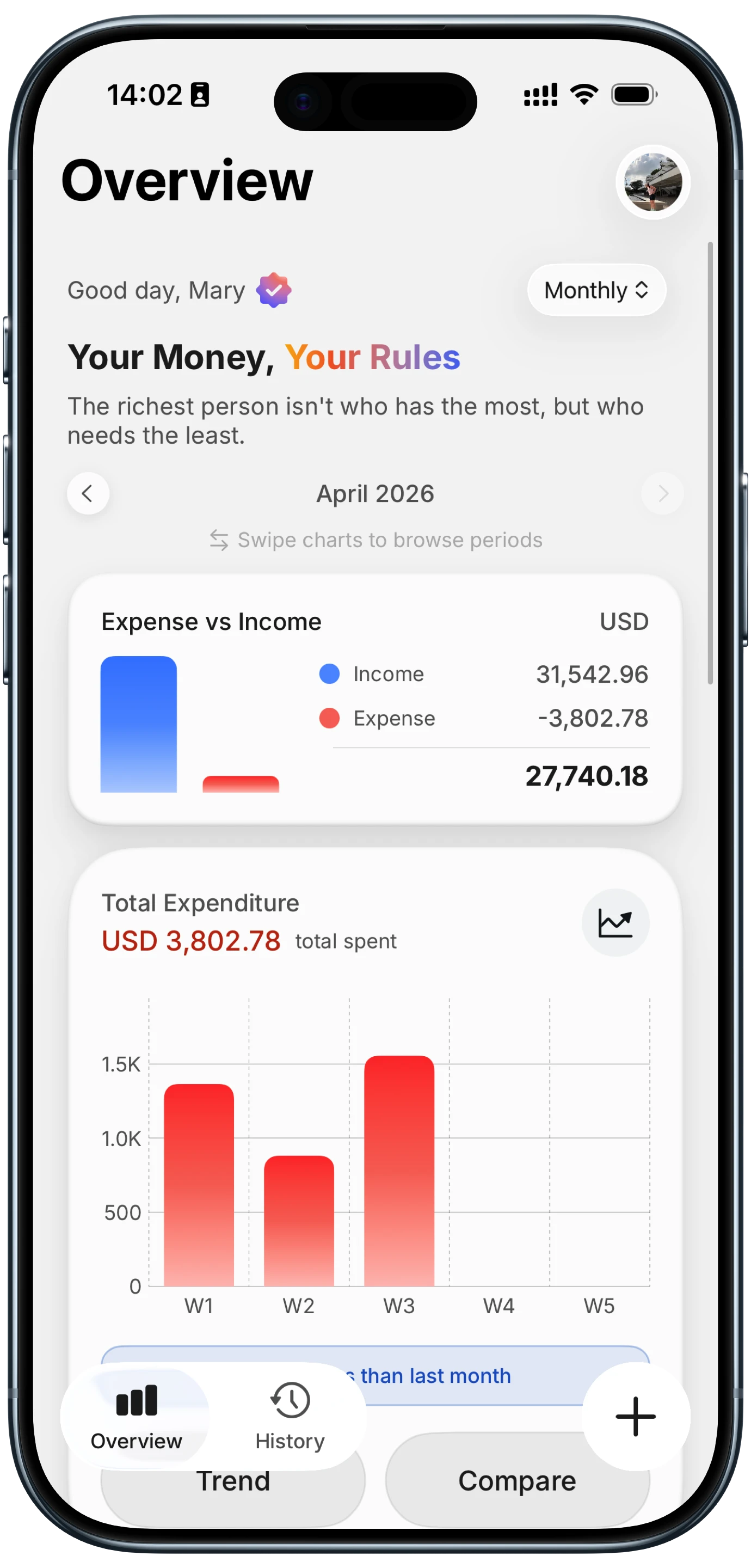
No structure to build on. There are no categories that persist, no budget to compare against, no charts, and no way to see the month at a glance without asking for it and trusting the answer.
The Privacy Question
Worth being deliberate here. Sending a running record of your spending to a general assistant means your purchase history sits in a chat provider's system, subject to their retention and training policies rather than a financial app's.
Some providers let you disable training on your conversations, and business tiers usually handle data differently from consumer ones. Whatever you use, check the setting rather than assuming. A complete spending history is unusually revealing: it shows where you go, when, with whom, and what you are worried about.
A Workable Middle Path
If you want to use it anyway, the version that survives contact with reality looks like this:
- Capture purchases in something built for it, so the record is complete and current.
- Export a month of transactions when you want analysis.
- Paste that into ChatGPT and ask your question.
- Verify any number before acting on it.
This uses the assistant for what it is good at, which is reasoning over data you hand it, and leaves the ledger to something that maintains one reliably.
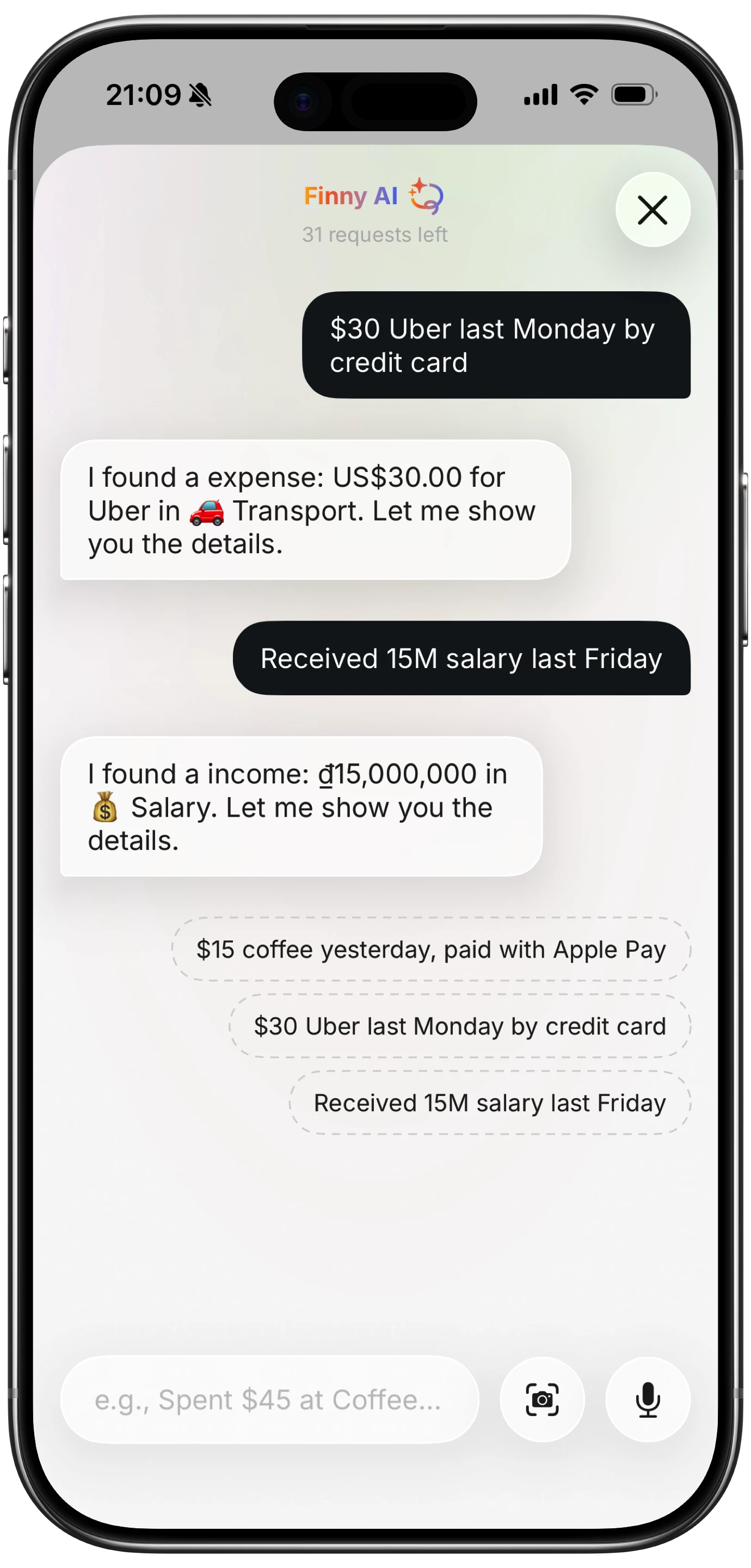
Finny app's AI chat feature
Dedicated tools now do the parsing part just as well. Finny turns a typed sentence, a spoken phrase, or a photographed receipt into a structured expense with the amount, merchant, and category filled in, then asks you to confirm before saving.
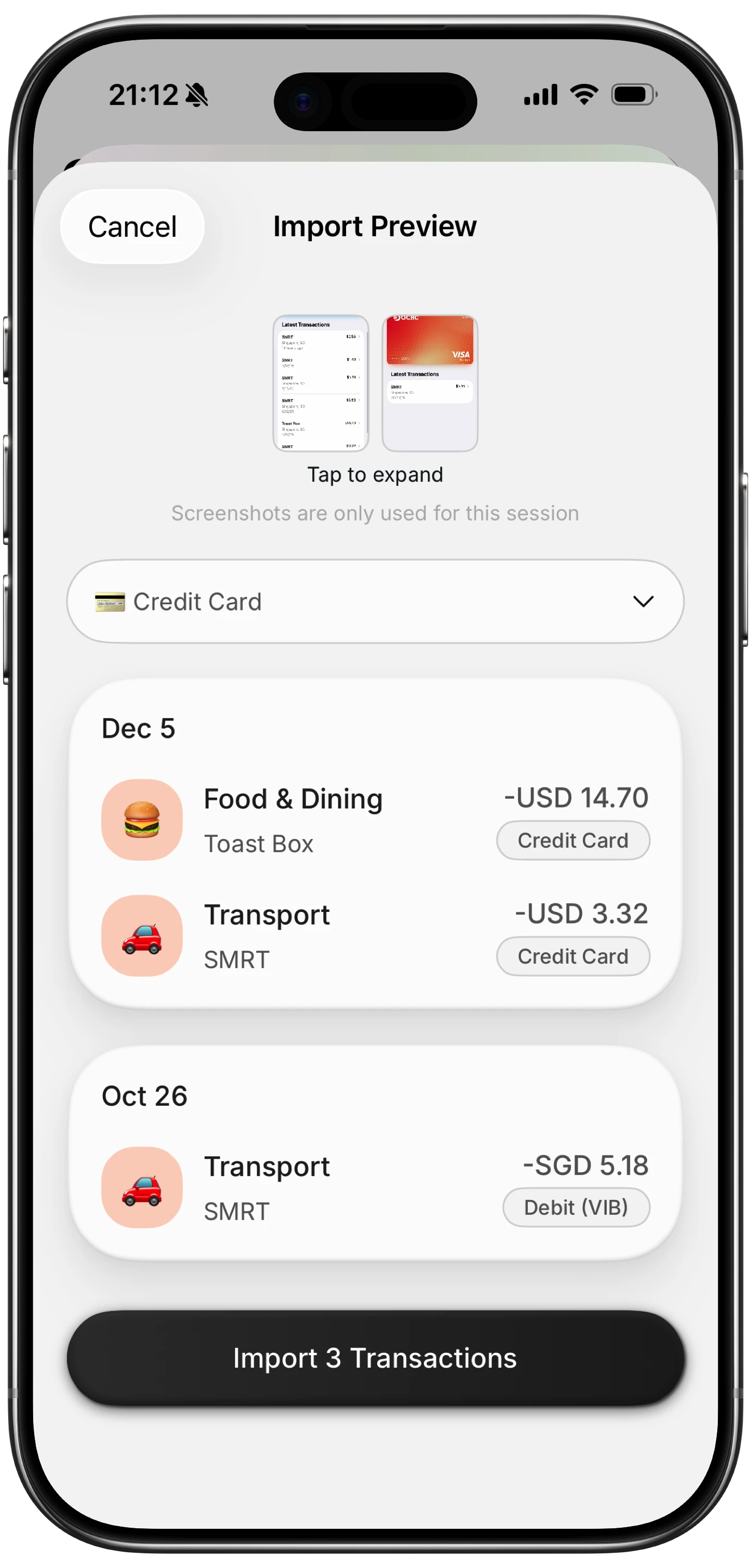
Finny app's screenshot import feature
The confirmation step is the difference that matters. A general assistant will produce an answer regardless of whether it is right, while a tracker built for the job shows you the parsed result before it becomes a record.
Most spending now happens online or on a card, and this video shows an on-screen payment being captured:
The New Middle Category
A group of apps launched recently that sits between the two: expense trackers built around a chat interface, where the conversation is the input method but a real database holds the records. We compared them in best AI chat expense trackers.
That design solves the memory problem, since the ledger is a database rather than a conversation, while keeping the natural language entry that makes ChatGPT appealing in the first place. At least one of them also connects to ChatGPT and Claude directly, so you can log from inside the assistant while the data lives somewhere durable.
The Bottom Line
ChatGPT can track expenses in the sense that it can parse and total them. It cannot be your ledger, because chat memory is not a database and long arithmetic is not reliable enough to trust unverified.
Use it for analysis, categorization judgment, and planning. Keep the record itself somewhere built to hold one. If the appeal was typing a sentence instead of filling a form, that feature now exists in dedicated trackers without the memory problem attached.
Common Questions About ChatGPT and Expense Tracking
Can ChatGPT keep a running total of my spending?
Not reliably over time. It can total a list you paste in a single conversation, but maintaining a persistent ledger across weeks depends on chat memory, which is designed for context and preferences rather than durable records. Entries from earlier sessions may not be retrievable, and long arithmetic across many entries can be subtly wrong in ways that look plausible. Verify any figure before acting on it.
Is it safe to give ChatGPT my spending data?
It is a genuine privacy decision rather than a formality. A complete spending record reveals where you go, when, and what you are worried about, and it would sit under a chat provider's retention and training policies rather than a financial app's. Check whether training on your conversations can be disabled, and be aware that consumer and business tiers often handle data differently.
What is better than ChatGPT for tracking expenses?
Anything that maintains a real database while accepting natural language input. Dedicated trackers now parse a typed sentence, a spoken phrase, or a receipt photo just as well, and they add persistent categories, budgets, and totals you can trust. A newer group of chat-based expense apps keeps the conversational interface while storing records properly, which addresses the memory limitation directly.
Can I use ChatGPT to categorize my expenses?
Yes, and this is one of its genuine strengths. For an ambiguous purchase you can explain the context and get better reasoning than a budgeting app's automatic rules would produce. The practical approach is to use it for judgment calls on individual transactions rather than as the system that stores and totals them.
Ready to track expenses with less friction?
Download Finny to log expenses using AI, receipts, or text. No bank connections, offline support, and full control over your financial data.