How Much Allowance Should a Kid Get? By Age (2026)
Your seven-year-old wants a $12 toy. Your thirteen-year-old wants movie money every Friday. Your sixteen-year-old needs gas. At some point most parents stop handing out cash on request and set a regular allowance, and the first question is always: what is the right number?
There is no official answer to how much allowance a kid should get, but there are useful anchors: rules of thumb, real survey data, and a clear list of what the money covers. For the wider picture of a family's money, see our guide to the family budget app.
The Common Rules of Thumb
The most widely repeated rule is $1 a week for every year of age. A six-year-old gets $6 a week, a twelve-year-old gets $12, and a sixteen-year-old gets $16. It is easy to remember, rises on each birthday, and feels fair between siblings.
A gentler version is 50 cents per year of age. It suits families on a tighter budget, or families who still pay for most things directly and want the allowance to be pocket money only.
Whatever formula you pick, three habits matter more than the number. Pay on the same day every week, because a small amount paid reliably teaches more than a larger one paid whenever you remember. Decide what the money covers before you set it, since $15 that has to buy school snacks is very different from $15 of fun money. And review the amount on a schedule, such as each birthday, so kids are not negotiating every week.
What US Parents Actually Pay in 2026
A 2026 survey for Wealth Enhancement Group, run by Wakefield Research with 1,000 US parents and grandparents in spring 2026, found that 68% of parents give an allowance, averaging $21 a week. Grandparents who give one average $15. The most common starting age was 8.
Greenlight, the kids' debit card app, publishes the average weekly allowance its own families paid, by age. In its 2025 data, the average ran from $6.18 at age 5 to $21.47 at 17. It comes from families already using a paid allowance app, so it is not a random sample, but it is the clearest by-age breakdown we found.
Both line up reasonably well with the $1 per year rule. A $21 survey average blends young kids with older teens, whose allowance often covers far more. If your number lands near these figures, you are in the normal range. If it is lower, that is fine: the habit matters more than the amount.
How Much Allowance by Age: A Starting Table
This table combines Greenlight's 2025 averages with the $1 per year rule and what each age group typically pays for. Adjust it for your budget, your area, and what you expect the money to cover.
| Age | Greenlight 2025 average (weekly) | $1 per year rule (weekly) | What it might cover |
|---|---|---|---|
| 5 to 7 | $6.18 to $6.79 | $5 to $7 | Small treats, saving up for a toy |
| 8 to 10 | $7.22 to $8.53 | $8 to $10 | Snacks, books, birthday gifts for friends |
| 11 to 13 | $9.35 to $11.59 | $11 to $13 | Games, in-app purchases, outings with friends |
| 14 to 15 | $13.13 to $15.26 | $14 to $15 | Movies, fast food, some clothes |
| 16 to 17 | $17.89 to $21.47 | $16 to $17 | Gas, clothes, entertainment, part of a phone bill |
The averages climb faster after 14. That usually reflects more responsibility, not generosity: older teens often cover clothes, gas, or their social life, so the allowance replaces money parents would have spent anyway.
Chores-Based or Unconditional?
Unconditional. Kids get the money no matter what, and chores are part of living in the family. The allowance is a tool for learning to manage money, not a wage. Money stays separate from behavior, but some kids never connect money with effort.
Chores-based. Kids earn the money by finishing set tasks, closer to a paycheck. It links work and pay, but a child who does not need money that week may decide to skip the dishes.
Hybrid. Many families pay a modest base allowance with everyday chores expected, then offer paid extra jobs like washing the car or raking leaves. Kids who want more money can earn it, and the dishes are not up for debate.
There is no single wrong answer here. Pick the version that matches how your family already thinks about chores, explain it once, and stay consistent. Switching models often teaches less than any one applied steadily.
What the Allowance Should Cover at Each Age
The amount only makes sense next to a list of what it pays for. Without one, kids spend the allowance and still ask you for everything else.
Ages 5 to 7. Small wants: a treat at the store, or saving a few weeks for a toy. The lesson is that money runs out, and waiting gets you something bigger.
Ages 8 to 12. A few predictable expenses, like snacks, presents for friends' birthdays, or a game purchase.
Ages 13 to 15. Regular spending, like outings, movies, and part of the clothing budget. Running out before the weekend teaches more than any lecture.
Ages 16 to 17. A real budget covering gas, clothes, entertainment, and perhaps part of the phone bill. With a part-time job, the allowance can shrink as earnings grow.
Each time you add something to the list, raise the allowance by roughly what you used to spend on it, so the change feels like a promotion rather than a cut.
Save, Spend, Give: Splitting It Up
Many families divide each allowance three ways: spend now, save for something bigger, and give. Younger kids often use three clear jars so they can watch each pile grow.
Two splits come up often. Thirds puts one third each into spend, save, and give, which is easy for young kids. 50/40/10 puts half into spending, 40% into saving, and 10% into giving, a good fit for a tween saving toward something specific. Older teens can add a fourth bucket for long-term saving.
Some parents match savings to make the habit stick, for example adding 50 cents for every dollar left in savings for a month. Matching works best with a goal attached, like a bike or a concert ticket.
Keep the split loose enough that kids feel ownership. If the spend share is too small to buy anything, saving starts to feel like a punishment. The goal is the habit of setting something aside, not a precise percentage.
Moving a Teen to a Monthly Amount
Somewhere between 14 and 16, many parents switch from a weekly allowance to a monthly one. A month is closer to how adults get paid, and it forces planning: money that arrives on the first has to last until the next first.
To convert, multiply the weekly amount by 52 and divide by 12. $15 a week becomes about $65 a month, and $20 a week becomes about $87.
Expect the first few months to go badly, and plan for it. Teens often spend most of it in the first week and run short at the end. That is the point: better to learn it with $65 than with a first paycheck. Resist topping up mid-month, and talk it over calmly at the start of the next one.
If your teen uses Apple Cash, our guide to tracking teen spending with Apple Cash Family covers the controls Apple gives parents.
Tools for Paying Allowance
Cash works well for younger kids. Once kids pay by phone or card, most families use one of these.
Apple Cash Family
Built into iPhone for US families using Family Sharing. A parent can set up recurring payments for a child, choosing the amount, start date, and how often it is sent. Parents can limit who the child sends money to, get notified of transactions, and lock the account. Accounts can send or receive up to $2,000 in a rolling seven-day period.
Greenlight
A debit card and app for kids. Plans start at $5.99 a month for Core, with debit cards for up to 5 kids, and every plan includes chores and allowance. Higher tiers run $10.98 to $19.98 a month.
BusyKid
Built around chores, with payday every Friday. An optional Auto-Allowance pays without chores, on Fridays or on the 1st and 15th. Kids can set aside a share to save or give, and spend with a Visa prepaid card. BusyKid lists its price as $4 a month billed annually, plus possible card fees.
Helping a Teen See Where It Goes
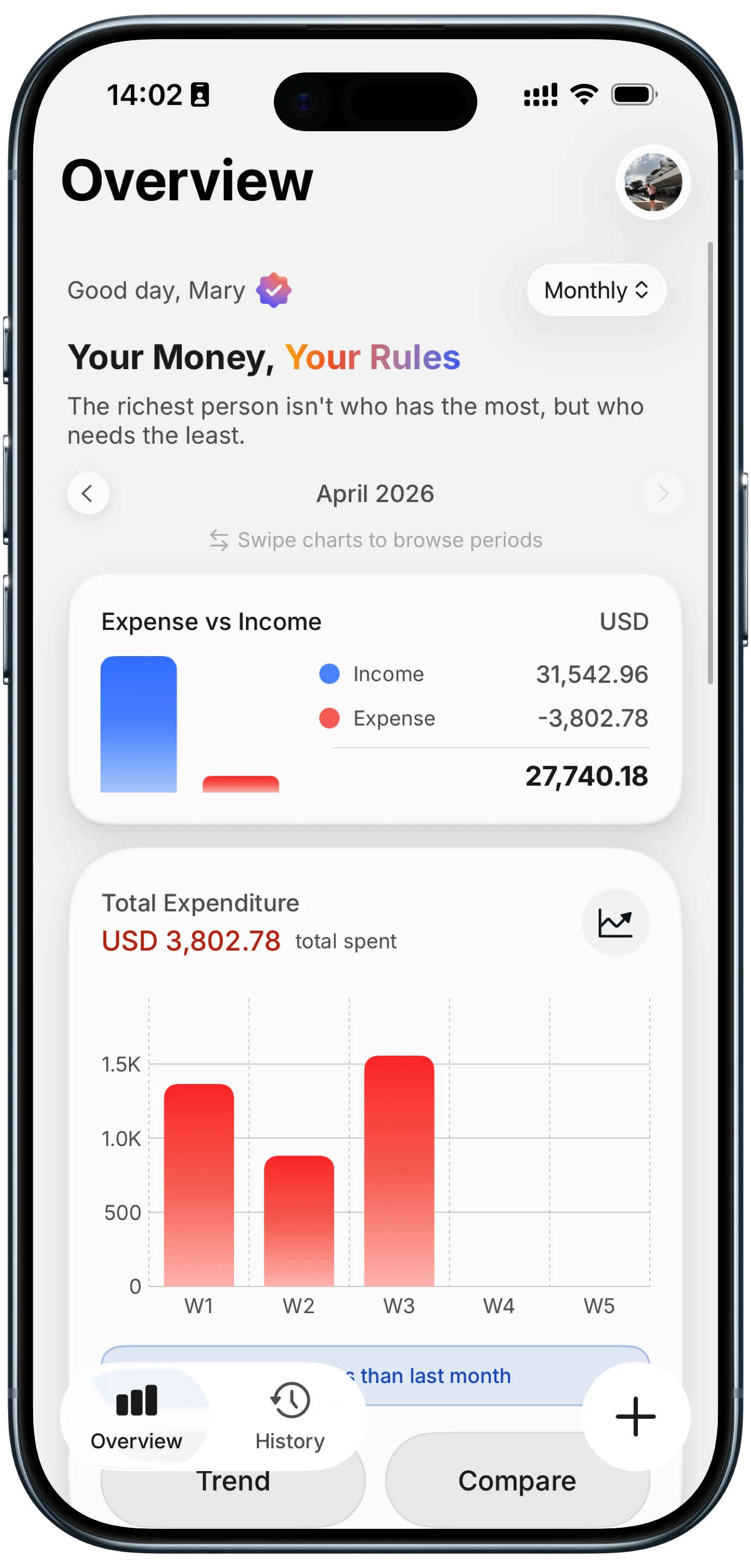
Paying an allowance is the easy part. The lesson lands when kids can see what they spent it on, and a short monthly look together, without judgment, does more than any app. A notebook works, and so does a tracker on the teen's phone.
Track spending by card
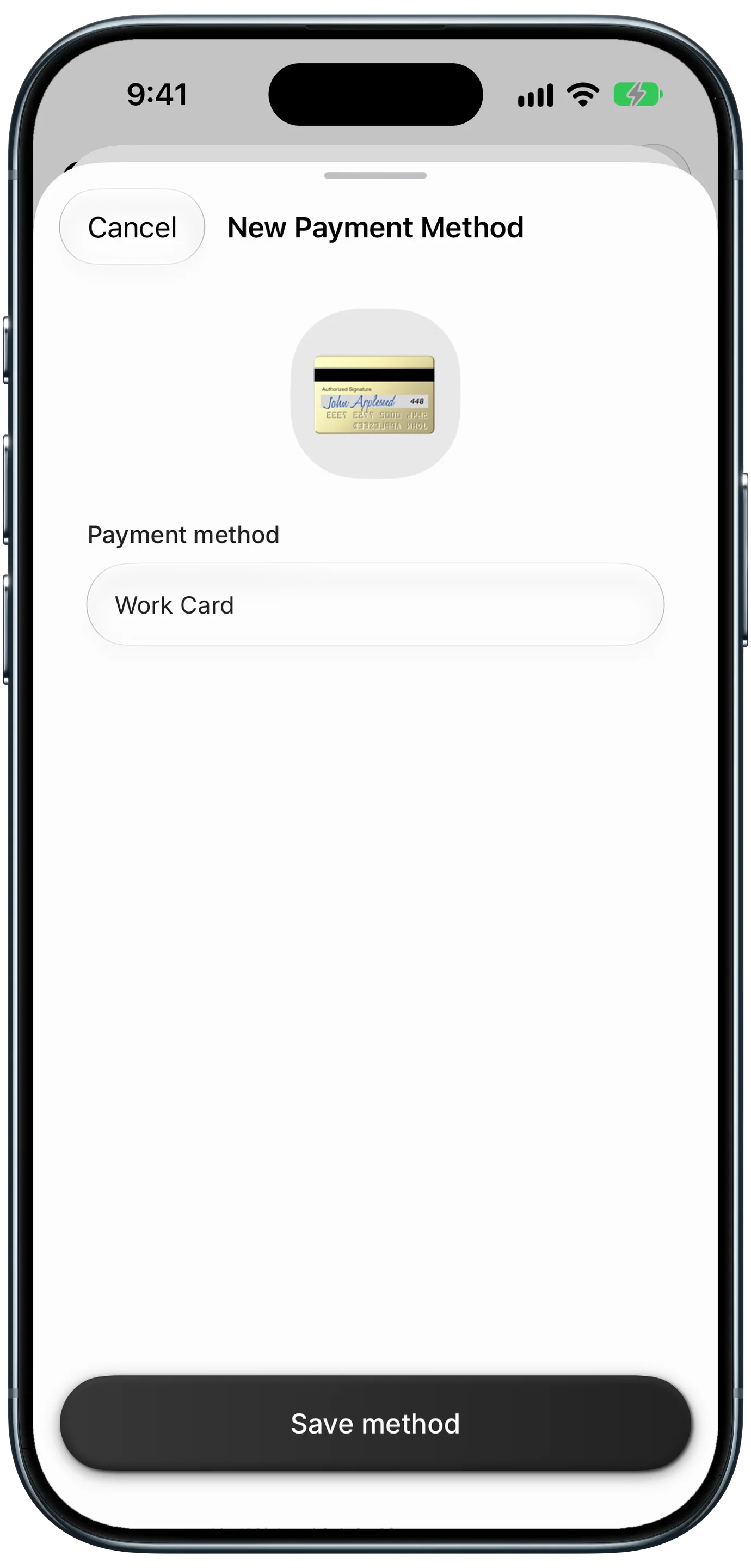
A teen with their own iPhone can track their spending in Finny and add each way they pay as a payment method, such as an Apple Cash card, a kids' debit card, or cash.
Finny app's payment methods feature
The sheet above names a new method "Work Card," the kind a teen with a weekend job might add. Finny then shows spending per method, with no bank connection.
Share some of it with a parent
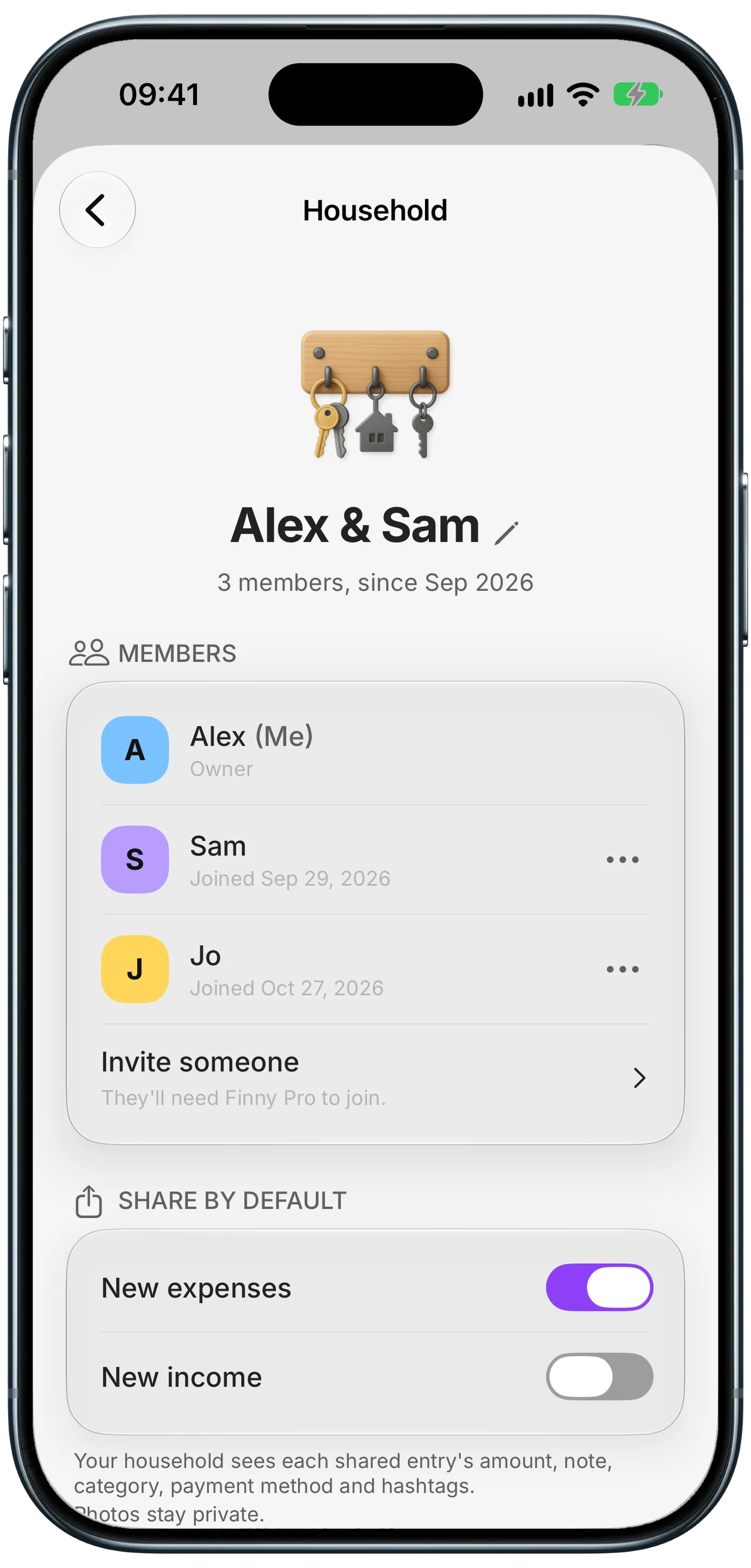
With Finny Households, a teen can share the entries they choose, like school lunches and transport, with a parent and keep everything else private.
Finny app's Households feature
The Household screen above shows three members, with new expenses shared by default and new income kept private. The household sees a shared entry's amount, note, category, payment method, and hashtags, never its photos. Only the teen can edit or delete what they logged.
Here is a quick look at Households in action:
Everyone in a household needs Finny Pro, and a family plan covers up to 6 people in your Apple family, teen included. Finny does not pay allowances or move money. For the full tour, see the Households launch post.
Common Questions About How Much Allowance to Give
How much allowance should a 10-year-old get?
The $1 per year of age rule suggests about $10 a week, and Greenlight's 2025 data put the average for its 10-year-olds at $8.53, so $8 to $10 is typical. What matters more is what the money covers. If a 10-year-old buys their own snacks and friends' birthday gifts, the higher end makes sense.
Should allowance be tied to chores?
Either approach can work. An unconditional allowance keeps money lessons separate from behavior, while a chores-based one links work and pay but lets a child skip chores when they do not need money. Many families pay a base allowance with everyday chores expected, plus paid extra jobs. Pick one approach and stick with it.
How much allowance should a 16-year-old get?
Greenlight's 2025 data put the average for 16-year-olds at $17.89 a week, close to the $1 per year rule. Many families give more at this age because the allowance covers gas, clothes, and plans with friends. Monthly, that is roughly $70 to $90, which helps a teen plan ahead the way they will with a paycheck.
Ready to help your teen see where their allowance goes?
Download Finny to track spending without linking a bank, and share only the entries you choose with your family.