How to Split Holiday Hosting Costs With Family
Hosting Thanksgiving or Christmas is generous, and it is also expensive. The turkey is only the start: drinks, appetizers, extra groceries for overnight guests, and a second trip to the store all land on the host's card. Many hosts absorb it quietly every year, and some start to dread it.
There are fair ways to split holiday hosting costs that keep the holiday warm and the host's budget intact. This guide covers what hosting really costs, five common ways families share the bill, how to raise it without awkwardness, what to do when someone can't chip in, and where travel fits. Planning the whole season? Start with our holiday budget planner.
What Hosting a Holiday Really Costs
The best-known benchmark is the American Farm Bureau Federation's Thanksgiving dinner survey. Its 2025 survey put a classic dinner for 10 at $55.18, or about $5.52 per person, down 5% from 2024. Adding ham, potatoes, and green beans raised it to $77.09. AFBF's 2026 results had not been released when this was written.
That figure is a floor, not a budget. The classic menu covers turkey, stuffing, sweet potatoes, rolls, peas, cranberries, a vegetable tray, and pumpkin pie. It leaves out appetizers, drinks, extra desserts, disposable pans, and paper goods. Our Thanksgiving budget guide puts a realistic hosting budget for 10 at $150 to $200 once those are in.
Christmas often runs higher, with a pricier main like a roast and sometimes more than one meal. Multi-day hosting adds the costs nobody counts: breakfasts and lunches for overnight guests, extra laundry, a higher power bill. Before deciding how to split anything, write down the full list. Hosts are usually surprised by the real total, and guests almost always are.
Five Ways to Split the Cost
Families tend to land on one of these, and many combine two.
The host pays for everything
Simple and generous, and it works when the host can afford it and enjoys controlling the menu. The risk is quiet resentment if it falls on the same person every year. Guests can still bring drinks, a host gift, or help clean up.
Potluck
Each household brings a dish, which spreads both cost and work. The catch is that dishes vary wildly in price: the turkey costs far more than a bag of rolls. Balance it by giving the main to the host and pairing cheaper sides with drinks or dessert.
Split the groceries evenly
The host shops, totals the receipts, and divides by the number of households. The math is easy, but a single person pays the same as a family of five.
Split by household size
Divide the total by the number of people eating, and each household pays for its headcount. Many families count young kids as half or free.
Rotate hosts
Each household takes a turn, or siblings alternate Thanksgiving and Christmas. Over a few years the cost evens out with no money changing hands, as long as everyone has room to host.
Here is the math for a $240 dinner shared by four households of 4, 3, 3, and 2 people:
| Method | Household of 4 | Household of 3 | Household of 3 | Household of 2 |
|---|---|---|---|---|
| Even split by household | $60 | $60 | $60 | $60 |
| Split by headcount ($20 a person) | $80 | $60 | $60 | $40 |
How to Bring It Up Without Awkwardness
The first message is usually harder than the math. A few things make it easier.
Raise it early. A note two or three weeks out gives people time to plan. Bringing it up at the table, or sending a bill afterward, is what makes it awkward.
Frame it as planning. "I'd love to host again. Want to split groceries like last year, or do a potluck?" offers a choice instead of a demand.
Name a number or a method. "Can everyone help out?" leads to uneven results. "Groceries should run about $240, so $60 per household" is clear and easy to agree to.
Count the host's contribution. Many families agree the host's kitchen, utilities, and cleanup are their share, so the host pays less in cash or nothing at all.
Close the loop. A short message with the final total and each share, sent within a day or two, keeps things transparent and stops the topic from lingering into the next holiday. If the plan changed along the way, say so, and adjust the shares rather than letting one person absorb the difference.
When Someone Can't Contribute Money
Every family has someone in a tight spot: a college student, a relative between jobs, a sibling with new medical bills. The goal is to include them without putting them on the spot.
Offer ways to contribute that are not cash. Someone can handle cleanup, bring folding chairs, run the kids' table, or drive an older relative. Time and effort count, and most people would rather give that than nothing.
Keep the money conversation private. Instead of one group message listing everyone's share, the host can message each household separately, which lets someone say "not this year" without an audience. A host who can afford it can quietly cover that share.
A per-household split, rather than per-person, also helps a family with several kids who would otherwise pay the most. And if one household is always stretched, give them an inexpensive dish in a potluck, like rolls or a salad, so they come to the table on their own terms.
Don't Forget Travel Costs
Hosting and traveling are two sides of the same holiday. The host pays for food and the house, while guests who travel can spend far more on flights, gas, and hotels.
Many families factor this in. A household that flew across the country might skip the grocery share or pay less, while local family covers more of the meal. That feels fair to most people because everyone is spending something to be there.
A few practical points:
- Overnight guests cost more. Breakfasts and extra groceries over a long weekend can rival the main meal. Count them, or have guests cover one meal out.
- Carpool and split gas. Relatives driving from the same area can share a car and divide the fuel.
- Rotate who travels. Rotating hosts also rotates who pays for travel, which evens things out over a few years.
For guests planning their own trip, our holiday travel budget guide compares flying and driving costs.
Keep One Running Tally Everyone Can See
The easiest way to avoid "who bought the wine?" afterward is one shared record. A spreadsheet or shared note works. If your family uses iPhones, a Finny household does it with less effort.
Create a household for the holiday
One person creates a household and invites the others with a code or a QR code. A household holds up to 6 people, so for a big gathering, invite one adult from each family. Anyone with the code can join until it is revoked, so send it only to family.
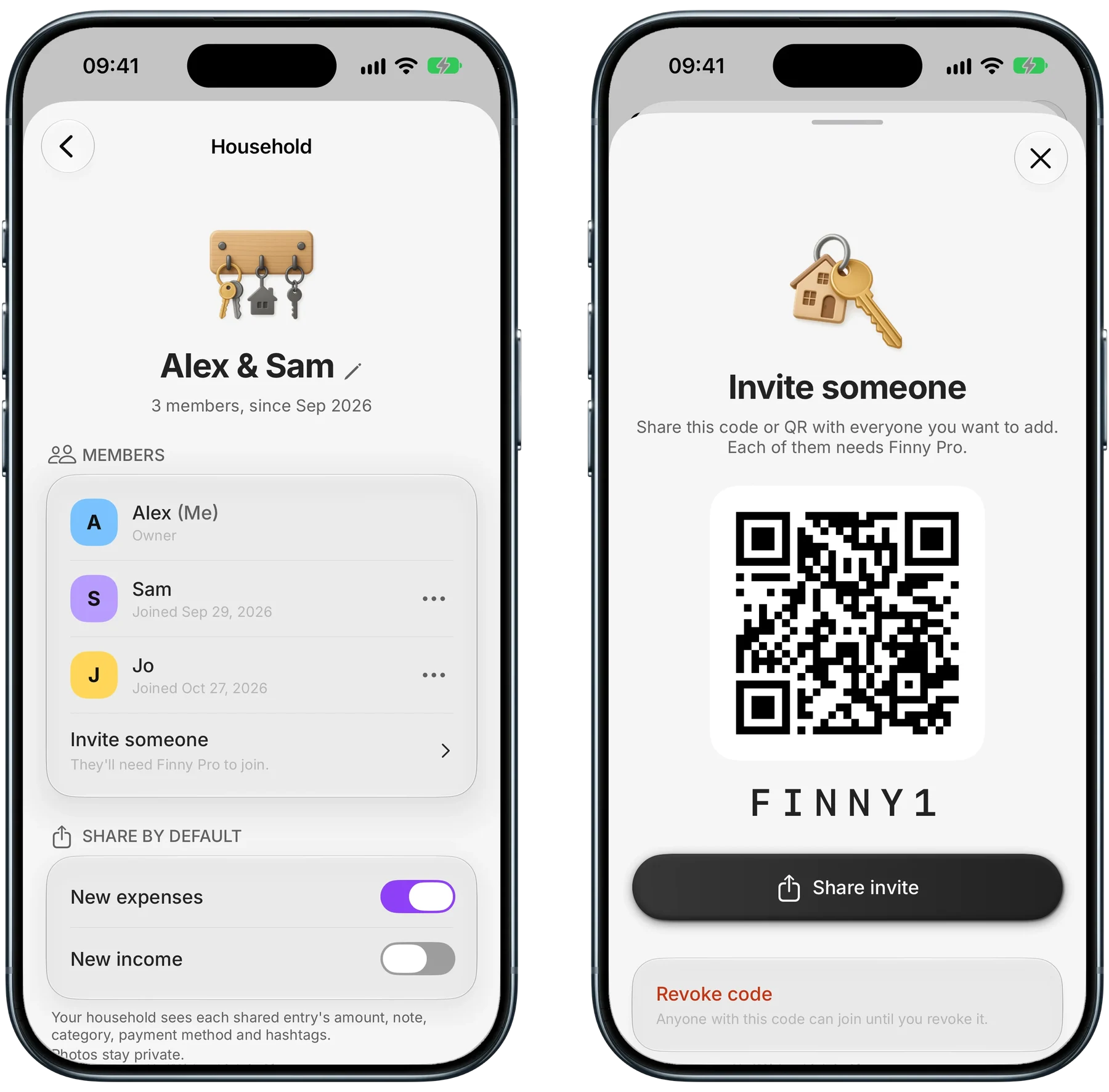
Finny app's Households feature
The screens above show the Household screen with its members, then the invite screen with a QR code and a Share invite button. Here is a quick look at Households in action:
Everyone logs what they buy
Each person logs holiday purchases on their own phone, shares them with the household, and adds a tag like #Thanksgiving. Shared entries show in everyone's History with the initial of whoever logged them.
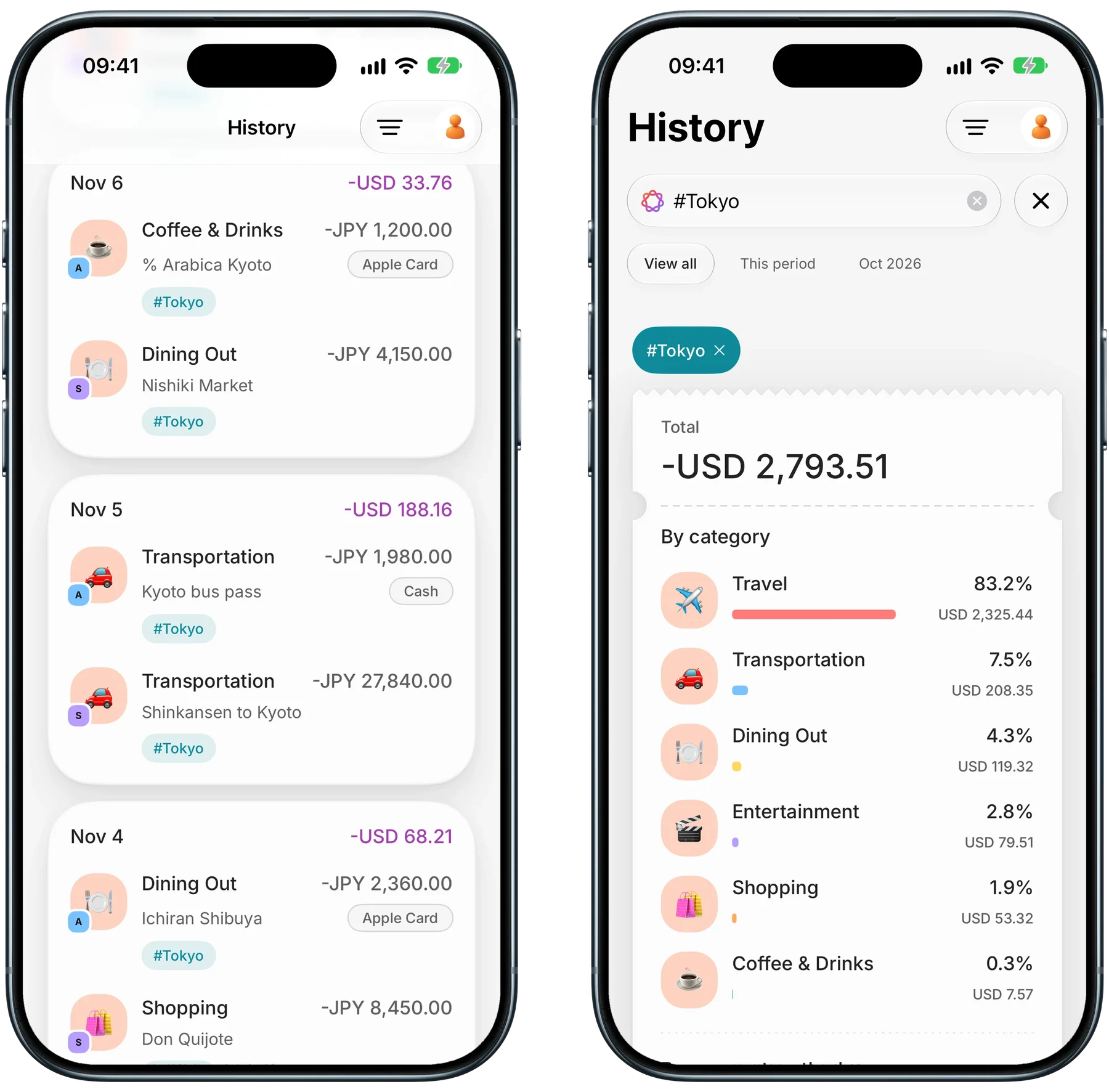
Finny app's Households feature
The example above is a trip: Alex's and Sam's entries side by side, then a #Tokyo search totaling it by category. Only the person who logged an entry can edit it, and receipt photos stay private.
One search shows the total
After the holiday, search the tag. Every search shows a total in your home currency, split by category and payment method, with everyone's shared entries included.
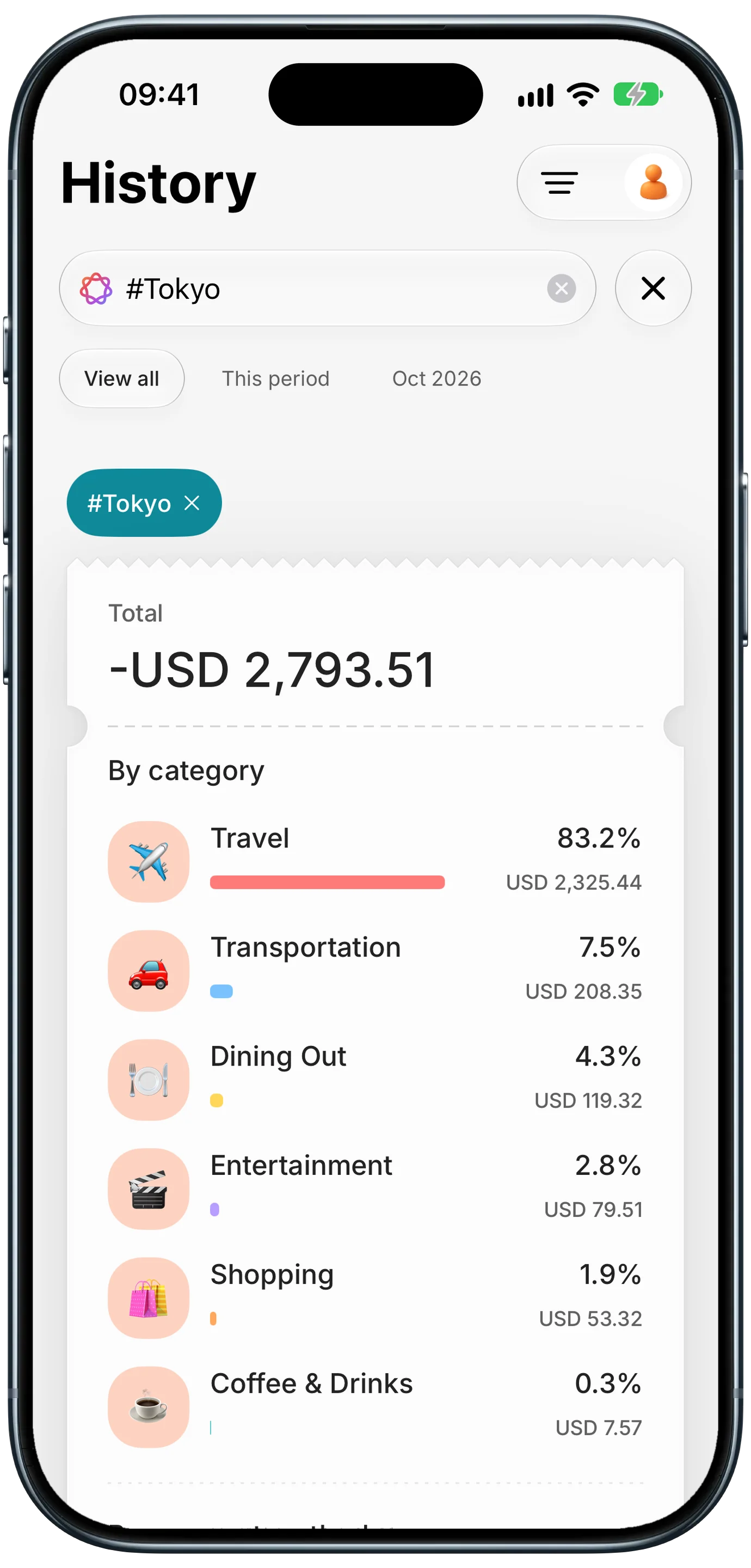
Finny app's hashtag search feature
This #Tokyo search totals a trip by Travel, Transportation, Dining Out, and more. A #Thanksgiving search works the same way for groceries, drinks, and supplies. Finny shows who paid for what, but it does not work out who owes whom: settling up stays between you, though our free bill split calculator can work out the transfers. Everyone needs Finny Pro, and a family plan covers up to 6 people in your Apple family. More in the Households launch post.
Common Questions About Splitting Holiday Hosting Costs
Is it rude to ask family to chip in for holiday dinner?
No, as long as you ask early and offer a clear plan. Most relatives would rather know the cost up front than wonder whether they should bring something. Frame it as planning ("want to split groceries or do a potluck?") and name a number or a method. What feels rude is a surprise bill after the meal, so send the request a few weeks ahead.
How do you split holiday costs when families are different sizes?
Split by headcount. Divide the total by the number of people eating, and each household pays for its own people. Many families count young children as half or free. If that feels too precise, an even split per household with the host paying less in cash is a simpler middle ground most families accept.
Should guests who travel still pay a share?
It depends on the gap. A household that spent hundreds on flights is already paying to be there, so many families waive or reduce their grocery share and let local relatives cover more. Guests driving a short distance usually pay the normal share. Agree on it in advance so nobody has to guess.
How do you settle up after the holiday?
Add up what each household spent, compare it with each agreed share, and have whoever paid less send the difference to whoever paid more, by bank transfer, a payment app, or cash. Do it within a few days while receipts are fresh. Some families skip the transfers entirely and simply note who is owed, then let that household spend less next year.
Ready to see who bought what this holiday?
Download Finny to share the expenses you choose with family, tag them by event, and see the total in one search, with no bank login.