How to Budget a Trip Abroad Around Exchange Rates
You plan a week in Tokyo for $2,500. You land, pay for dinner in yen, and the number on the menu means nothing in your head. By day four you've lost track entirely, and a month later the card statement says the trip cost $3,100. Some of that gap is spending. Some of it is exchange rates, card fees, and conversions you never noticed.
A good travel budget built around exchange rates takes that uncertainty out. This guide shows how to pick a planning rate, when to budget in the local currency versus dollars, which conversion traps quietly add 3 to 8 percent, and how to see every purchase in dollars while you're still on the trip. For picking a tool, our best travel budget apps roundup compares the options.
Why exchange rates break travel budgets
Three things make a foreign-currency trip harder to budget than a trip at home:
- Rates move. A budget set in dollars in March can buy noticeably more or less yen by October. The change is rarely dramatic over a few weeks, but on a large trip it adds up.
- Prices don't feel real. JPY 1,190 for a bowl of ramen or EUR 18 for a museum ticket doesn't register the way a dollar price does, so small purchases slip by.
- Fees hide in the conversion. Foreign transaction fees, ATM fees, and dynamic currency conversion all widen the gap between what you think you spent and what your card charges.
The fix is to decide on one rate for planning, budget in the currency you'll actually spend, and track every purchase with its dollar equivalent as you go.
Step 1: Pick a planning rate
Start by looking up the current rate and rounding it slightly against yourself. If one dollar buys about 150 yen, plan at 145. That built-in cushion absorbs normal rate movement and small fees, so the trip doesn't come in over budget just because the market moved.
Use the planning rate to convert your trip budget once. A $2,500 trip at 145 yen per dollar becomes a budget of about JPY 362,000. From here on, that yen figure is the number you manage.
Step 2: Budget in the local currency
It's easier to stick to a budget in the currency printed on the prices you see. Split the local-currency budget into a few categories:
| Category | Example share | Tokyo example (JPY) |
|---|---|---|
| Lodging | 40% | 145,000 |
| Food and drinks | 25% | 90,000 |
| Transport | 15% | 54,000 |
| Activities | 10% | 36,000 |
| Shopping and gifts | 10% | 37,000 |
Pay for flights and anything booked at home in dollars, and keep them outside the local budget. That way the on-the-ground budget is a clean number in one currency.
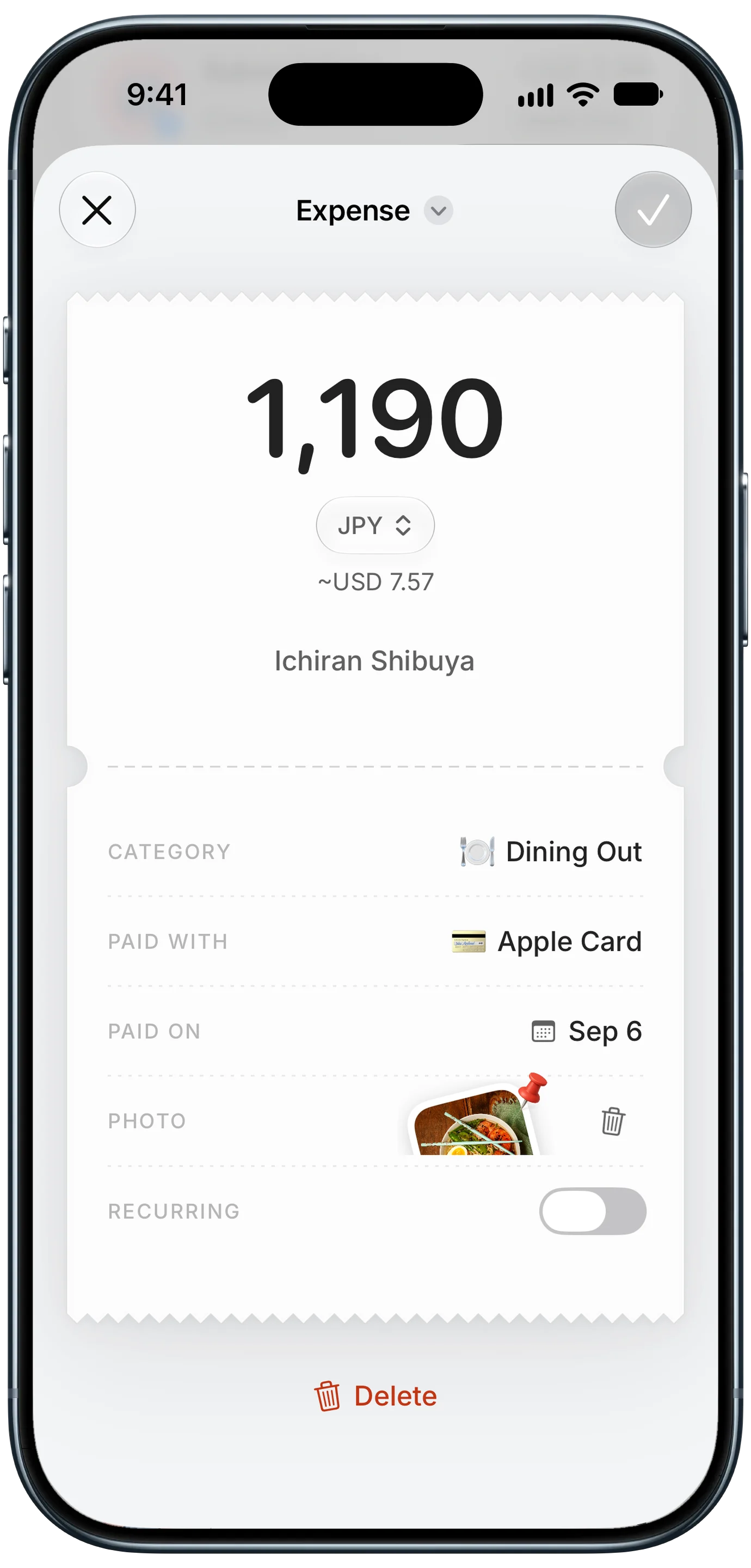
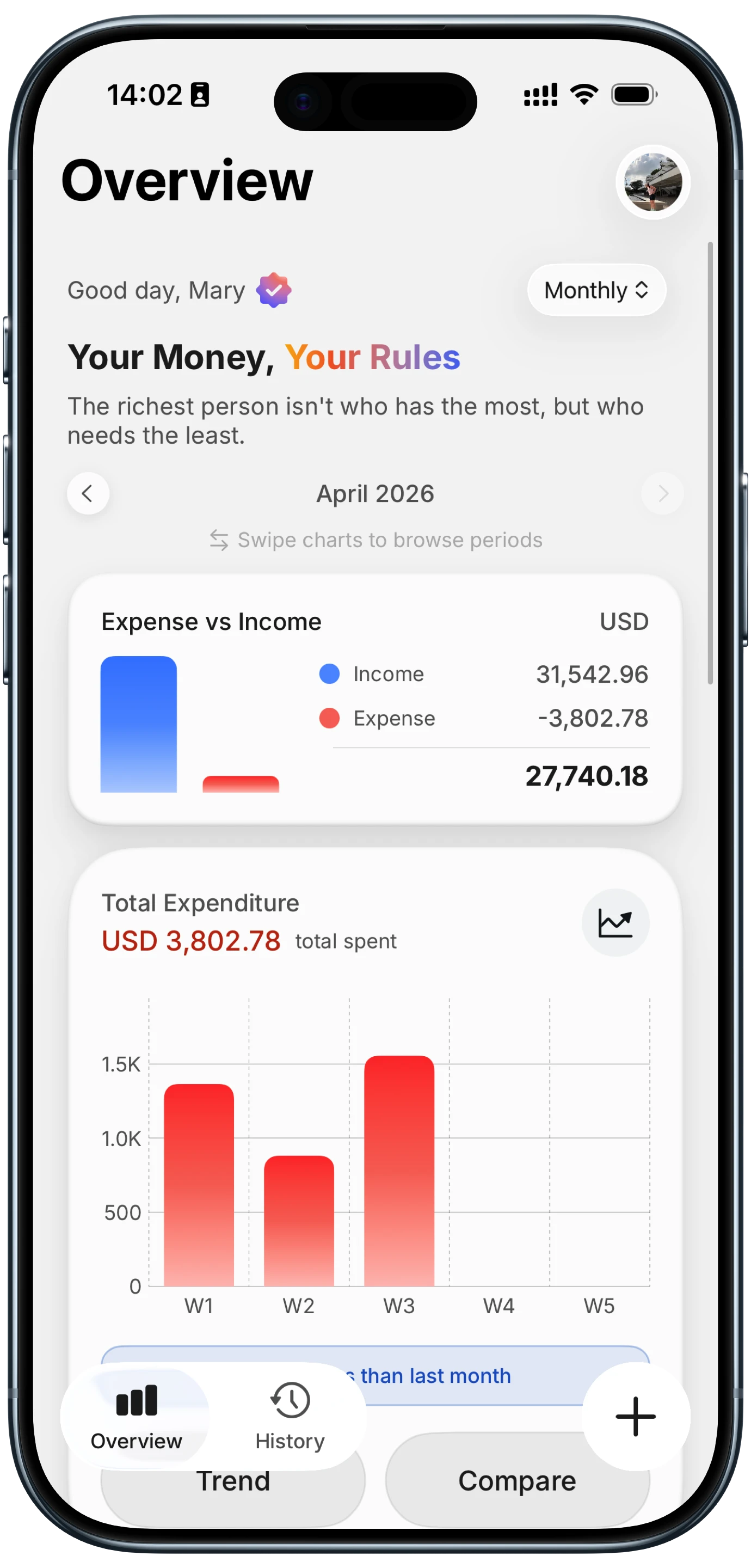
In Finny, a budget can be set in the trip's currency, like JPY 250,000, with an end date so it closes when the trip does. Its dollar equivalent is locked at the rate on the day you create it, so the cap doesn't drift as markets move. Every purchase you log in yen shows its approximate dollar value, and the overall total stays in your home currency at live rates.
Step 3: Avoid the conversion traps
Most travel money leaks happen at the moment of payment. Three to watch:
Dynamic currency conversion. A card terminal or ATM abroad may offer to charge you in dollars instead of the local currency. It sounds convenient, but the rate usually carries a markup of several percent. Always choose to pay in the local currency and let your card network convert it. Guides like One Mile at a Time's DCC explainer and CardRatings make the same recommendation.
Foreign transaction fees. Many US cards charge around 3% on every purchase made in another currency. A card with no foreign transaction fee removes that cost entirely. Our guide on how to avoid foreign transaction fees covers which card types waive them.
ATM fees. Withdrawing cash abroad can mean a fee from your bank, a fee from the local ATM, and sometimes a conversion offer on top. Take out fewer, larger amounts, and decline any conversion the ATM offers.
Step 4: Track in both currencies while you travel
The trip budget only works if you know where you stand mid-trip. Log each purchase in the currency you paid, and check the dollar total at the end of each day.
Here's a card payment logged automatically on iPhone, which works the same abroad:
A daily check-in takes two minutes:
- Add anything you paid in cash while you still remember it.
- Compare today's spending to a daily target. Divide the local-currency budget by the number of days for a simple daily figure.
- Glance at the dollar total to see the whole trip, flights included, in the currency you'll pay it back in.
For more on logging in several currencies, see our guide to tracking expenses in multiple currencies.
Step 5: Reconcile when you get home
When the card statement arrives, compare it to what you logged. The difference between your logged dollar total and the charged total is your real conversion cost: rate movement plus any fees. Knowing that number makes your next planning rate more accurate.
If the trip ran over, find out where before you plan the next one. It's usually food and small purchases, not lodging. Our guide on recovering from overspending on vacation helps if the gap is big.
Frequently Asked Questions
Should I budget a trip in dollars or the local currency?
Plan in dollars, then budget and track in the local currency. Your total trip budget is a dollar amount you can afford, but spending decisions happen in the local currency at the register. Convert once at a slightly conservative planning rate, manage the local-currency budget during the trip, and check the dollar total each day.
How do I account for exchange rate changes in a travel budget?
Use a planning rate a few percent worse than today's rate when you convert your budget. The cushion absorbs normal rate movement and small fees. Pay with a card that has no foreign transaction fee and always decline dynamic currency conversion, so the rate your card network uses is close to the market rate.
Is it better to pay in local currency or dollars abroad?
Pay in the local currency. When a terminal or ATM offers to charge you in dollars, that's dynamic currency conversion, and its exchange rate typically includes a markup of several percent. Choosing the local currency lets your card network convert the charge, which is usually cheaper.
How much cash should I bring on an international trip?
Bring enough for the first day's transport and small purchases, and withdraw the rest from ATMs as needed in fewer, larger amounts to limit fees. How much depends on the destination: some countries are almost cashless, while others still run on cash for small vendors, markets, and transit.
The bottom line
Budgeting a trip abroad around exchange rates means deciding on the rate before the market decides for you. Convert your budget once at a cautious planning rate, manage it in the local currency, pay in local currency with a no-fee card, and watch the dollar total as you go. The trip will still surprise you, just not on the card statement.