Year-End Money Review: Close Out 2026 in an Hour
Most people skip the year-end review because they imagine it as an audit: spreadsheets, receipts, and an uncomfortable reckoning. It does not need to be that. An hour, six steps, and a willingness to look at numbers you may not enjoy is enough to close out the year properly.
A year-end money review is worth the hour because December is the only month where you can see a complete year and still act on it. Retirement contributions, charitable giving, and flexible spending accounts all have December deadlines. Everything you learn afterward is history. If you have an FSA balance to use up, our HSA vs FSA guide explains the carryover and grace period rules, and once the review is done, our 2027 budget reset walks through building next year's plan.
This is a timeboxed checklist. Set a timer for each step and move on when it rings, because the goal is finishing, not perfection.
Step 1: Net Worth Snapshot (10 minutes)
One number, taken once a year, that tells you more than any monthly metric.
List what you own: checking, savings, retirement accounts, investment accounts, home value if you own, car value if it is significant. List what you owe: mortgage, car loans, student loans, credit card balances.
Subtract. Write down the result with today's date.
The figure itself matters less than the direction. If you did this last year, the change is the real output. If you did not, this becomes your baseline and next December will be more useful. Our guide to net worth tracking covers what to do with the number once you have it.
Do not chase precision. A car valued within a few hundred dollars is fine. Spending twenty minutes on an exact figure defeats the purpose.
Step 2: Subscription Audit (10 minutes)
The highest-return ten minutes in the whole review.
Open your card statements for the last two months and list every recurring charge. Then go through the list and mark each one: keep, cancel, or downgrade.
The ones to look for:
- Services you signed up for during a free trial and never used
- Duplicate streaming subscriptions across household members
- Annual renewals that quietly increased in price
- Subscriptions attached to a device or app you no longer own
Cancel on the spot rather than making a list to handle later. The list never gets handled. Our guide to auditing subscriptions in 20 minutes has a fuller process if you want to go deeper.
Step 3: Category Review (15 minutes)
Look at where the money actually went this year, not where you planned for it to go.
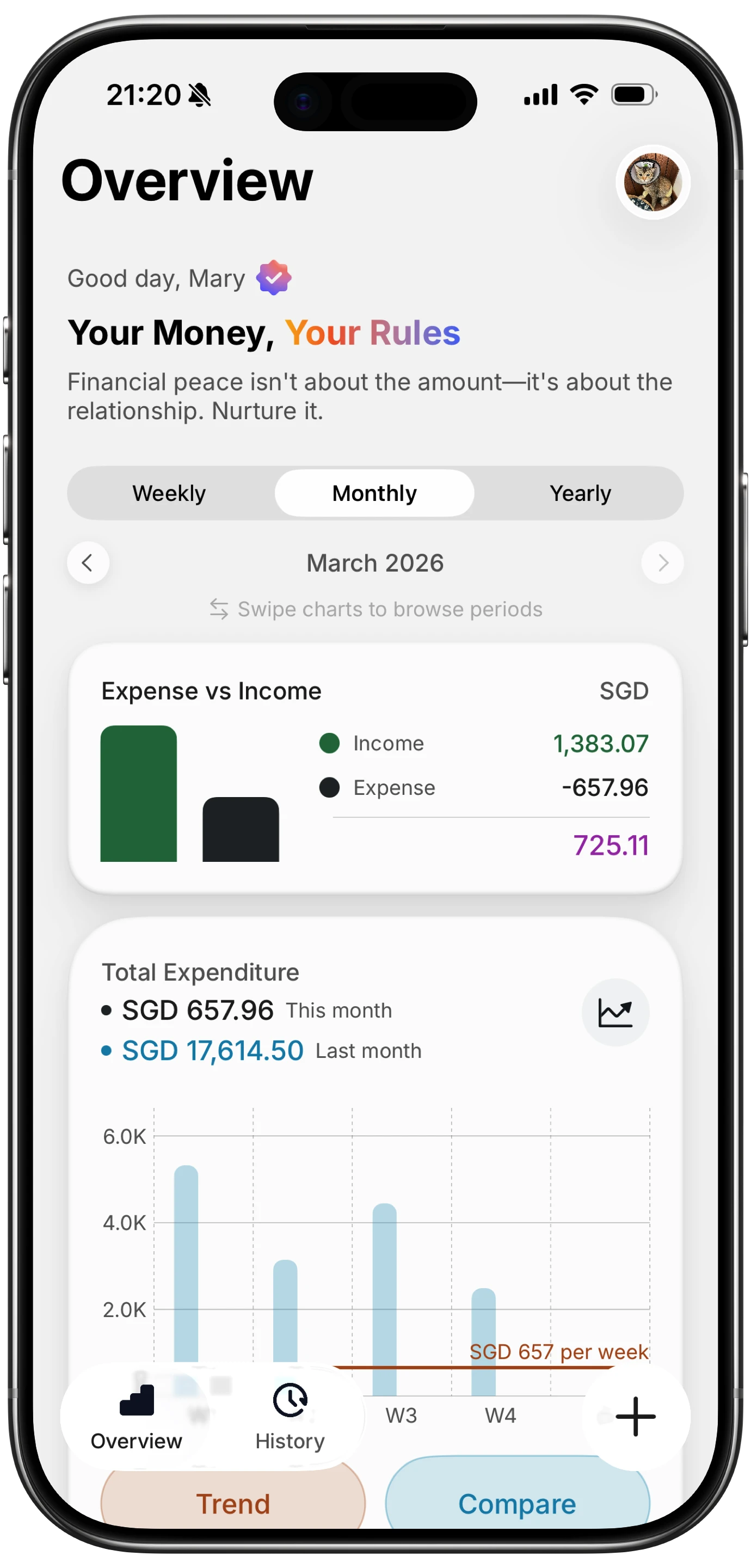
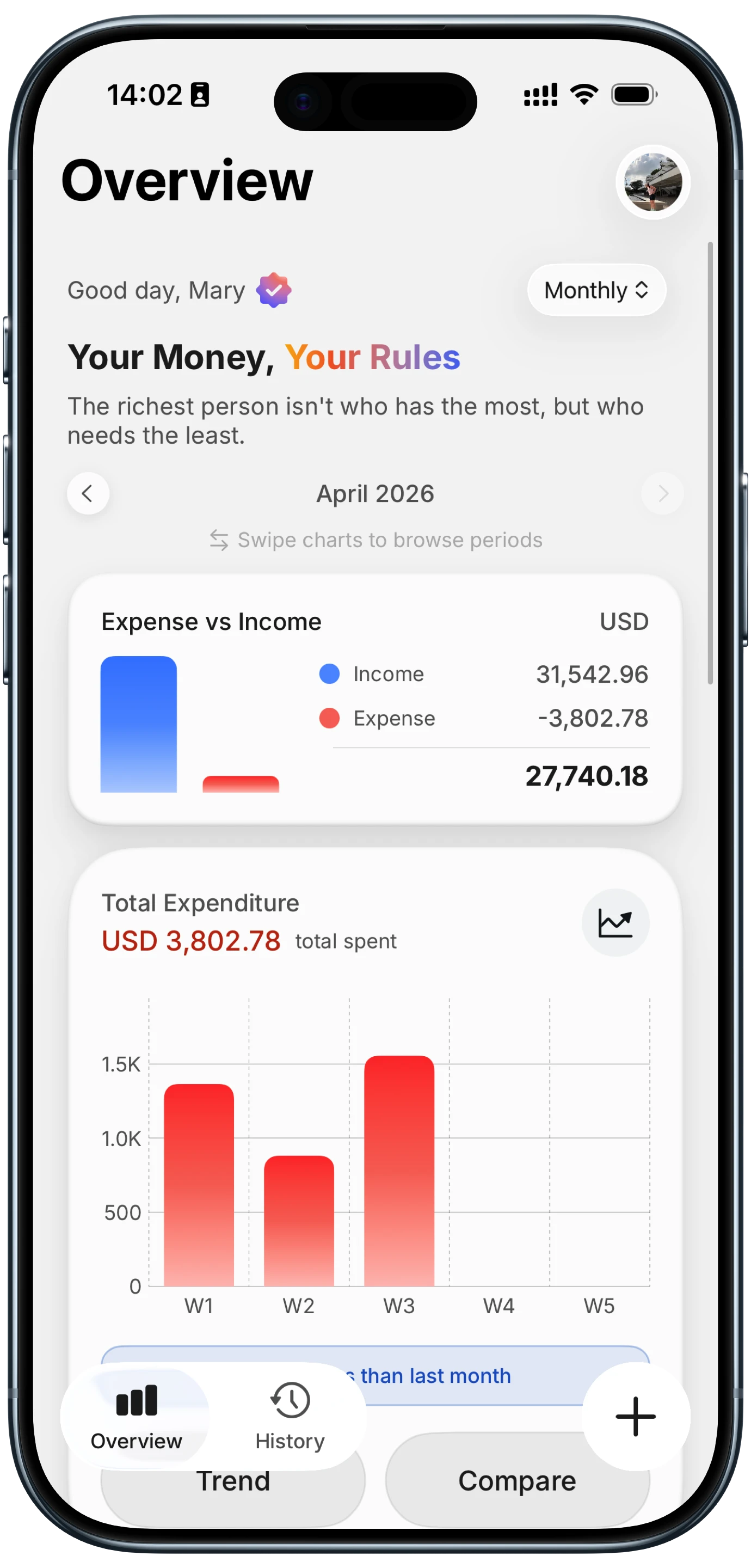
Finny app's Overview feature
Pull up the year by category and look for three things:
- The category that is larger than you expected. There is always one. Its size is information, not a moral failing.
- The category that shrank. Worth knowing what caused it, because it may be repeatable.
- The category that does not match your priorities. If dining out exceeded travel and you would rather travel, that is next year's adjustment in a single line.
Setting the period to a full year makes this quick, especially if your financial year does not run neatly from January.
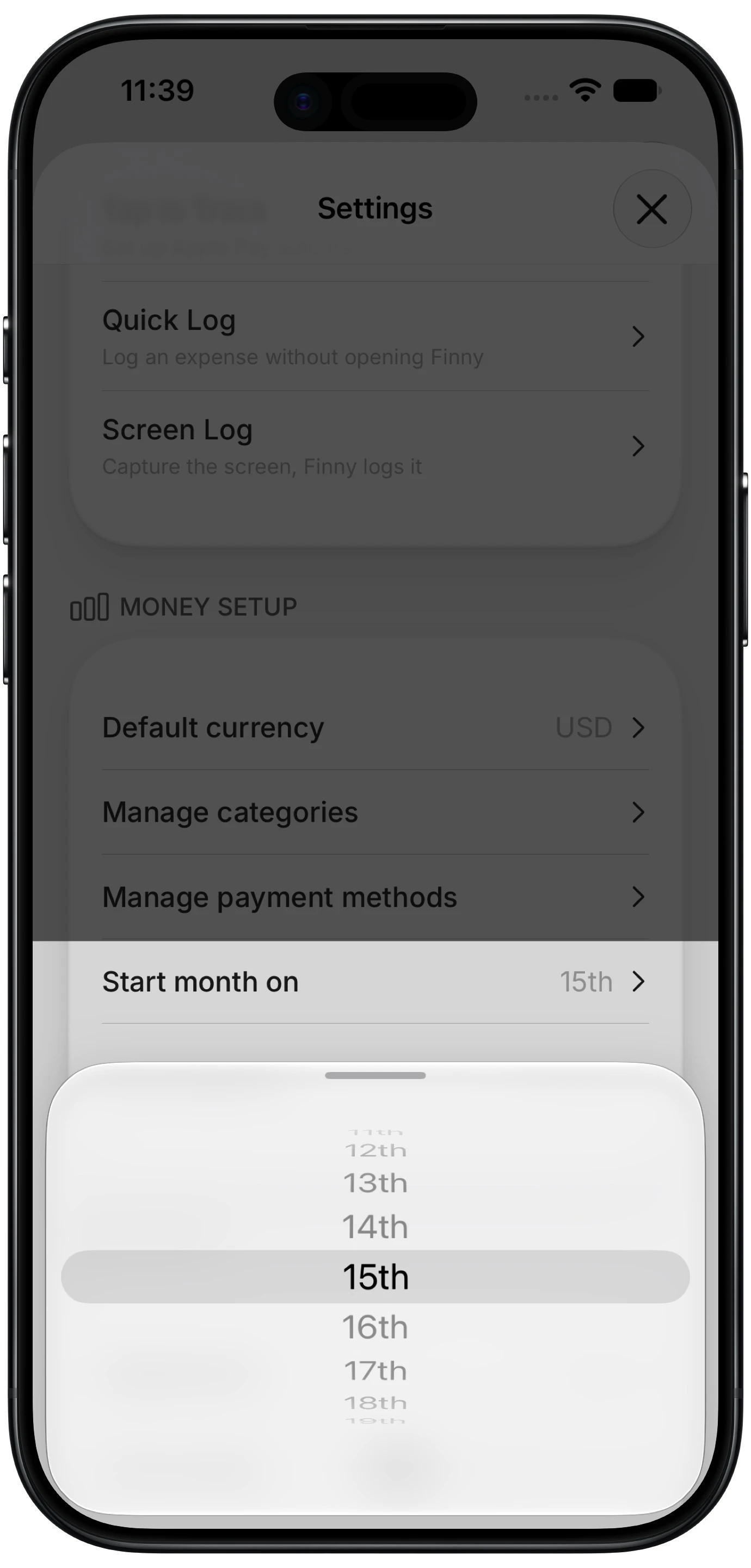
Finny app's custom month start feature
Step 4: Deadline Items (10 minutes)
These expire on December 31 and cannot be done in January.
Retirement contributions. Check whether you have room left in a 401k for the year. Employer plans usually cut off with the final December paycheck, so this is a mid-December task, not a New Year's Eve one. IRA contributions generally allow until the April tax deadline, which gives more room.
Flexible spending account balances. Most FSA funds do not roll over. Check the balance and spend it on eligible items if there is one.
Charitable giving. Donations must be made by December 31 to count for this tax year. If you itemize, this is the last window.
Tax-loss harvesting. If you hold taxable investments that have lost value, selling before year end can offset gains. Worth a conversation with an accountant rather than a rushed decision.
Step 5: Set Three Targets for Next Year (10 minutes)
Not resolutions. Three specific, checkable targets.
A useful target names a number and a date: "emergency fund at $6,000 by June" rather than "save more." Three is the limit, because a list of ten produces nothing.
Good candidates:
- An emergency fund milestone, using our guide on building an emergency fund
- One debt cleared entirely rather than several reduced slightly
- One spending category brought down to a specific monthly figure
Write them where you will encounter them in March, which is when most annual intentions quietly expire.
Step 6: Fix One Piece of Friction (5 minutes)
Pick the single thing that made money management annoying this year and address it now.
Common candidates: no automatic transfer to savings, bills scattered across too many accounts, or no reliable way to see what you spent without reconstructing it from a statement.
That last one is the most common. If you could not answer "what did I spend on groceries in March?" without exporting a statement, the fix is capturing purchases as they happen rather than reconstructing them later.
Finny does that without a bank connection: card payments get logged as you make them, and receipts get captured from your photo library. The point is not the tool, it is that next December's review takes ten minutes instead of an hour.
This video shows the capture side, which is the part that makes an annual review easy:
Do It With Your Partner If You Have One
If finances are shared, do this together. An hour once a year is a low price for both people knowing the same facts, and it prevents the slow divergence where one person tracks everything and the other has no idea.
Keep it to the checklist and keep it timeboxed. Our guide to the money date covers making these conversations routine rather than tense.
The Bottom Line
One hour, six steps: net worth, subscriptions, categories, deadline items, three targets, one friction fix.
The deadline items are the ones with real money attached, so do those even if you skip everything else. The category review is the one that changes next year's behavior. And the friction fix is what makes next December's review take a fraction of the time.
The holidays are the busiest possible moment for this, which is exactly why timeboxing matters more than thoroughness. A finished review with rough numbers beats a perfect one you abandon.
Common Questions About Year-End Money Reviews
When should I do a year-end financial review?
Early to mid December works best, because several deadline items need action before December 31 and some require lead time. Employer 401k contributions usually stop with the final December paycheck, charitable donations must clear by year end, and flexible spending account balances typically expire. Waiting until the last week of December leaves too little room to act on what you find.
What should be in a year-end money review?
Six things cover it: a net worth snapshot, a subscription audit, a review of annual spending by category, any items with December 31 deadlines, three specific targets for next year, and one fix for whatever made money management annoying. The deadline items carry the most immediate financial value, while the category review is the part that changes behavior in the following year.
How long does a year-end financial review take?
About an hour if you timebox each step and accept approximate figures. Precision is the enemy here, since a net worth estimate within a few hundred dollars serves the same purpose as an exact one. If your spending is already categorized through the year, the review is considerably faster because you are reading numbers rather than reconstructing them from statements.
Should I do a year-end review if my finances are a mess?
Especially then. The review is not a judgment, it is a measurement, and the categories that look worst are the ones with the most room to improve. Start with the subscription audit, which usually produces immediate savings and takes ten minutes. A baseline you dislike is still more useful than no baseline, because next year's comparison needs a starting point.
Ready to track expenses with less friction?
Download Finny to log expenses using AI, receipts, or text. No bank connections, offline support, and full control over your financial data.