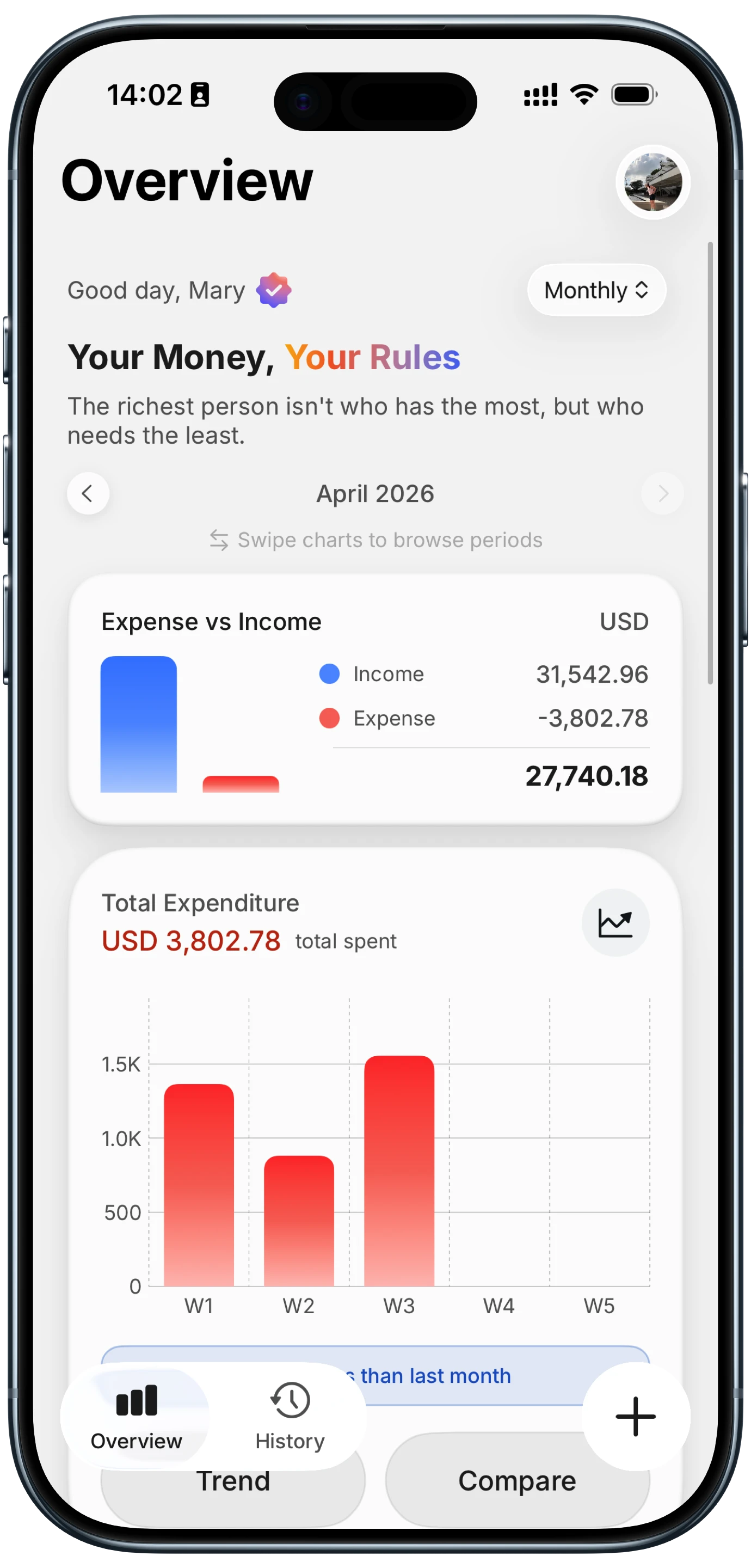
How to Budget for Christmas Gifts in 2026
Gift budgets fail in a specific way. You set a total, you buy the first few gifts comfortably, and then the list grows. A coworker gives you something unexpected. A niece gets added. The gift you planned for your partner suddenly feels too small next to what they bought you. Every addition is defensible on its own, and together they double the total.
Learning how to budget for Christmas gifts is mostly about fixing the list before fixing the amounts, because an open-ended list makes any budget theoretical. This guide covers the per-person method, the situations that reliably blow it up, and how to keep the running total visible while you shop.
If you have not set an overall seasonal number yet, start with our holiday budget planner and come back, since gifts should be a slice of that total rather than a separate exercise. If gift cards are on your list, our guide to tracking gift card balances shows how to log them without double counting.
Write the Full List Before Any Numbers
Every name, in one place, before you assign a single dollar. Include the people you always forget: teachers, the mail carrier, a host, a babysitter, the friend who reliably gives you something.
The list length is the real variable. Twenty-two names at an average of $45 is $990. Fourteen names at $45 is $630. Adjusting the list is far more powerful than shaving $5 off each gift, and it is the lever most people never touch because pruning a list feels unkind while overspending feels generous.
For reference, national survey data puts gift spending at roughly $628 per person, which we break down in how much Americans spend on Christmas.
Two ways to shorten it honestly:
- Propose a group gift for a family or a friend circle. One $80 gift split five ways beats five $30 gifts.
- Propose skipping. Adults exchanging $40 gifts of similar value are effectively trading money. Most people are relieved when someone says so first.
Assign Per-Person Limits, Not an Average
An average is a budget you cannot check while shopping. A per-person limit is one you can.
Sort names into tiers and give each tier a fixed number:
| Tier | Who | Limit | Notes |
|---|---|---|---|
| Inner | Partner, children | $75 to $150 | The only tier where going over is a real decision |
| Close | Parents, siblings, closest friends | $40 to $60 | Where list creep usually starts |
| Wider | Extended family, friends | $20 to $30 | Group gifts work well here |
| Courtesy | Teachers, hosts, coworkers | $10 to $15 | Keep consistent to avoid comparison problems |
| Buffer | Unplanned additions | 10% of gift total | Assume this gets used |
The buffer is not padding, it is realism. Someone will be added. A budget with no buffer converts the first surprise into overspending, and the first overspend is usually what makes people stop tracking entirely.
Handle the Three Situations That Break Gift Budgets
Reciprocity pressure. Someone gives you a gift more expensive than yours. The instinct is to top it up. Do not, at least not this year. Note it and adjust next year's tier. Correcting in the moment costs the most and helps the least.
Children and the fairness trap. Equal spending per child is easier to hold than equal-feeling gifts. Set one number per child and let the contents differ. Attempting to match perceived excitement is how a $75 limit becomes $160.
The self-gift. Holiday sales are aimed at you, not only at your list. Purchases for yourself during the season are real holiday spending. Either budget for them explicitly or leave them out, but do not let them hide inside the gift category. Our guide to the 30-day rule is useful here.
Fund It Before You Shop
Take the gift total, divide by the weeks remaining, and move that amount aside each week. Starting in September, a $700 gift budget is under $60 a week. Starting December 1st, the same $700 is over $230 a week.
That difference is what decides whether gifts are paid for with money you already have. Our guide on saving money fast covers ways to find the weekly amount if the number feels tight.
Track Each Purchase Against Its Name
The per-person method only works if you record purchases against people as you go. Otherwise you reach mid-December with a pile of receipts and no idea whether your sister's tier is spent.
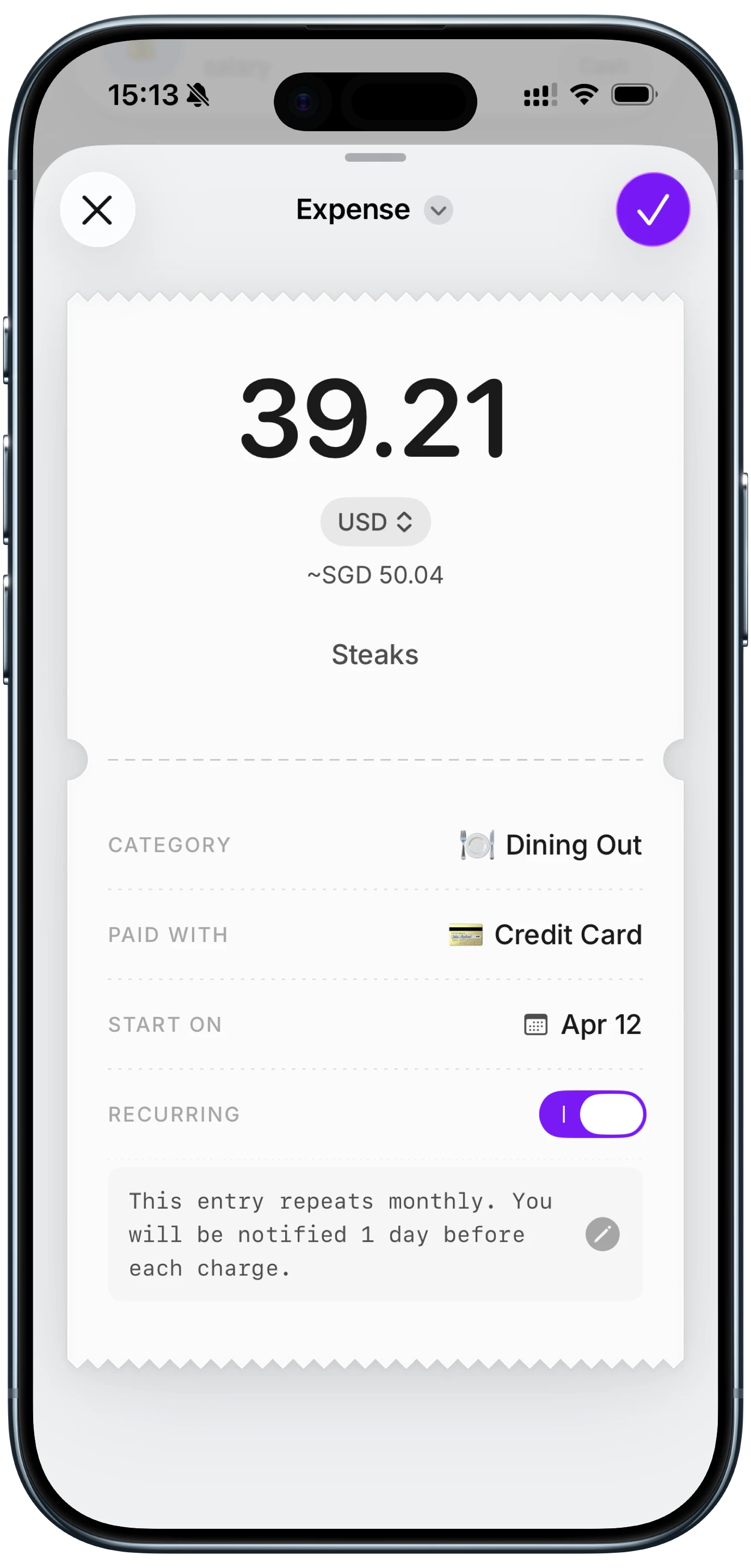
Finny app's expense entry feature
Whatever you use, capture three things at the moment of purchase: the amount, who it is for, and whether that person is now finished. The third one prevents the most common error, which is buying a second gift for someone you already covered because you could not remember.
Typing a note like "gift, Sarah, $42" is enough. Finny parses entries like that into an amount, category, and note, so logging a gift takes a few seconds in a checkout line.

Finny app's AI chat feature
For in-store card spending during the season, this video shows purchases being captured as they happen:
Do a Mid-Season Reconciliation
Around the first week of December, check the list against what you have actually bought. Three columns: name, limit, spent.
Names with nothing spent are your remaining budget. Names already over are sunk. The useful move is to reallocate what is left rather than to top everyone up to match the overspends. Most people do the opposite, and that is how a budget drifts 40% over in the final two weeks.
The Bottom Line
Fix the list first, because list length drives the total more than any individual gift. Assign per-person limits so you can check yourself while shopping instead of afterward. Add a real buffer for the people you have not thought of yet. Fund it weekly, starting as early as you can. Then record each purchase against a name so the reconciliation in December takes ten minutes rather than a shoebox of receipts.
None of this makes gifts less generous. It makes the generosity deliberate rather than accidental.
Common Questions About Christmas Gift Budgets
How much should I spend per person on Christmas gifts?
There is no standard figure, only tiers that fit your own total. A workable structure is $75 to $150 for a partner or child, $40 to $60 for parents and siblings, $20 to $30 for wider family and friends, and $10 to $15 for courtesy gifts. Set the tiers from your overall holiday ceiling rather than from what a gift "should" cost, and keep courtesy gifts consistent so nobody can compare unfavorably.
How do I stop my Christmas gift list from growing?
Write the complete list before assigning any amounts, then treat additions as requiring a subtraction elsewhere. Build in a buffer of about 10% for genuine surprises so the first addition does not break the plan. For the wider tiers, propose group gifts or a mutual skip early, before anyone has shopped. Most people welcome the suggestion but will not raise it themselves.
Should I buy Christmas gifts early or wait for sales?
Early buying spreads the cost across more paychecks, which matters more for most households than the discount does. Waiting for late sales concentrates spending into the weeks when you are most rushed and least price-sensitive. If you do buy during sales events, log each purchase immediately, because sale periods produce the fastest budget drift of the whole season.
What is the best way to track gift spending?
Record purchases against the recipient's name, not just as a general holiday category, and do it at the moment of purchase. That single habit prevents duplicate gifts and tells you which tiers still have room. A note with the amount, the person, and whether they are now covered is enough. The method matters less than keeping it current through the busiest shopping weeks.
Ready to track expenses with less friction?
Download Finny to log expenses using AI, receipts, or text. No bank connections, offline support, and full control over your financial data.