Subscription Statistics 2026: What Americans Spend
Subscriptions are the bills most people never add up. Each one looks small, and the total is usually bigger than people guess.
This page collects the most useful subscription statistics for 2026: what Americans spend, how many streaming services they pay for, how much prices rose, how much goes to subscriptions nobody uses, and where the FTC's click to cancel rule stands. Every figure links to its source with who published it and when. To compare against your own bills, our subscription cost calculator turns them into a yearly total.
Key Subscription Statistics for 2026
- $76 a month is what the average subscribing household spends on streaming video, up 9 percent in a year, across four paid services, per Deloitte's fall 2026 Digital Media Trends (published October 2026).
- 29.0 percent was the rise in the Consumer Price Index for subscription and rental of video and video games from December 2024 to December 2025, against 2.7 percent for all items, per Bureau of Labor Statistics data.
- $252 a year is lost to unused subscriptions, up from $204 the year before, according to CNET's 2026 subscription survey as reported by ABC7 in July 2026.
- 59.9 percent of subscribers pay for at least one subscription they have not used in 30 days, per a March 2026 Self Financial survey.
- 70 percent say they have forgotten to cancel a free trial at least once (same survey).
- $86 vs $219: what people guessed they spend on subscriptions each month versus what they actually listed, in a 2022 C+R Research study.
- 43 percent of consumers canceled at least one paid streaming video service in the last six months, up from 39 percent a year earlier (Deloitte, October 2026).
- 55 percent of Americans plan to significantly cut back on subscriptions in 2026, according to a NerdWallet survey reported in April 2026.
- The FTC click to cancel rule is not in force. A federal appeals court vacated it in July 2025, and the FTC restarted the rulemaking in March 2026.
How Much Americans Spend on Subscriptions Each Month
There is no single official number for subscription spending, because surveys define "subscription" differently. Some count only streaming video, some count every recurring service, and some ask only people who already pay for one. Here are the main recent measures side by side.
| Source (date) | Who was asked | Finding |
|---|---|---|
| Deloitte (October 2026) | 3,518 US consumers | $76 a month on streaming video per subscribing household |
| Deloitte (March 2026) | 3,575 US consumers | $69 a month on streaming video per subscribing household |
| Bango (March 2025) | 5,000 US subscribers | 5.4 subscriptions on average; 23% spend over $100 a month |
| Self Financial (March 2026) | 1,272 US adults | $35.03 a month on paid subscriptions, 3.4 active on average |
In Bango's survey, video streaming was the most common subscription type, paid for by 75 percent of subscribers.
People underestimate their total. In the 2022 C+R Research survey of 1,000 consumers, people given 10 seconds to guess their monthly subscription spending said $86 on average. Itemized by category, the total came to $219, about 2.5 times the guess. We found no newer survey using this method, so treat it as a 2022 figure.
Streaming Subscriptions: How Many and How Much
Streaming video is the best-measured slice of subscription spending. Deloitte's fall 2026 report, based on a May 2026 survey of 3,518 US consumers, found that more than 90 percent say their household pays for at least one streaming video service, and subscribing households pay for four on average, a number that has held steady.
Spending per household is still rising. The same report puts average streaming video spending at $76 a month per subscribing household, 9 percent higher than a year earlier. Deloitte's March 2026 release, from a survey fielded in October and November 2025, had put it at $69 a month.
Ad-supported plans have become the norm rather than the budget option:
- 68 percent of streaming video subscribers had at least one ad-supported plan in the March 2026 release, up from 46 percent in 2024.
- 65 percent had one in the October 2026 report.
- 45 percent of consumers say they pay too much for streaming, and about half are looking for ways to lower their monthly costs (October 2026).
Subscription Price Increases in 2025 and 2026
Federal price data shows how fast streaming costs climbed. In the Consumer Price Index, the category that covers streaming video services, "subscription and rental of video and video games," rose 29.0 percent from December 2024 to December 2025, while prices overall rose 2.7 percent, according to BLS data. From September 2025 to September 2026, the same index rose 14.4 percent, against 3.7 percent for all items. (October 2025 prices were not collected during the federal funding lapse.)
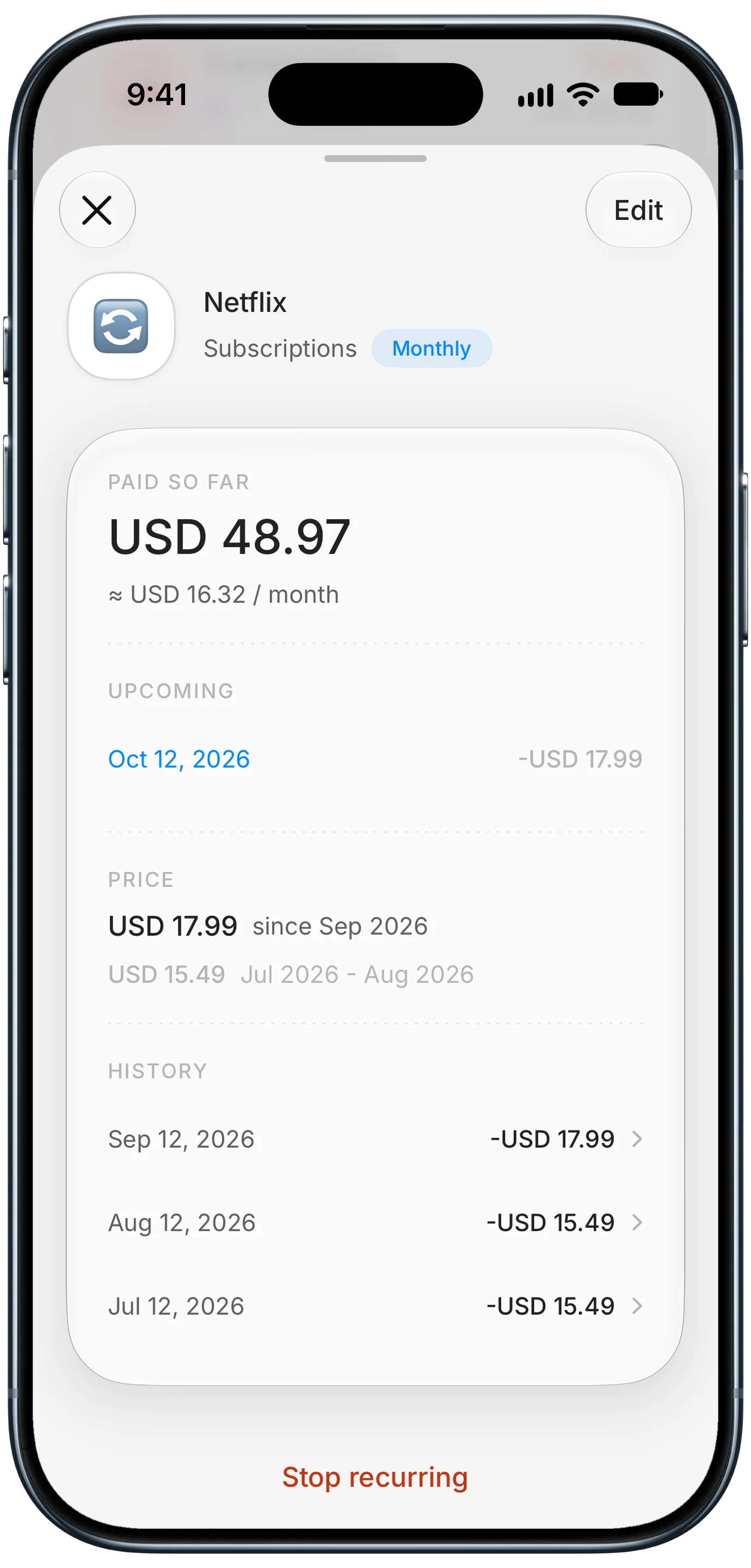
Finny app's subscription price history feature
A price history like the one above, shown here with sample figures, is how an increase shows up in practice: the same entry, a higher amount from one month on. Here are the real major US increases from the last 14 months.
| Service and plan | Before | After | When |
|---|---|---|---|
| Disney+ Premium (no ads) | $15.99 | $18.99 | Oct 21, 2025 |
| HBO Max Standard | $16.99 | $18.49 | Oct 21, 2025 |
| Spotify Premium Individual | $11.99 | $12.99 | Announced Jan 15, 2026 |
| Netflix Standard | $17.99 | $19.99 | Mar 26, 2026 |
| Netflix Standard with ads | $7.99 | $8.99 | Mar 26, 2026 |
| YouTube Premium Individual | $13.99 | $15.99 | Announced Apr 10, 2026 |
| Peacock Premium Plus | $16.99 | $19.99 | Aug 18, 2026 |
| Peacock Premium | $10.99 | $12.99 | Aug 18, 2026 |
Sources: MacRumors for Disney+ (September 2025), TVLine for HBO Max (October 2025), MacRumors for Spotify (January 2026), TechCrunch for Netflix (March 2026), Reuters via The Star for YouTube (April 2026), and TechCrunch for Peacock (August 2026). Existing subscribers usually move to the new price on a later billing date.
Add up six of those ad-free plans (Netflix Standard, Spotify, YouTube Premium, Peacock Premium Plus, Disney+ Premium, HBO Max Standard) and the monthly total went from $93.94 to $106.44. That is $12.50 more a month, or $150 a year, for the same six services.
Forgotten Subscriptions and Free Trials That Convert
Subscriptions you stopped using are harder to spot than price increases, because nothing about the charge changes.
CNET's 2026 subscription survey, as reported by ABC7 in July 2026, found Americans losing $252 a year to forgotten subscriptions, uncanceled free trials, and services they stopped using, up from $204 the year before. Millennials and Gen Z wasted the most, at $29 and $27 a month.
The Self Financial survey, run in March 2026 among 1,272 US adults, measured unused subscriptions directly, defining "unused" as paid for but not used in the past 30 days:
- 59.9 percent of subscribers had at least one unused paid subscription, up from 54.9 percent in 2025.
- They averaged 2.6 unused subscriptions, costing $26.79 a month.
- 70 percent had forgotten to cancel a free trial at some point. Half of them said it happened twice, and 20 percent said three times or more.
- A forgotten trial cost $34.31 on average, and 37.8 percent said it meant cutting back on other spending.
Forgetting is built into how subscriptions are paid. In the 2022 C+R Research study, 72 percent of consumers had set all their subscription payments to auto-pay, 74 percent said recurring charges are easy to forget, and 42 percent had stopped using a subscription but forgot they were still paying for it.
Subscription Fatigue and Cancellations
The other side of rising prices is churn. Deloitte's October 2026 report found that 43 percent of consumers had canceled at least one paid streaming video service in the previous six months, up from 39 percent a year earlier. Many of those cancellations are temporary: 27 percent had canceled a service and signed up for the same one again within six months, up from 23 percent.
Price is the clearest pressure point. In Deloitte's March 2026 release:
- 73 percent said they were frustrated that the entertainment services they pay for keep raising prices.
- 61 percent said they would cancel their favorite streaming service if its price rose by $5 a month.
Intent to cut back reaches beyond streaming. A 2026 NerdWallet survey found that 55 percent of Americans plan to significantly cut back on subscriptions this year to save money, according to InvestigateTV coverage published in April 2026.
The pattern looks less like quitting and more like rotating: cancel when a price rises, rejoin when something new comes out. That works for people who track renewal dates and poorly for those who do not. For a practical routine, see our guide to stopping subscription creep.
Where the FTC Click to Cancel Rule Stands
In October 2024 the FTC finalized its click to cancel rule, which would have required businesses to make canceling as easy as signing up. It never took full effect. On July 8, 2025, the US Court of Appeals for the Eighth Circuit vacated it because the FTC had not completed a required preliminary regulatory analysis. As Jones Day noted in May 2026, the ruling was about process, not the merits.
What has happened since:
- The old rule is back. The original 1973 Negative Option Rule, which covers only prenotification plans, is the version in effect, per a September 2026 status summary.
- The FTC restarted rulemaking. It issued an advance notice of proposed rulemaking on March 11, 2026, asking whether to revive parts of the vacated rule, including a simple cancellation mechanism. Comments closed April 13, 2026.
- No new rule yet. No proposed rule had appeared in the Federal Register as of September 14, 2026, and we found none by late November.
- Enforcement continues under existing law. In September 2025 the FTC announced a $2.5 billion settlement with Amazon over Prime enrollment and cancellation, under the Restore Online Shoppers' Confidence Act. It covered an estimated 35 million consumers and requires an easy way to cancel Prime.
State laws fill some of the gap. Jones Day counts about 30 states with automatic renewal or negative option laws, including California's.
How to Check Your Own Subscription Number
National averages are context; the number that matters is yours. The C+R Research gap between $86 guessed and $219 listed suggests a quick estimate will miss.
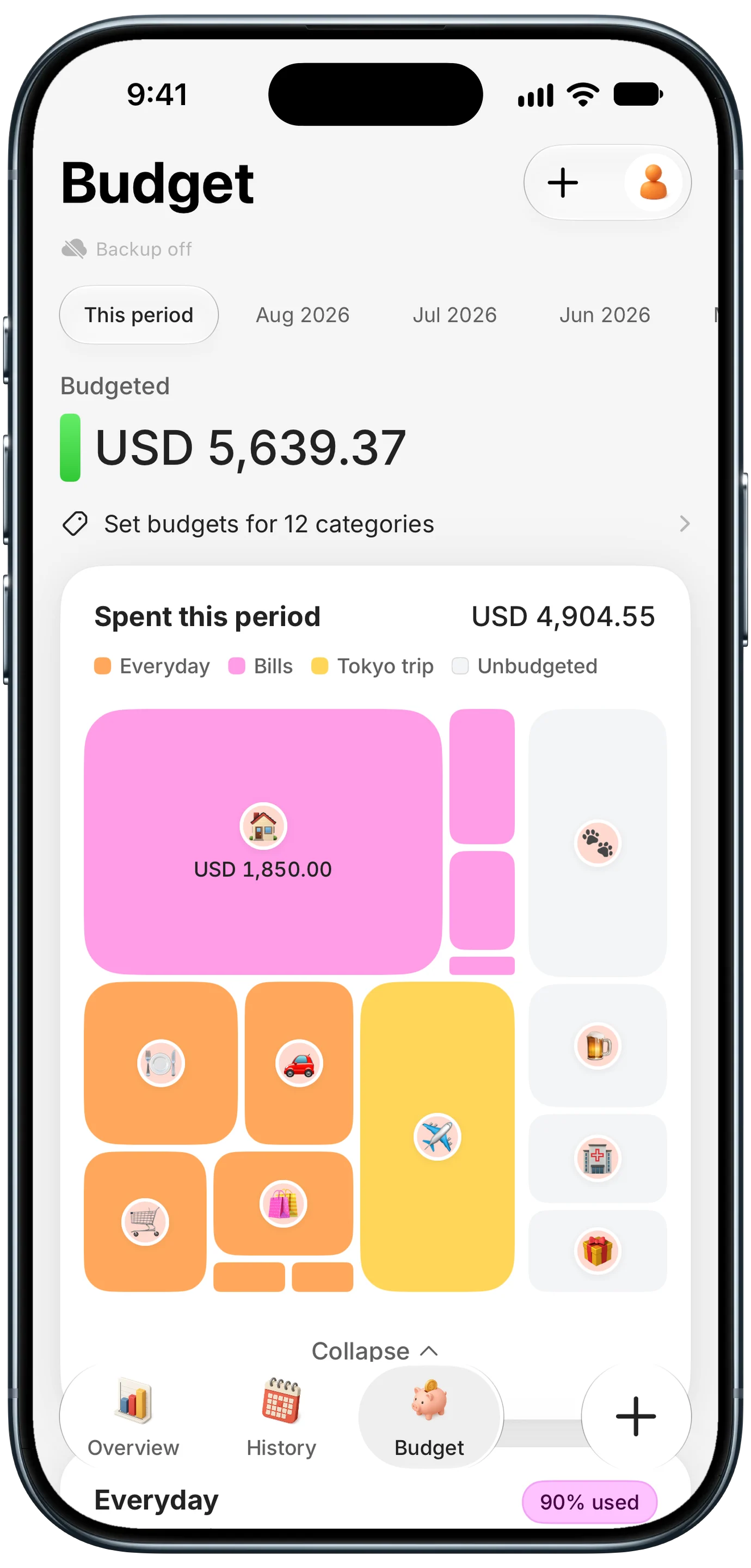
Finny app's budget map feature
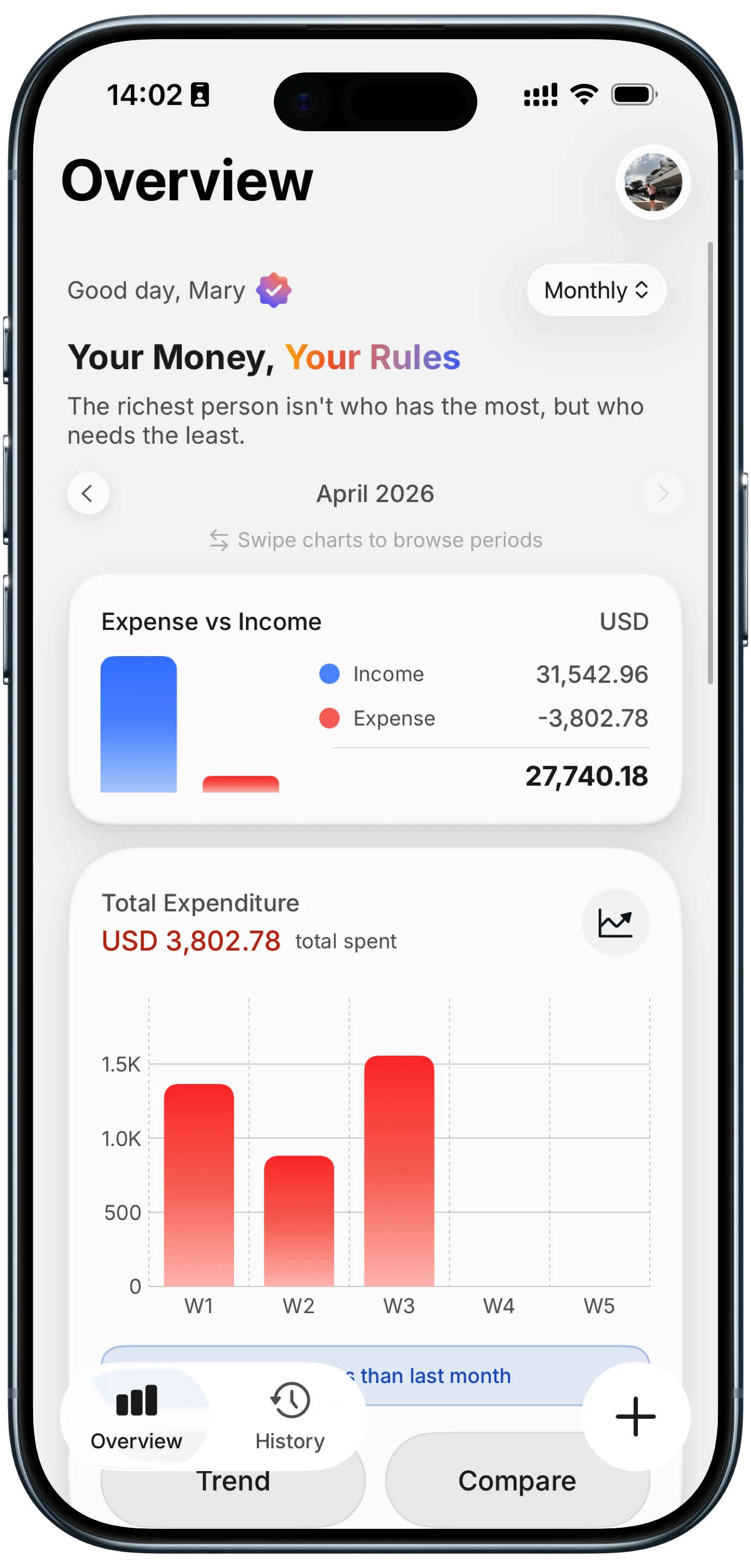
A category view like the one above shows where the money went this period, which is often where forgotten charges stand out. To get your own number:
- List every recurring charge. Check two or three months of statements plus your App Store subscriptions. Our 20-minute subscription audit walks through it.
- Convert everything to one period. Annual plans hide easily. The subscription cost calculator turns weekly, monthly, and yearly charges into one total.
- Compare with the benchmarks above. If streaming alone is well above $76 a month, or you pay for something you have not opened in 30 days, start there.
- Keep a list going forward. A dedicated tracker catches the next price increase. Our roundup of the best subscription tracker apps for 2026 compares the options, and our guide to canceling subscriptions on iPhone covers the cancel step.
In Finny, recurring payments, from daily to yearly, sit together with an upcoming bills card, and each one keeps a price history, so an increase shows up as a new line rather than a surprise on your statement.
This full tour shows how Finny tracks spending, including recurring payments, on iPhone:
Common Questions About Subscription Statistics
How much does the average American spend on subscriptions per month?
It depends on what counts as a subscription. Deloitte's fall 2026 survey puts streaming video alone at $76 a month for the average subscribing household. A March 2025 Bango survey found 23 percent of subscribers spend over $100 a month across all subscriptions, while a March 2026 Self Financial survey put spending on paid subscriptions at $35.03 a month. Itemized totals tend to come out higher than quick guesses.
How many streaming services does the average household pay for?
Four. Deloitte's fall 2026 Digital Media Trends report, based on a May 2026 survey of 3,518 US consumers, found that subscribing households pay for four streaming video services on average, a figure that has held steady. More than 90 percent of consumers said their household pays for at least one. What has changed is the cost: average spending rose 9 percent in a year, to $76 a month.
How much money do people waste on unused subscriptions?
CNET's 2026 survey, as reported by ABC7 in July 2026, put it at $252 a year, up from $204 the year before. Self Financial's March 2026 survey found 59.9 percent of subscribers had at least one subscription they had not used in 30 days, averaging 2.6 unused subscriptions and $26.79 a month. Forgotten free trials add to it: 70 percent said they had missed canceling one.
Is the FTC click to cancel rule in effect?
No. The FTC finalized the rule in October 2024, but the Eighth Circuit vacated it on July 8, 2025, on procedural grounds. The FTC issued an advance notice in March 2026 to restart the rulemaking, and comments closed April 13, 2026. No proposed rule had appeared as of September 2026. The FTC still enforces the Restore Online Shoppers' Confidence Act, and many states have their own automatic renewal laws.
Want to know your real subscription total, not a guess?
Download Finny to keep every recurring payment in one place, see what is coming up next, and spot a price increase the month it happens.