How to Log Transactions From Screenshots on iPhone
Your bank app shows a clean list of last week's purchases. Venmo shows who you paid and for what. An order confirmation shows the total. All of it is right there on your screen, but none of it reaches your budget unless you retype it, one amount at a time.
Knowing how to log transactions from screenshots closes that gap. A screenshot is the one export every app supports, and on iPhone it can become a logged expense in a few seconds. This guide covers three ways to do it, from built-in iOS tools to AI that reads a whole list at once, plus how to avoid duplicates and keep your data private. If you're working from full statements instead, see our guide to tracking personal expenses from a bank statement.
Why screenshots are the universal export
Plenty of money never shows up in a budgeting app's bank feed:
- Apps with no export, like many e-wallets, buy now pay later apps, and store cards.
- Accounts you'd rather not link, because you don't want to share bank credentials with an aggregator.
- Peer-to-peer payments in Venmo, Zelle, or Cash App that arrive as vague transfers. Our guide to tracking Venmo and Zelle payments covers those in depth.
- Online orders, where the confirmation page is the only clear record of what you bought.
Every one of these can be screenshotted. That makes a screenshot the most flexible way to get spending into your budget without connecting anything.
Method 1: Copy the numbers with Live Text
iPhone can read text in any screenshot using Live Text.
- Take the screenshot and tap the thumbnail, or open it in Photos.
- Tap the text button in the corner, or press and hold on the amount.
- Copy the merchant and amount, then paste them into your tracker.
It's free, works everywhere, and nothing leaves your phone. It's also still manual: you copy one field at a time, so it's best for one or two transactions, not a list of twenty.
Method 2: Build a Shortcut that reads the screenshot
For a repeatable workflow, the Shortcuts app can extract text from an image and pass it along. In iOS 27, the Extract Text from Image action gained a Tables mode that turns a list on screen into rows. Our guide to iOS 27 Shortcuts for money walks through a two-action build that sends the rows to a spreadsheet.
This suits people who already keep their budget in Numbers or Google Sheets. The trade-off is setup time, and cleaning up rows when a bank app lays things out unusually.
Method 3: Let AI read the whole screenshot
The fastest option is an expense tracker that reads a screenshot with AI and turns every transaction in it into an entry: amount, merchant, date, and a suggested category. You review the list, fix anything that's off, and save them all at once.
Finny does this two ways:
- Batch import from screenshots. Pick screenshots of a bank or e-wallet transaction list, and Finny reads them into separate transactions for you to review. It's the quickest way to catch up after a week of not logging.
- Screen Log for a single payment. When one payment is on your screen, like a transfer confirmation, an order page, or a card app showing a new charge, Screen Log records it straight from what's on screen, and keeps the screenshot attached to the entry.
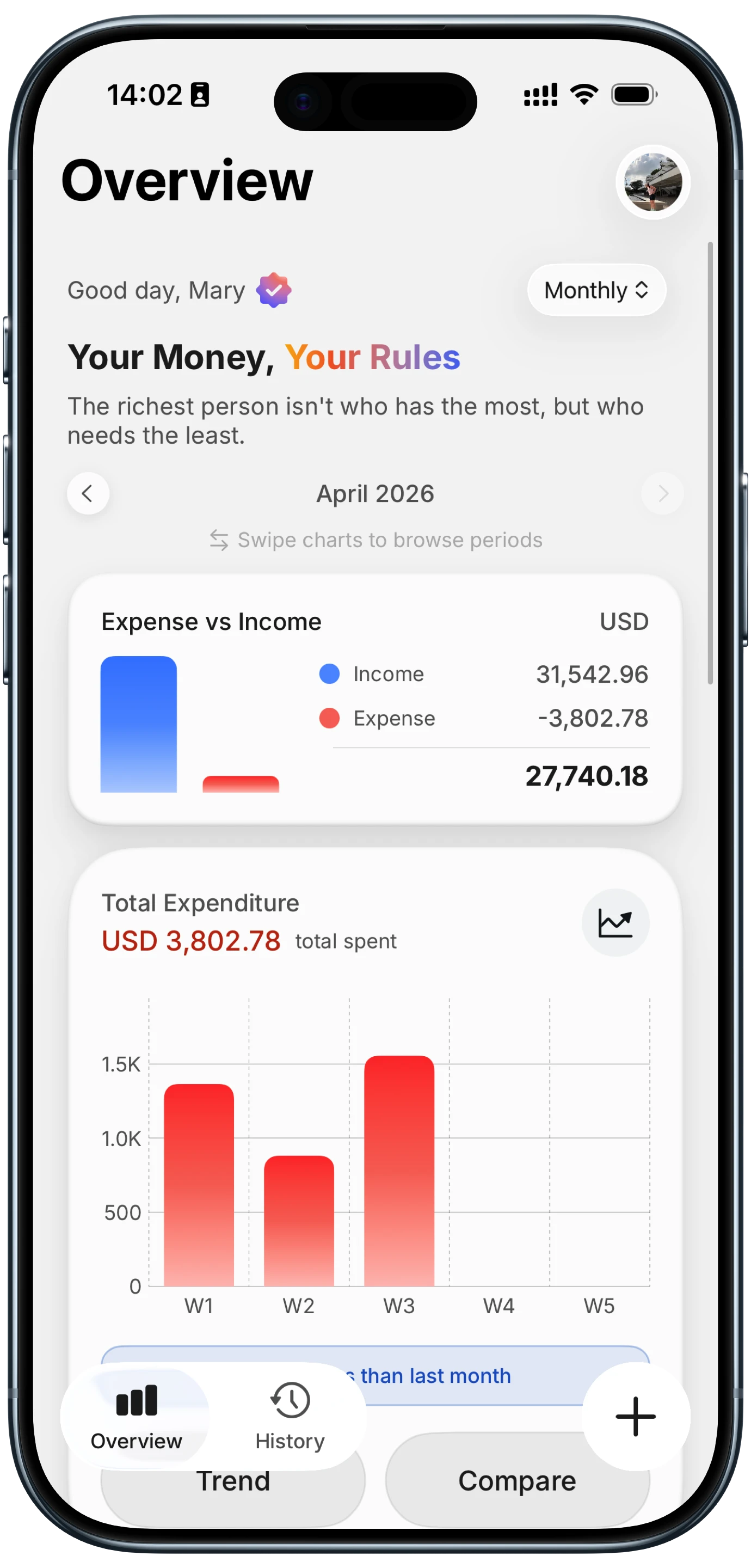
Here's Screen Log recording a payment from the screen, with no bank connection:
Comparison: which method fits you
| Method | Speed | Handles lists | Setup | Best for |
|---|---|---|---|---|
| Live Text copy and paste | Slow | No | None | One or two transactions |
| Shortcuts with Extract Text | Medium | Yes (Tables mode) | 15 to 30 minutes | Spreadsheet budgets |
| AI screenshot import | Fast | Yes | None | Catching up on many transactions |
Tips for screenshots that read cleanly
AI and Live Text both work better with good input:
- Capture the full row. Make sure the merchant, date, and amount for each transaction are fully visible, not cut off at the edge.
- One account per screenshot. Mixing a checking account and a card in one image makes it harder to assign the right payment method.
- Avoid pending items, or note them. A pending charge can change amount, like a restaurant tip or a gas pump hold.
- Scroll and screenshot in overlapping pages for long lists, then check for duplicates at the seams.
Avoiding duplicates
The main risk with screenshots is logging the same purchase twice: once when you paid, and again when it shows up in a screenshot of your bank app. Two habits prevent it:
- Pick a "since" date. When importing a list, only import transactions after the last one you logged.
- Review before saving. Scan the imported list against what's already in your history for that week, and drop anything already there.
If card payments are already logged as you make them, use screenshots for everything else: transfers, e-wallets, cash-like apps, and online orders. See our guide to tracking e-wallet spending for more on those.
Privacy: what happens to your screenshot
A screenshot of a banking app can show balances and partial account numbers, so check how any tool handles it:
- Live Text and Shortcuts read the image on your iPhone.
- AI import sends the image to be read, so check the app's privacy policy for how images are processed and whether they're kept.
- Crop before importing if the screenshot shows more than you need, like a balance or another notification.
The upside over bank linking is control. You choose exactly which screenshot to share, instead of granting an app continuous access to your account.
Frequently Asked Questions
Can I import transactions from a screenshot on iPhone?
Yes. You can copy amounts with Live Text, build a Shortcut that extracts text from the image, or use an expense tracker that reads screenshots with AI and turns each transaction into an entry. AI import is the fastest for a list of transactions, since it reads the whole screenshot at once and lets you review everything before saving.
How do I track spending from an app that has no export?
Take a screenshot of its transaction list and import it. A screenshot works for any app, including e-wallets, store cards, and buy now pay later apps that don't offer a CSV export or bank connection. Import regularly, such as weekly, and only import transactions after the last one you logged to avoid duplicates.
Is it safe to upload bank app screenshots to an expense tracker?
It can be, if you check how the app handles images. Crop out anything you don't need, like balances or other notifications, and read the privacy policy to see how screenshots are processed and whether they're stored. Compared with bank linking, screenshots give you more control, because you decide exactly what to share.
How do I avoid logging the same transaction twice?
Import only transactions after the last one you logged, and review the imported list against your recent history before saving. If your card payments are already logged as you make them, use screenshots mainly for transfers, e-wallets, and online orders that aren't captured any other way.
The bottom line
Learning how to log transactions from screenshots gives you a way to track any account without linking it. Use Live Text for the odd transaction, Shortcuts if you live in a spreadsheet, and AI import when you need to catch up on a whole list. Review before saving, watch for duplicates, and your budget can include every app on your phone.