True Cost of Owning a Car in 2026: Run Your Own Numbers
Ask most people what their car costs and they will name the monthly payment, maybe plus gas. That is the part they see. The rest arrives quietly: the insurance renewal, the registration notice, new tires, a parking garage downtown, a toll on the way to the airport, and the value draining out of the car every day it sits in the driveway.
This guide lays out the true cost of owning a car in 2026, starting with AAA's latest study, then adding the costs AAA leaves out. You will build your own yearly figure and cost per mile in a simple table, see how used and new compare, and check whether ride-hailing or transit would actually be cheaper for you. If you drive for work, our guide to tracking mileage and fuel expenses for work covers the tax side.
What AAA Says a New Car Costs in 2026
AAA's Your Driving Costs 2026 study, released September 15, 2026, puts the average cost of owning and operating a new vehicle at $12,863 a year, or about $1,072 a month. That assumes 15,000 miles a year over five years, which works out to about 86 cents a mile.
Here is how AAA's weighted average breaks down, from the 2026 Your Driving Costs brochure:
| Cost (new vehicle, 15,000 miles a year) | Per year | Per month |
|---|---|---|
| Depreciation | $4,422 | $369 |
| Fuel (17.32 cents a mile) | about $2,600 | $217 |
| Full-coverage insurance | $2,098 | $175 |
| Maintenance, repairs, and tires (11.73 cents a mile) | about $1,760 | $147 |
| Finance charges | $1,184 | $99 |
| License, registration, and taxes | $802 | $67 |
| Total | $12,863 | $1,072 |
Depreciation is the biggest line, and it never shows up on a bill. Fuel is second partly because AAA's figures assume regular gas averaged about $4.15 a gallon. AAA also changed its method this year, so the 2026 figure is not directly comparable with last year's $11,577.
Vehicle type matters a lot. A small sedan came in at $9,259 a year, while a half-ton pickup reached $16,449. Mileage matters too: at 10,000 miles a year the average drops to $10,992 but rises to about $1.10 a mile, and at 20,000 miles it climbs to $14,799 but falls to about 74 cents a mile. Fixed costs get spread across more miles.
The Costs AAA Leaves Out
AAA's study covers the core costs of a new car. It does not include several costs that are very real in everyday life, and for city drivers these can add thousands a year.
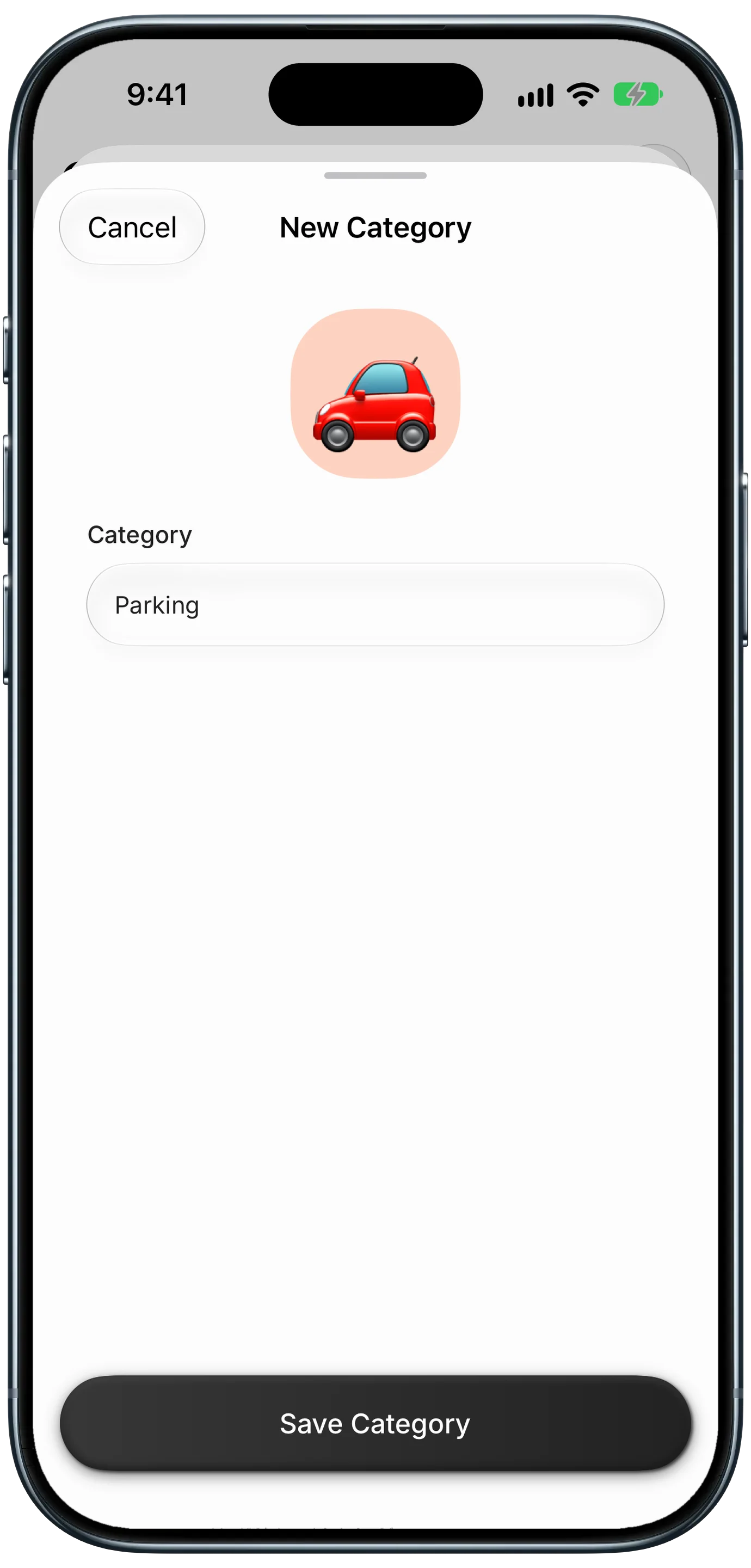
Finny app's categories feature
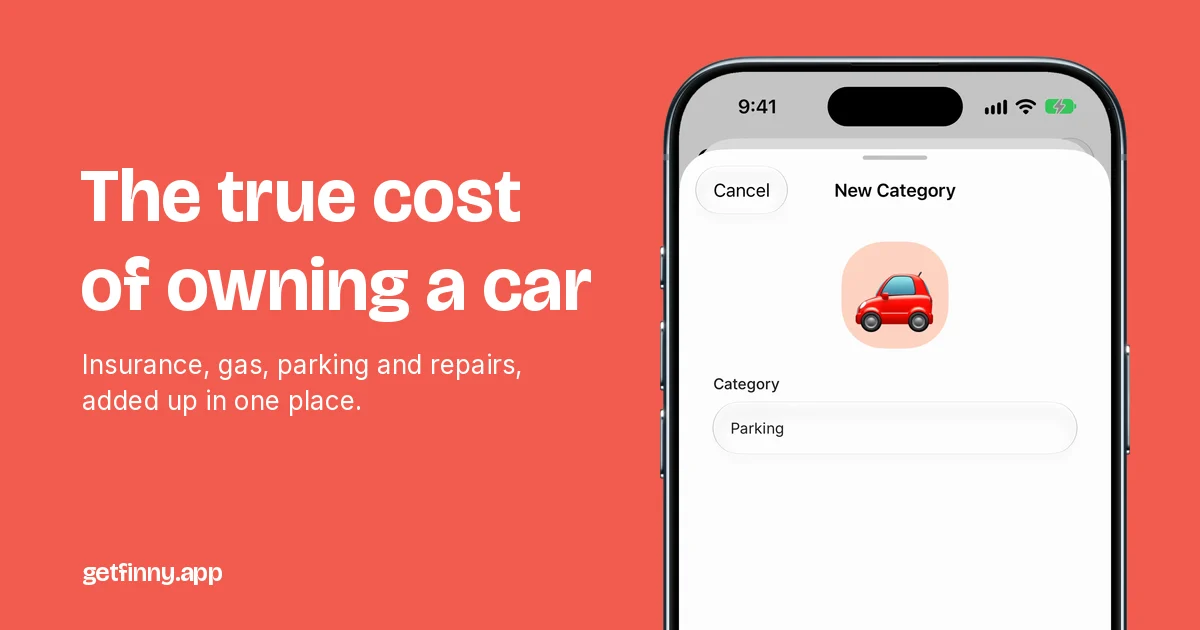
These forgotten costs are easy to miss because they rarely land in one place. Parking ends up under "Other," tolls show up on a separate account, and a car wash looks like a random card charge. In Finny you can make your own category, give it a name like Parking and a car icon, and from then on those charges have their own total instead of disappearing into a catch-all bucket.
The usual suspects:
- Parking: a monthly garage, meters, apartment parking fees, and event lots. In a big city, a reserved spot alone can cost more than the car's insurance.
- Tolls: daily commutes on toll roads, bridges, and express lanes add up fast and are often billed to a separate toll account.
- Car washes and detailing: a monthly wash membership is small per visit and steady across a year.
- Tickets and fees: parking tickets, a speeding ticket, a late registration fee, or a towing bill.
- Extras: a roadside assistance membership, phone mounts, floor mats, and accessories.
There are also costs AAA counts but that may differ for you. Insurance swings by state, age, and driving record. If your car is older than five years, maintenance and repairs likely run above AAA's average, even as depreciation falls.
How to Work Out Your Own Car Cost per Mile
AAA's averages are a useful benchmark, but your number is the one that matters. The table below is a worksheet. Fill in your own figures for the last 12 months, then divide by the miles you drove.
| Cost line | Where to find it | Example: used sedan, 10,000 miles |
|---|---|---|
| Depreciation | Price paid minus today's estimated value, divided by years owned | $2,000 |
| Loan interest | Your loan statement (interest only, not principal) | $700 |
| Insurance | Your policy declarations page | $1,900 |
| Registration, taxes, inspection | Your DMV renewal notice | $400 |
| Fuel | Miles divided by mpg, times price per gallon | $1,330 |
| Maintenance, repairs, tires | Last 12 months of receipts | $1,400 |
| Parking | Garage, meters, apartment fees | $1,200 |
| Tolls | Your toll account history | $300 |
| Car washes, tickets, extras | Card statements | $250 |
| Total | $9,480 |
In this example the car costs about 95 cents a mile, more than AAA's small sedan figure, almost entirely because of parking and tolls. That is the point of running your own numbers: the averages cannot see your commute.
Compare your result with the IRS business mileage rate, which is 76 cents a mile for July through December 2026 (72.5 cents for January through June). If your true cost per mile is well above that rate, your car costs more to run than the figure the IRS lets business drivers deduct.
Used vs New: Where the Money Moves
Most drivers are not buying a new car every five years, and AAA's study only covers new vehicles. A used car changes the mix of costs rather than removing them.
Depreciation shrinks. A new car loses value fastest in its first few years. Buy a three- to five-year-old car and someone else has absorbed much of that drop. Since depreciation is AAA's largest single cost, this is the biggest saving used cars offer.
Repairs grow. Older cars need more tires, brakes, batteries, and the occasional large repair once warranties run out. A sinking fund for car repairs, topped up monthly, turns a $1,200 surprise into a planned withdrawal.
Financing can cost more per dollar. Used-car loans often carry higher interest rates than new-car loans, though you are usually borrowing less. Paying cash or putting more down helps.
Insurance may drop. Insurance often falls as a car ages, and on a low-value car some drivers drop collision coverage. That saves money but means paying for your own repairs after an at-fault accident, so weigh it against your savings.
For most people, a reliable car that is a few years old offers the lowest cost per mile. The tradeoff is less predictability, which a repair fund handles.
When Ride-Hailing or Transit Wins
The math that surprises people is how much a car costs before it moves. In AAA's 2026 figures, the ownership side alone (insurance, registration and taxes, depreciation, and finance charges) averages $8,506 a year for a new car. Driving adds about 29 cents a mile on top.
So picture someone who drives only 5,000 miles a year. A new car would still cost roughly $9,500 to $10,000 a year, around $800 a month. If ride-hailing plus transit would cost them $400 to $500 a month, going car-free is cheaper by thousands, even after renting a car for a road trip or two.
The same logic runs in reverse. If you drive long distances, live where transit is thin, or drive kids around daily, the car usually wins. Ride-hailing gets expensive quickly as trips add up.
To make the comparison honest, use real numbers on both sides. Our guide to how much you have spent on Uber shows how to find your ride-hailing total, and the driving vs flying math in our holiday travel budget for 2026 shows how per-mile car costs change the answer for longer trips. Car-light living, with one shared car or a car share membership, is often the middle ground.
How to Track Your Car Budget All Year
Your worksheet is a snapshot. Tracking keeps the number current, so you notice when repairs start climbing or parking creeps up.
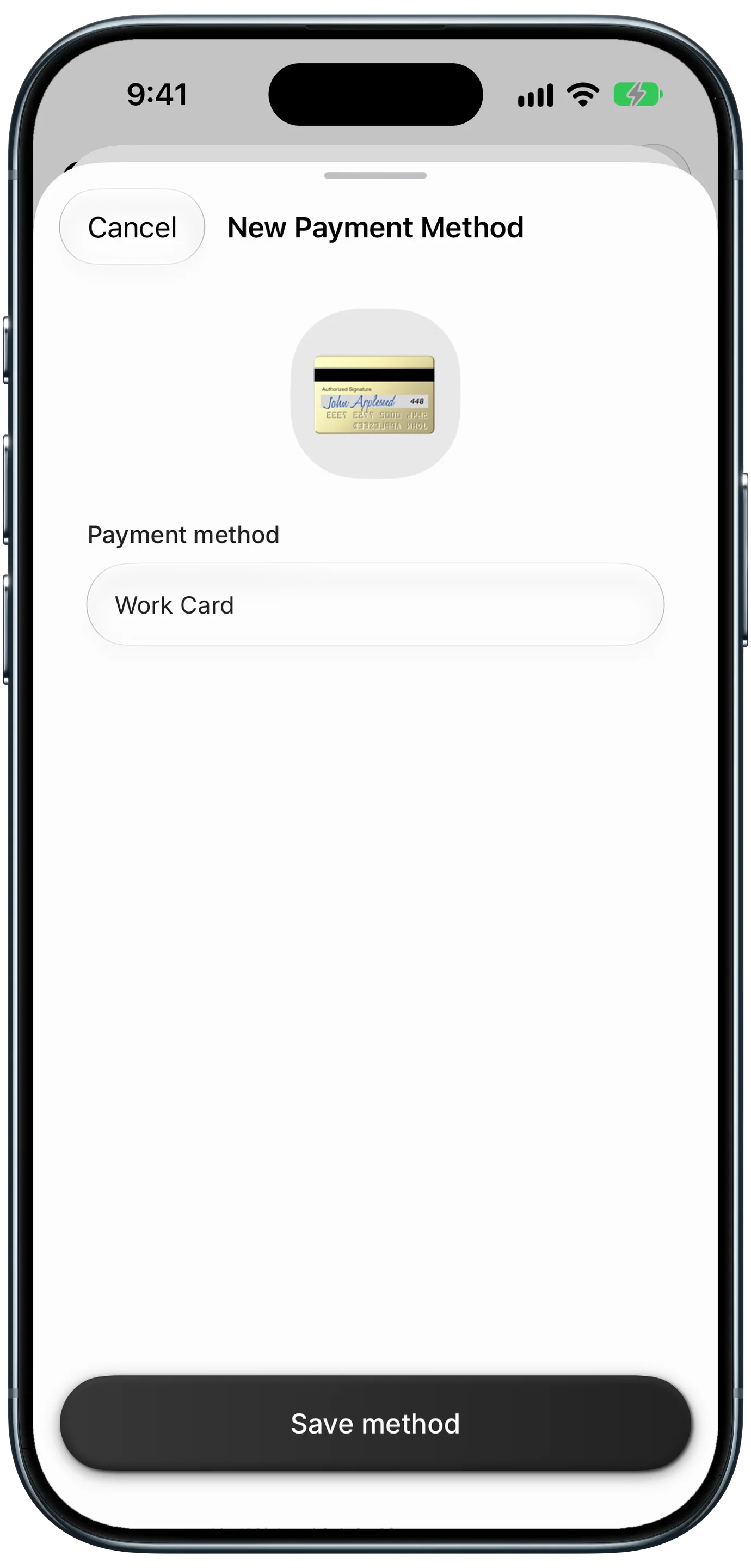
Finny app's payment methods feature
One simple move is to put car costs on one card. In Finny you can add that card as its own payment method, like the Work Card shown here, and Overview shows how much went on each card. If you drive for work, a dedicated card also keeps business costs apart from personal ones.
Then tie the costs together. Add #car to fuel, insurance, parking, and repairs, and searching #car in History shows the car's total for any period, split by category and payment method. Tags group spending without changing category totals. Adding tags needs Finny Pro (a low monthly or yearly price), while searching them is free. Set the loan payment and insurance premium as free recurring rules with reminders, so neither catches you off guard. Our guide to never missing a bill payment covers that habit in more detail.
For parking apps and toll accounts paid online, this short video shows how a payment on your screen becomes an entry:
Common Questions About the True Cost of Owning a Car
What is the average cost of car ownership per year?
AAA's Your Driving Costs 2026 study puts the average cost of owning and operating a new vehicle at $12,863 a year, assuming 15,000 miles a year over five years. That includes depreciation, fuel, insurance, maintenance, finance charges, and registration and taxes. It does not include parking, tolls, car washes, or tickets, so your real figure may be higher, especially if you live in a city.
How do I calculate my car cost per mile?
Add up a full year of car costs: depreciation, loan interest, insurance, registration, fuel, maintenance, parking, tolls, and extras. Divide the total by the miles you drove that year. AAA's 2026 average for a new vehicle is about 86 cents a mile at 15,000 miles. Low-mileage drivers usually pay more per mile because fixed costs like insurance and depreciation are spread across fewer miles.
What did AAA's driving costs 2026 study change?
AAA updated its method for 2026, including hybrids and electric vehicles in its standard vehicle categories, so the $12,863 figure is not directly comparable with 2025's $11,577. Among the hybrid and EV comparisons, a hybrid medium sedan had the lowest yearly cost at $10,204, while an electric pickup had the highest at $17,414. Fuel costs assumed regular gas averaged about $4.15 a gallon.
How much should my car budget be?
A common guideline is to keep total car costs, not just the payment, to roughly 15% to 20% of take-home pay. Use your own worksheet total rather than the payment alone. If your number is higher, the biggest levers are usually a cheaper or older car, shopping your insurance, and cutting parking or tolls where you can.
See what your car really costs, one entry at a time.
Finny helps you log fuel, parking, insurance, and repairs in seconds, set reminders for your loan and premium, and see your car's yearly total in one search, with no bank connection required.