How to Budget a Biweekly Paycheck: 3 Methods That Work
Rent is monthly. The car payment is monthly. The phone bill, insurance, and student loan are monthly. Your paycheck arrives every other Friday. That one mismatch is behind most of the stress of biweekly pay: some months feel tight for no obvious reason, and twice a year an extra deposit shows up and disappears without a plan.
This guide covers how to budget a biweekly paycheck in practice: why 26 paychecks do not divide into 12 months, how to find your three-paycheck months, three methods that work, and what to do with the extra checks. If you are paid once a month instead, our guide to budgeting on monthly pay covers that different problem, and why your budget app splits your paycheck explains the calendar issue underneath both.
Biweekly Pay Is the Most Common Schedule
According to the Bureau of Labor Statistics, 43.0 percent of US private establishments paid their employees every two weeks as of February 2023, more than any other schedule. Weekly pay came second at 27.0 percent, then semimonthly at 19.8 percent and monthly at 10.3 percent. Those figures count businesses rather than individual workers, but the point holds: biweekly is the default for a large share of American paychecks.
It is easy to confuse with semimonthly pay. Semimonthly means twice a month on fixed dates, such as the 15th and the last day, which is 24 paychecks a year that always land in the same place. Biweekly means every 14 days, which is 26 paychecks a year that drift through the calendar.
That drift is the whole challenge: semimonthly pay maps onto monthly bills neatly, while biweekly pay needs a method that expects the dates to move.
Why 26 Paychecks Do Not Fit 12 Months
A year is 52 weeks and a day or two, so biweekly pay produces 26 paychecks, occasionally 27. Divide 26 by 12 and you get about 2.17 paychecks per month. No month actually receives 2.17 paychecks: ten months get two and two months get three.
Two biweekly paychecks cover 28 days, but the average month is about 30.4 days long. So your payday slides roughly two and a half days earlier each month, until a month starts close enough to a payday to catch three.
Which months those are depends entirely on your first payday of the year. Take someone paid on Fridays whose first 2027 payday is January 8. Counting forward in 14-day steps, their three-paycheck months are April (the 2nd, 16th, and 30th) and October (the 1st, 15th, and 29th). Someone paid on the alternate Fridays, starting January 1, gets January, July, and December instead, plus a 27th paycheck in the same year, though a New Year's Day payday is usually paid early by the employer.
To find yours, take your employer's pay calendar or your first payday and count forward 14 days at a time. Do it once in December and mark the two months.
Method 1: Assign Each Bill to Paycheck 1 or Paycheck 2
This is the method most people mean by budget by paycheck. Instead of treating the month as one pool, you give every bill a specific paycheck to come from.
One rule makes it reliable despite the drift. In a two-paycheck month, the first payday always lands somewhere between the 1st and the 14th, and the second between the 15th and the 28th. So:
- Paycheck 1 pays bills due from the 15th to the end of the month.
- Paycheck 2 pays bills due from the 1st to the 14th of the next month.
Each bill is then paid from money you already have, never from a paycheck that has not arrived. When a third paycheck lands, around the 29th to the 31st, every bill is already covered by the other two, which makes the extra check genuinely free.
The weak point is lopsided bills. If rent and the car payment are both due early in the month, paycheck 2 may not cover them. Two fixes work: set aside half the rent from each paycheck, or ask a lender to move a due date, which many card issuers and loan servicers allow.
Method 2: Budget on Two Paychecks and Bank the Rest
The simplest biweekly budget ignores the extra paychecks completely. You build your monthly budget as if every month brings exactly two, which is the leanest month you will ever have, and treat anything above that as a bonus.
This works because it is conservative. A budget built on two paychecks never comes up short in a two-paycheck month, and the two three-paycheck months each hand you a full extra check with nothing assigned to it. Over a year that is two paychecks, roughly 8 percent of your take-home pay, arriving with no claims on it.
The cost is a monthly budget tighter than your income really is. Take home $2,100 every two weeks and your average month is about $4,550, but you are budgeting on $4,200. Some people like that margin; others find it frustrating.
It pairs well with envelope budgeting: fill each envelope from two paychecks, and send the third straight to savings before it can be absorbed.
Method 3: Start Your Month on Payday, With One Caveat
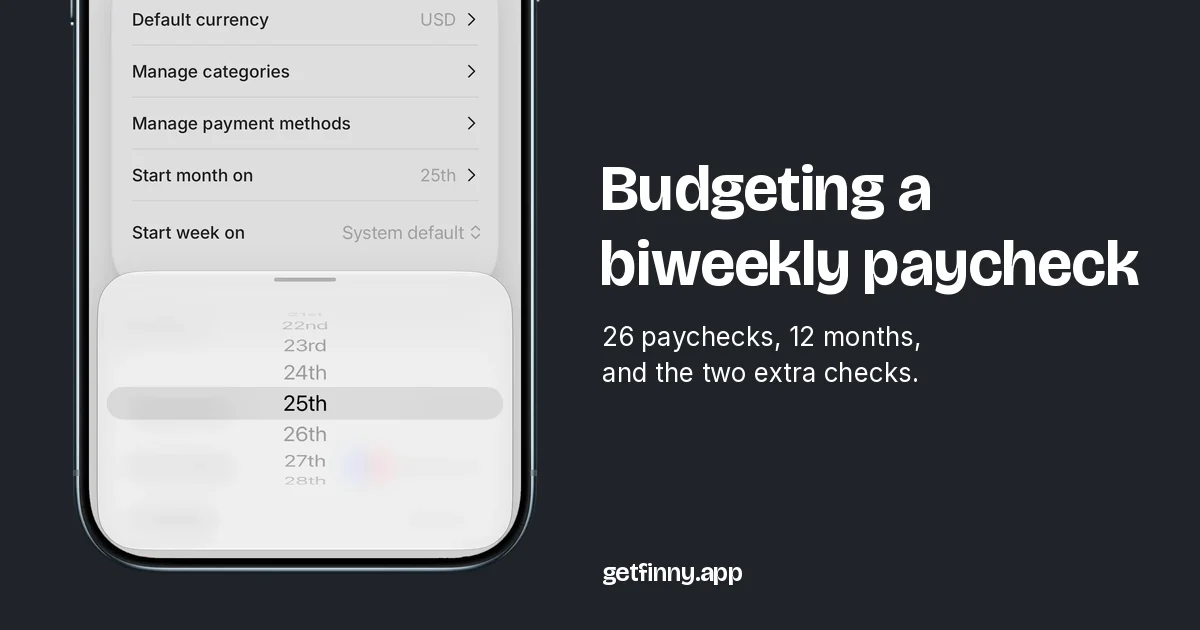
The third approach changes the month itself. If your budget period starts on payday instead of the 1st, the money and the bills it funds sit in the same window.
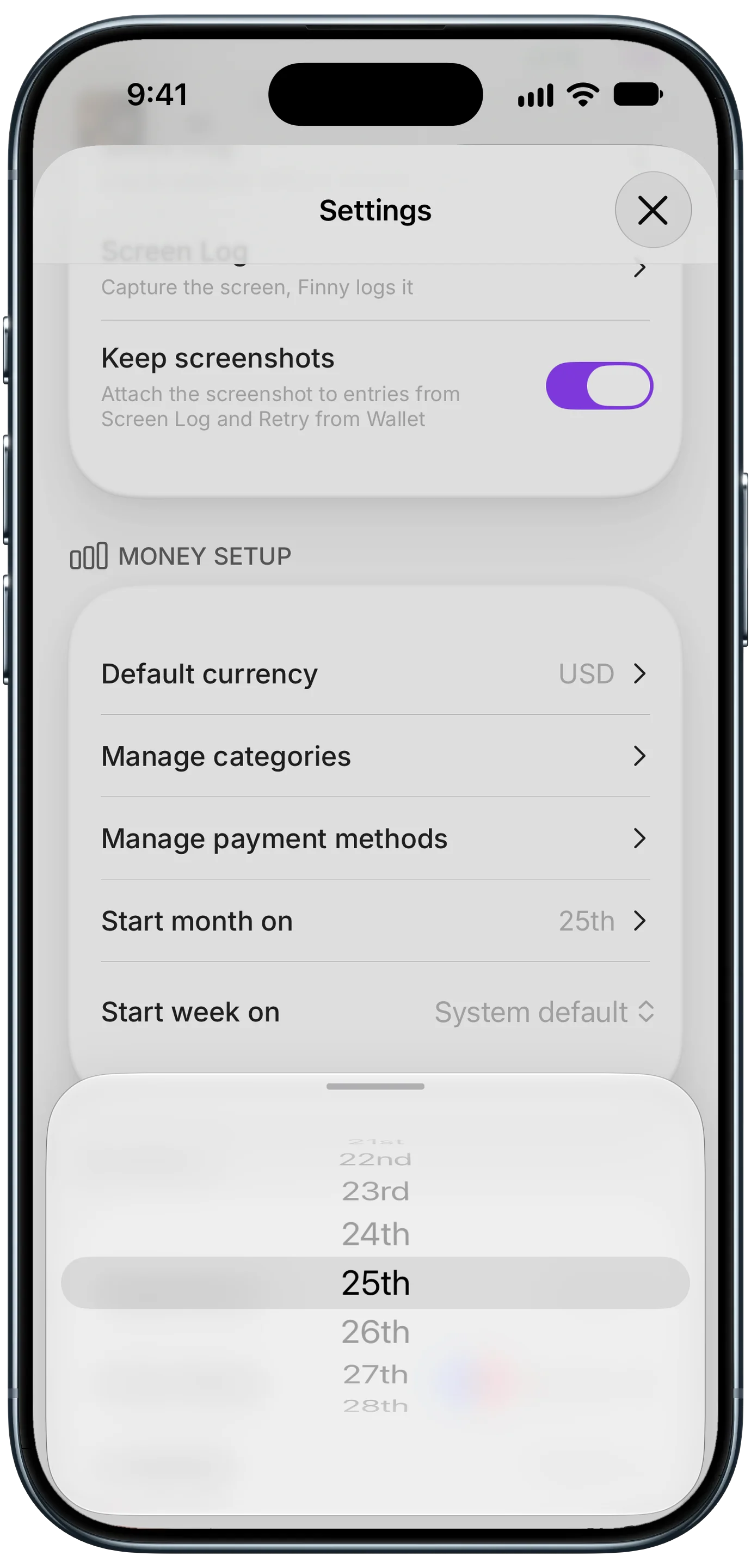
Finny app's custom month start feature
This is the right fix for monthly and semimonthly pay. For biweekly pay it is only partial: your payday drifts about two and a half days a month, so any fixed start day lines up for a while and then drifts away. No fixed-date setting can follow a 14-day schedule. Our comparison of budget apps that let you change the month start notes the few tools with true biweekly periods.
Finny's Start month on setting (Pro) takes any day from the 1st to the 28th. For biweekly earners it is most useful for matching a fixed cycle that does sit still, such as a card statement, which our guide to budgeting by billing cycle explains.
The stronger version for biweekly pay is to budget a month behind: once a month of expenses is saved, this month's paychecks fund next month and payday timing stops mattering. The third paychecks are the fastest way to build that buffer.
What to Do With the Third Paycheck
The extra paycheck in your three paycheck months is the most valuable money you will receive all year, because nothing depends on it. The risk is that it lands, sits in checking, and quietly becomes a slightly better month.
Decide in advance. A sensible order:
- Build the buffer. If you do not yet have a starter emergency fund, this comes first.
- Fund irregular bills. Car registration, annual subscriptions, holiday gifts, and insurance premiums are easier when a sinking fund already holds the money.
- Pay down high-interest debt. A full extra paycheck against a card balance moves the number noticeably.
- Spend some on purpose. Assigning part of it to something you enjoy makes the plan easier to keep.
Timing helps. In the 2027 example above, October's extra paycheck lands just before the holidays, a natural fit for gifts and travel, while April's suits annual bills or a tax payment.
A Worked Example: $2,100 Every Other Friday
Say you take home $2,100 every other Friday, with your first 2027 payday on January 8. That is $54,600 a year, or $4,200 in a two-paycheck month. Using Method 1, with rent split between both paychecks:
| Paycheck 1 (lands 1st to 14th) | Paycheck 2 (lands 15th to 28th) | |
|---|---|---|
| Take-home pay | $2,100 | $2,100 |
| Half of rent ($1,450 due on the 1st) | $725 | $725 |
| Bills it covers | Utilities $160, insurance $140, student loan $210, internet $60 | Car $345, phone $70, subscriptions $45 |
| Savings transfer | $150 | $150 |
| Left for two weeks of spending | $655 (about $47 a day) | $765 (about $55 a day) |
The rent half from paycheck 1 waits in a separate account for the 1st. The columns are not equal, and that is fine: a $110 difference is easier to live with than a constantly changing plan.
In April and October 2027, a third $2,100 arrives with nothing assigned to it. In this plan, $1,000 goes to the emergency fund in April, and October's covers holiday spending and next year's car registration.
Keeping It Running Day to Day
Every method depends on knowing which bills are coming and what is left of this paycheck.
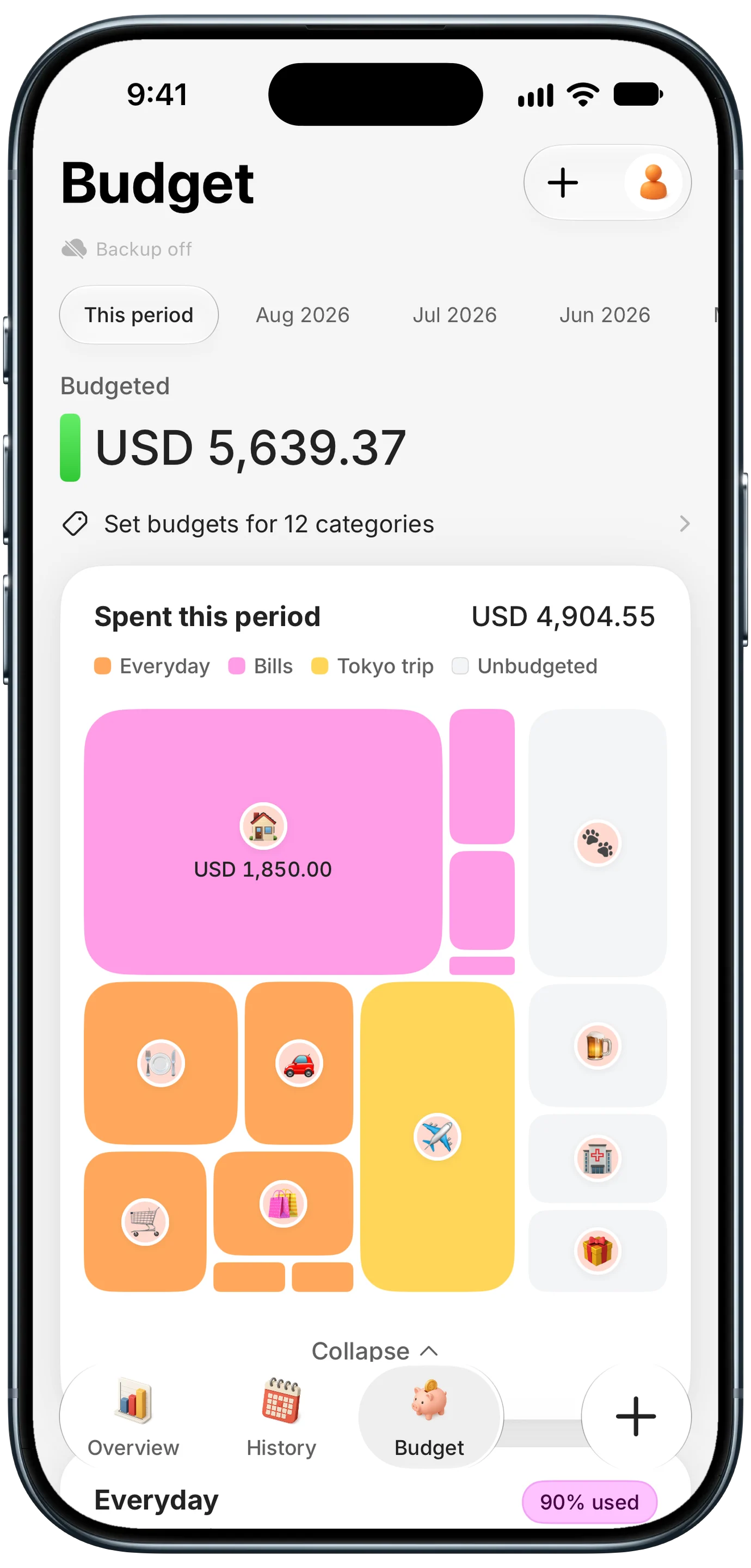
Finny app's budget map feature
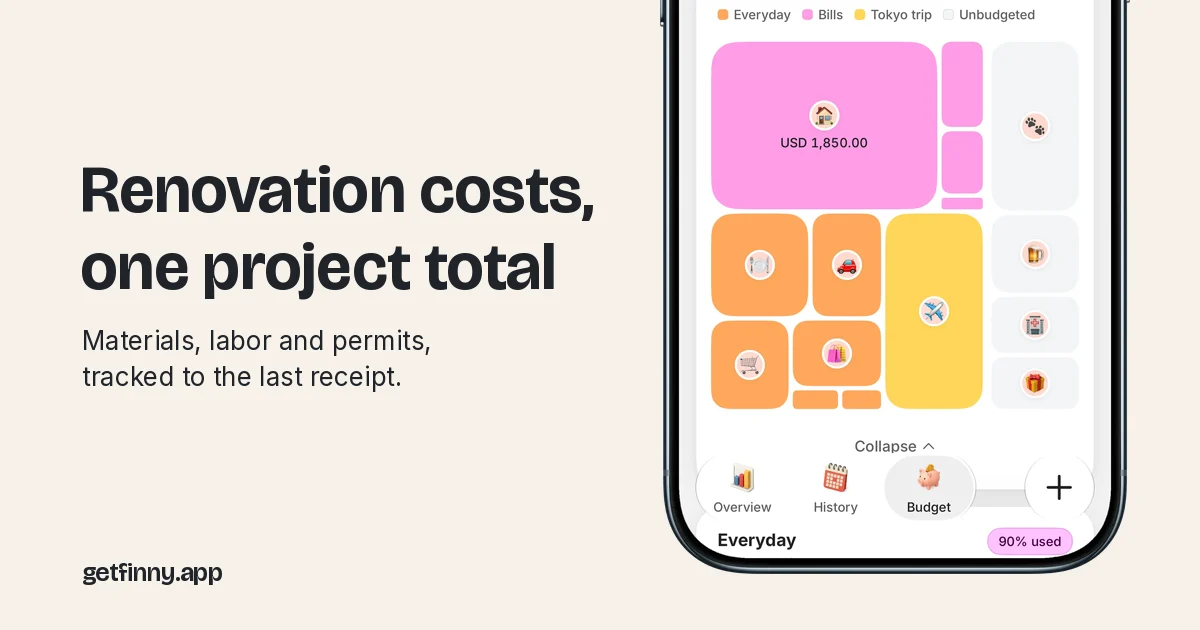
In Finny, recurring rules (free) record bills like rent and the car payment and send a reminder before each is due, and an upcoming-bills card on Overview shows what is next. Budgets (free) can roll over, so a quiet two weeks carries forward and an expensive one stays visible, while the spending map on the Budget tab shows where the period's money actually went.
The spending side only works if entries keep up with your card. This clip shows card payments being logged as you make them, with no bank connection:
For cash and anything else, the add menu offers a manual entry, a receipt scan, or a typed sentence through AI Log (receipt scans and AI Log need Pro).
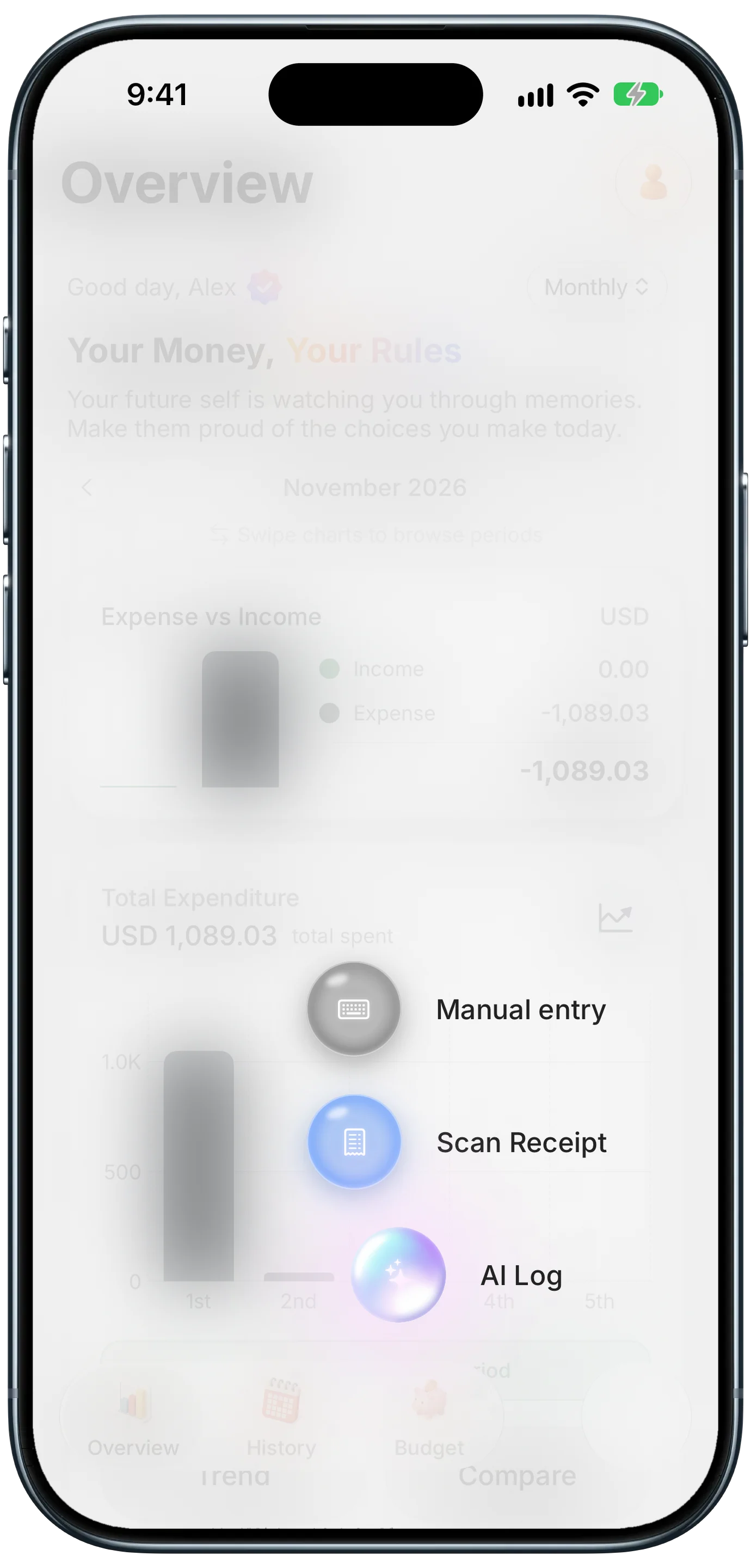
Finny app's add entry feature
Common Questions About Budgeting a Biweekly Paycheck
Which months have three paychecks in 2027?
It depends on your first payday of the year. If you are paid on Fridays and your first 2027 payday is January 8, your three-paycheck months are April and October. If your first payday falls on January 1, they are January, July, and December. For any other schedule, take your first payday and count forward 14 days at a time until a month holds three dates.
Is it 26 or 27 paychecks a year?
Usually 26. A year is 52 weeks plus one day, or two in a leap year, so every so often a schedule fits a 27th payday into the same calendar year. That happens when the first payday falls within the first day or two of January. Employers handle it differently, and some shift a holiday payday into the previous year, so check your pay calendar rather than assuming.
Should I budget biweekly or monthly?
Budget your bills monthly, because that is how they arrive, and plan your spending per paycheck, because that is how your money arrives. Method 1 does exactly this by assigning each bill to a paycheck. If you prefer one monthly number, build it on two paychecks and treat the extra checks as savings, which keeps your plan safe in the leanest months.
What is the difference between biweekly and semimonthly pay?
Biweekly pay arrives every 14 days, which gives 26 paychecks a year that land on different dates each month. Semimonthly pay arrives twice a month on fixed dates, such as the 15th and the last day, which gives 24 paychecks a year. Each semimonthly check is slightly larger for the same salary. Semimonthly is easier to match to monthly bills, while biweekly brings two bonus paychecks.
Ready to make every paycheck easier to plan?
Download Finny to track bills with reminders, set budgets that roll over, and see what is left before your next payday. No bank connections, offline support, and full control over your financial data.